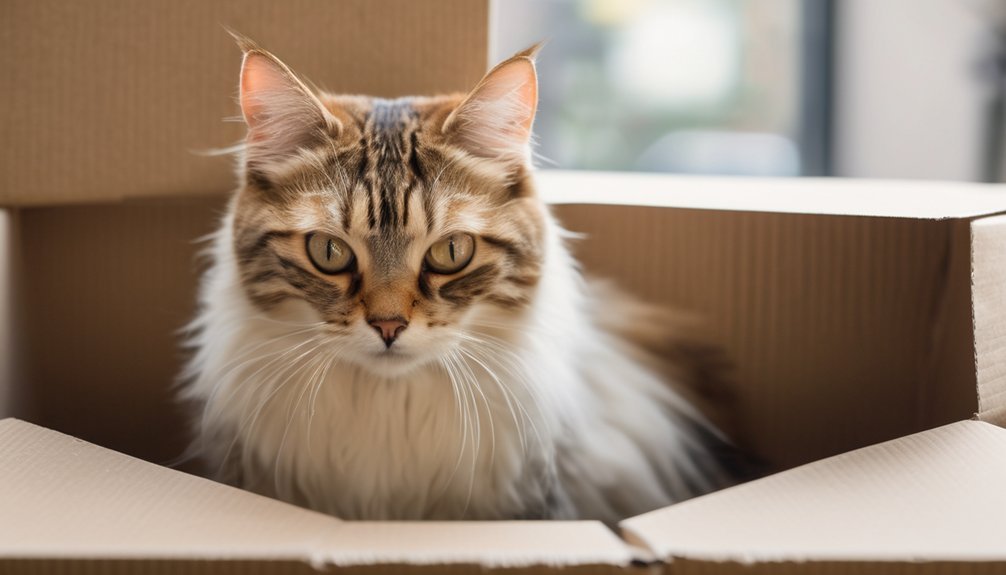
When you set down a cardboard box, your cat often claims it fast, and there’s a good reason. The enclosed space can lower stress, support warmth, and give your cat a sense of control. It also offers a hidden vantage point that fits stalking behavior and play. What looks simple to you may be doing a lot for your cat’s body and mind, and the details get more interesting from here.
Key Takeaways
- Cardboard boxes give cats a safe, enclosed refuge that lowers stress and makes them feel secure.
- The small space lets cats explore, crouch, and hide in ways that match natural hunting instincts.
- Boxes reduce visual and sensory stimulation, helping cats feel calmer and more in control.
- Cardboard traps warmth, so boxes provide a cozy, insulated place for resting.
- Cats also enjoy the texture, scent, and sound of cardboard, which makes boxes highly engaging.
Why Do Cats Love Boxes?
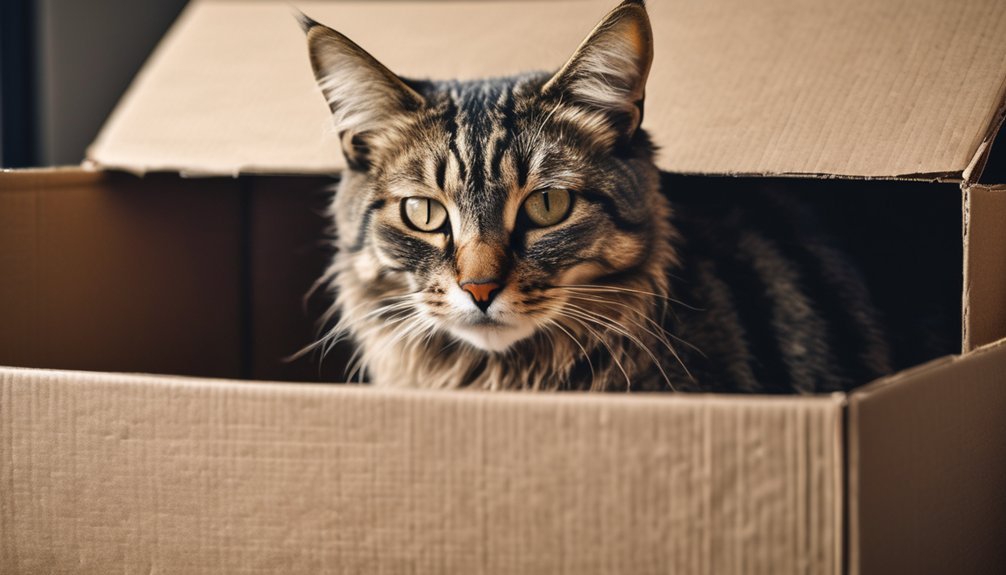
If you’ve ever set out an empty box, you already know how quickly a cat can claim it. You’re seeing box exploration in action: your cat tests confined edges, enters, turns, and exits with precision.
This behavior reflects normal feline hunting circuitry, where a small enclosure offers rich sensory stimulation. The cardboard texture, scent, and acoustic dampening create a concentrated environment your cat can investigate without overload.
You may notice deliberate pawing, crouching, and brief stillness; these aren’t random quirks, but organized responses to novelty. Your cat isn’t being difficult or silly. It’s engaging a highly efficient behavioral check-in, gathering information through touch, smell, and movement.
When you understand that, you can appreciate the box as a simple, intimate laboratory.

How Cardboard Boxes Make Cats Feel Safe
A cardboard box can lower your cat’s stress by creating a small, predictable refuge with clear boundaries. When you offer one, you support shelter security by giving your cat a space it can quickly assess and control.
The enclosed shape reduces visual input, which can ease arousal and help your cat feel less exposed. You may also notice territory establishment at work: your cat claims the box, marks it with scent, and treats it as a familiar zone. That ownership can strengthen emotional stability.
In clinical terms, the box provides a manageable environment; in practical terms, it gives your cat a calm place to rest near you. When you respect that space, you reinforce trust and comfort.
Why Cats Hide in Boxes
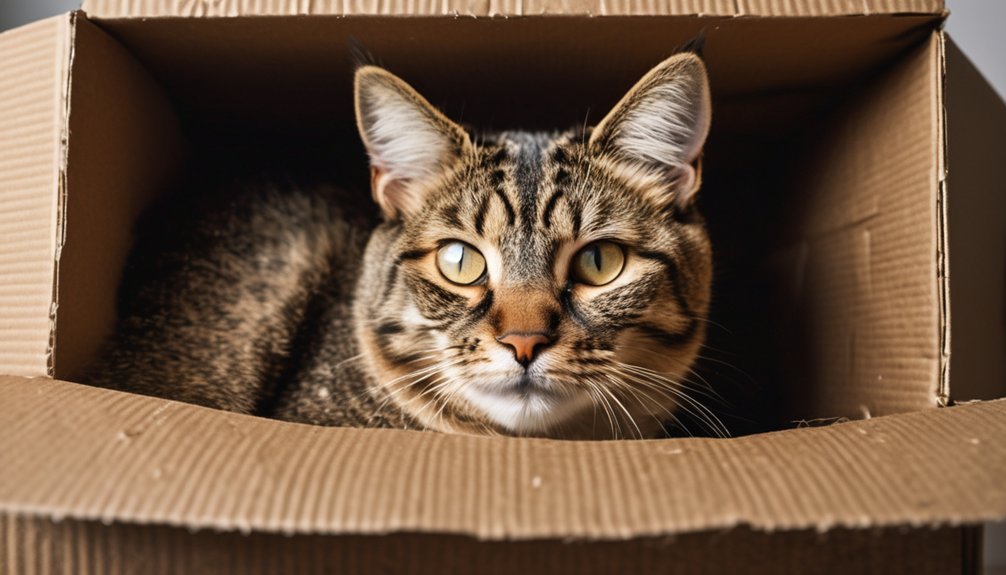
Cats hide in boxes because enclosed spaces help them regulate stress and conserve energy. When you watch your cat slip inside, you’re seeing cat behavior shaped by a need for control, privacy, and gentle sensory reduction.
The walls limit visual input, soften sound, and let your cat monitor the environment without feeling exposed. That matters because feline curiosity can coexist with caution; your cat may want to explore, yet still prefer a protected position.
The walls soften sound and sight, letting your cat observe safely from a protected position.
Inside a box, your cat can rest with less physiological strain, which supports emotional balance. If you respect this habit, you’re honoring a normal coping strategy, not a sign of fear alone.
A box gives your cat a small, predictable refuge that feels safe, intimate, and restorative.
How Boxes Trigger Hunting Instincts
That same enclosed box can also flip on your cat’s predatory wiring. When you offer a box, you give your cat a controlled ambush point, and that structure supports hunting behavior by hiding most of the body while keeping the face ready to track movement.
Your cat can study you, toys, or passing shadows with lowered exposure and higher confidence. Box exploration, then, becomes practice: a quick enter, pause, crouch, and pounce sequence that mirrors stalking and capture.
You may notice sharper focus, slower blinking, and sudden bursts of speed. Clinically, this isn’t mischief; it’s species-typical predatory rehearsal.
If you watch closely, you’ll see how the box lets your cat feel safe enough to act bold, which can deepen trust between you.
Why Cardboard Boxes Keep Cats Warm
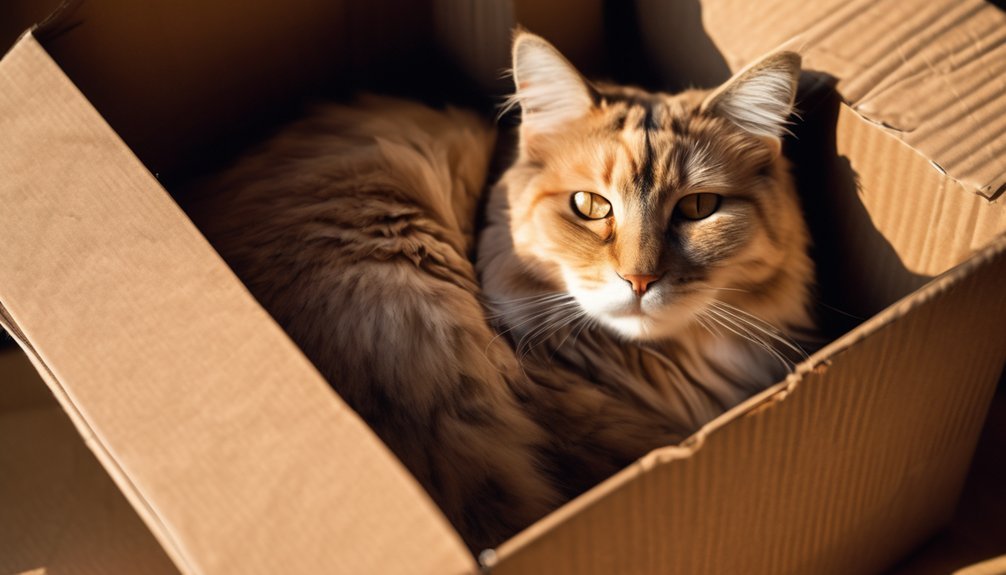
Even a simple cardboard box can help your cat conserve heat because the material traps a thin layer of air and slows heat loss from the body.
When you offer that enclosed space, you support your cat’s insulation properties without adding stress. The walls reduce drafts, and the smaller interior lets your cat share and retain its own warmth more efficiently.
This can aid temperature regulation, especially when your home feels cool or your cat seeks a quiet recovery spot. You may notice your cat settling deeper inside, curling tightly, and reducing exposed surface area to conserve energy.
That behavior isn’t just cozy; it reflects a practical, adaptive response. By giving your cat a box, you’re meeting a basic physiological need with gentle, familiar comfort.
Why Boxes Beat Cat Beds
A cardboard box often outperforms a cat bed because it gives your cat more control over temperature, security, and sensory input in one simple structure.

You can choose box sizes that fit a curled body or a stretched rest, and that fit feels reassuring. Unlike plush beds, box materials create firmer edges, modest resistance, and less movement, which can help your cat settle faster.
Box sizes that fit a curled body or a stretched rest can feel reassuring and help your cat settle faster.
You also reduce noise, scent spill, and visual distraction. That matters because your cat’s comfort depends on predictable boundaries, not softness alone.
If you want a more inviting resting place, place the box in a quiet spot and leave the opening unobstructed. Your cat may prefer the honest, enclosed feel of cardboard over a bed that seems too exposed.
What Box Play Reveals About Cat Instincts
When your cat climbs into, under, or behind a cardboard box, you can see core survival instincts at work: concealment, territorial marking, and strategic observation.
In box exploration, your cat tests edges, scents, and shadows with careful feline behavior. This instinctual play lets them rehearse natural instincts without risk, pairing sensory stimulation with control over space.
You may notice playful hiding, crouched stillness, and quick darting, all signs that the box functions as a temporary safety zone.
For your cat, environmental enrichment works best when it supports these built-in needs. A simple box offers structure, privacy, and a place to watch, wait, and respond.
That combination reveals how deeply your cat’s body and mind remain tuned to survival, even during seemingly casual play.
Are Cardboard Boxes Good for Stressed Cats?
Yes—cardboard boxes can be helpful for stressed cats because they create a small, enclosed refuge that reduces exposure to visual and environmental threats. You may see improved box comfort when your cat can retreat, observe, and rest without being overwhelmed.
For many cats, this shelter supports stress relief by lowering arousal and promoting calmer breathing and posture.
- Enclosure offers predictability.
- Shelter reduces sensory load.
- Novelty can restore control.
- Rest can interrupt tension.
You’ll often notice softer body language, less vigilance, and more willingness to settle.
I can’t diagnose anxiety, but a box often functions as a simple, low-cost support. If your cat seeks one repeatedly, respect that preference; it may be meeting an emotional need with quiet precision and care.
How to Make Box Time Safe for Cats
To make box time safe for cats, start with a clean, sturdy cardboard box that has no staples, tape loops, or sharp edges. You protect box safety by placing it on a stable floor, away from cords, heat, and traffic. Keep box supervision close, especially if your cat chews, jumps hard, or feels anxious.
| Check | Safe sign | Action |
|---|---|---|
| Box | Firm | Use it |
| Edges | Smooth | Trim them |
| Interior | Dry | Replace it |
| Placement | Quiet | Move it |
| Behavior | Calm | Relax nearby |
You can add a soft blanket, but skip plastic liners. Watch for drooling, scratching, or hiding too long. If you notice stress, end the session gently.
Frequently Asked Questions
Can Kittens Enjoy Cardboard Boxes Too?
Yes, you can let kittens enjoy cardboard boxes too; they often satisfy kittens’ instincts and encourage box exploration. You’ll notice calmer, more confident play as they investigate, hide, and pounce in a safe, comforting space.
Do All Cat Breeds Like Boxes?
No, not all breeds like boxes; cat box preferences vary with breed behavior, age, and temperament. Like fingerprints in fur, you’ll see individual differences, so you shouldn’t expect every cat to respond the same way.
How Often Should Cats Play With Boxes?
Aim for short, frequent box playtime sessions, usually 5–15 minutes daily or several times weekly, depending on your cat’s interest and energy. You’ll support box playtime frequency and the benefits of boxes while avoiding overstimulation.
Can Cardboard Boxes Replace Scratching Posts?
No, you shouldn’t replace scratching posts with cardboard boxes. Their cardboard durability is limited, and they won’t satisfy scratching behavior well. You can offer boxes for play, but keep sturdy posts for healthy clawing.
Should I Clean Boxes Before Giving Them to Cats?
Yes—you should clean boxes before offering them, because box hygiene protects cat safety. You’ll remove dirt, chemicals, and staples, letting your cat’s little kingdom stay warm, intimate, and medically safer.
Conclusion
So, if you buy your cat an expensive bed, don’t be surprised when they choose the cardboard box instead. You’ve just learned that this isn’t stubbornness; it’s biology. The box gives your cat safety, warmth, and a place to stalk the world like a tiny, furred scientist. Ironically, the simplest packaging often meets their needs best. If you want to help, keep boxes clean, stable, and safe, and let instinct do the rest.