Do cats really bring gifts because they see you as family, or is something else driving the behavior? When your cat drops a toy, a leaf, or worse, prey at your feet, you’re seeing a mix of hunting instinct, learned social behavior, and possible affection. The meaning isn’t always obvious, and the response you give can shape what happens next.
Key Takeaways
- Cats bring gifts mainly because hunting instincts drive them to catch, carry, and present prey-like items.
- Gifts can be a form of feline communication, showing social attention, trust, or a desire to interact.
- Some cats learn this behavior because owners react strongly, which can reward and reinforce the habit.
- Mothers teach kittens hunting skills by presenting prey, and domestic cats may mimic this learned behavior with toys.
- Respond calmly, avoid punishment, and redirect with play to reinforce healthy bonding and reduce unwanted hunting behavior.
Why Cats Bring Gifts
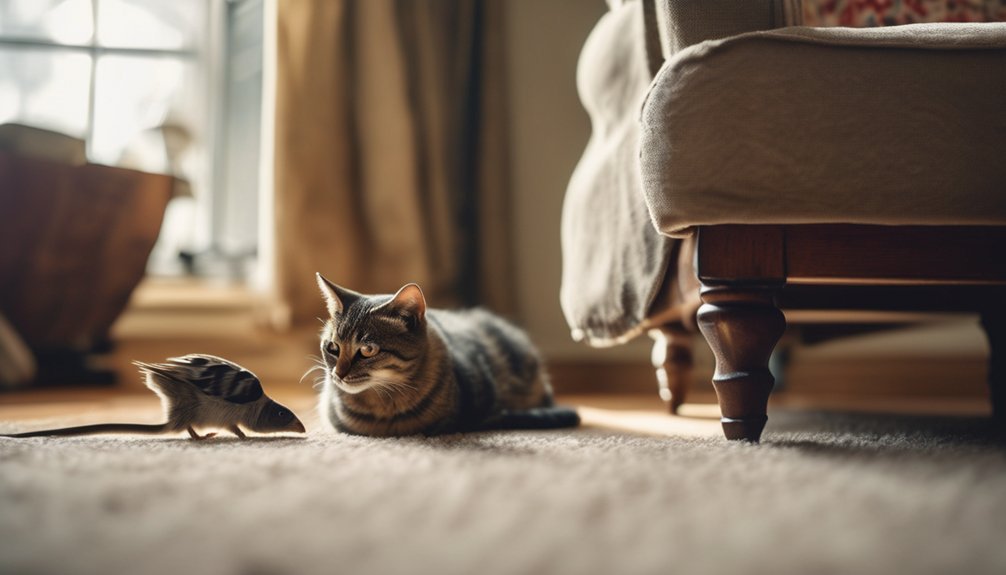
Cats often bring gifts because their hunting instincts remain strong even in domestic settings. You may notice this behavior after your cat stalks toys, insects, or small objects and then delivers them to you.
This action reflects playful behaviors that rehearse capture, carry, and presentation. It also functions as feline communication, letting your cat interact with you in a direct, socially meaningful way.
When you receive a gift, your cat is using learned habits shaped by observation and reward. You can view the behavior as a normal expression of energy, curiosity, and attachment.

In many cases, your cat is choosing a target, transporting it carefully, and placing it near you. That sequence shows coordination, intent, and a clear desire to engage.
What Cat Gifts Usually Mean
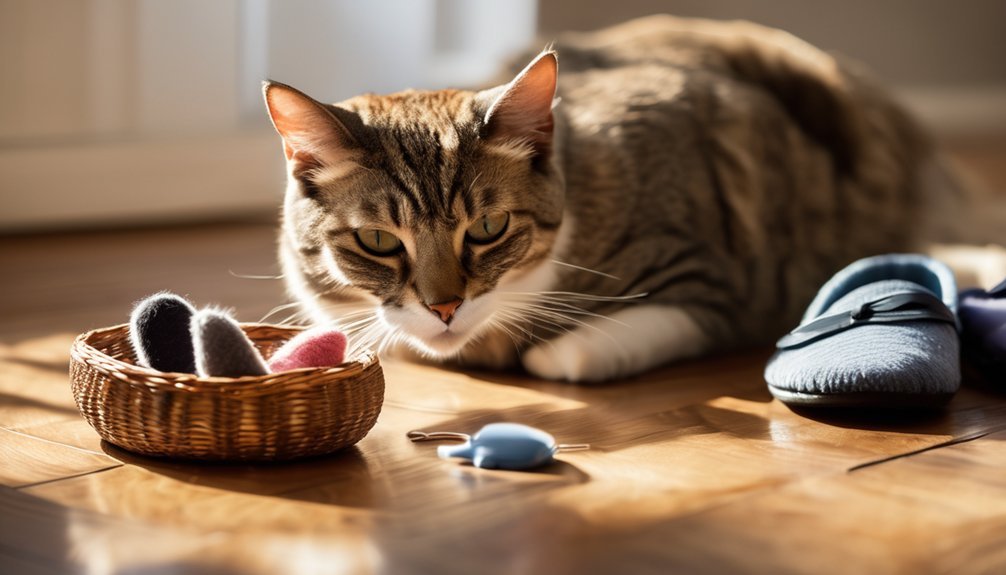
When your cat brings you a gift, the behavior usually signals social engagement rather than a literal offering. You can read it as feline communication: your cat is checking your response, inviting interaction, and reinforcing your bond. The item may reflect playful behavior, since cats often treat objects as shared social prompts.
| Gift type | Common meaning |
|---|---|
| Toy | Invitation to interact |
| Small object | Social attention-seeking |
| Removed item | Shared household interest |
| Soft object | Comfort and closeness |
In each case, your cat’s action is deliberate and communicative. You should note context, body posture, and timing, because these details clarify intent. If your cat repeats the behavior, it’s likely trying to maintain contact with you, not simply transfer possession.
Hunting Instincts Behind Cat Gifts
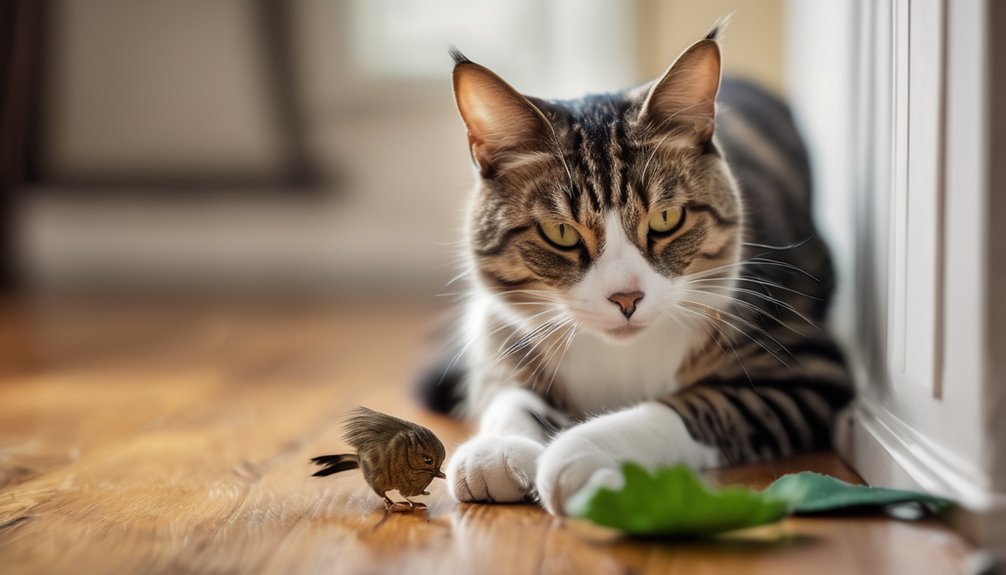
A cat’s gift can also reflect predatory behavior rather than simple social attention. You’re seeing feline behavior shaped by instinctual traits, not malice. Your cat may stalk, seize, and deliver prey or toys because hunting sequences remain active. This is clinically normal and often intensified when your home feels safe and intimate.
- You reinforce the act when you react strongly.
- Your cat may choose items that mimic prey size.
- Your presence can become part of the reward cycle.
- The gesture often signals practiced hunting skill.
If you want to respond, stay calm, praise gently, and remove unsafe objects. You don’t need to punish the behavior; instead, guide it toward play that satisfies the drive.
How Mother Cats Teach Kittens
In the wild, mother cats often bring kittens prey items or safe objects to introduce hunting, handling, and bite control in a controlled way. You can see maternal instincts guiding these nurturing behaviors as the queen regulates difficulty and timing.
| Action | Purpose |
|---|---|
| Present prey | Build tracking skill |
| Release it briefly | Practice pounce timing |
| Withdraw after contact | Reinforce control |
You’ll notice she repeats short sessions, then watches your kitten’s response. She may reposition the object, so you learn to stalk, seize, and release with precision. This teaching reduces injury risk and strengthens coordination. In domestic settings, your cat may mimic these sequences with toys, reflecting the same developmental pattern.
When Cat Gifts Show Affection
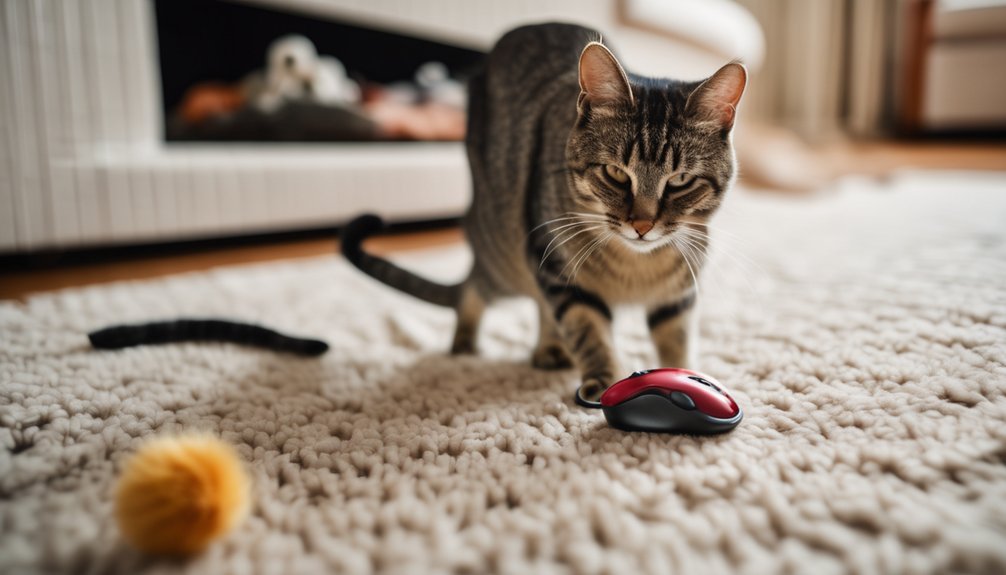
Mother cats’ gift-giving can also signal social bonding, and domestic cats may direct this behavior toward you as a sign of trust and affection. In feline behavior, this gift communication often appears when your cat seeks close contact and shared routine.
You may notice these moments:
- Your cat brings you a toy after quiet time.
- Your cat deposits prey-like items near you, then watches.
- Your cat repeats the act when you respond calmly.
- Your cat stays nearby, seeking your attention.
These actions suggest emotional investment, not random motion. You can interpret them as a personal message: your cat recognizes you, includes you, and invites connection.
When you respond with calm praise, you reinforce the bond and support continued affectionate interaction.

Why Cat Gifts Can Be Gross
Even when a cat’s gift reflects affection, the item itself can be unpleasant because cats often bring prey, carrion, or half-chewed toys that trigger human disgust responses.
You may feel this instinctively: fur, odor, saliva, and visible damage all signal contamination. In close quarters, those cues can make cat hygiene feel urgent, even if the object is harmless.
Gift etiquette also works differently across species; your cat doesn’t follow human rules for cleanliness, wrapping, or presentation. Instead, your companion presents whatever seems valuable, which can include insects, birds, or damp fabric scraps.
The mismatch between feline intent and your sensory boundaries explains why these offerings feel gross. They’re intimate in meaning, but they can still be physically repellent.
How to Respond to Cat Gifts
When your cat brings you a gift, respond calmly and avoid punishing the behavior. You reinforce trust by keeping your voice soft and your movements slow.
Offer brief gift appreciation: inspect the item, then thank your cat with gentle petting if they welcome contact. If the gift is prey, use gloves and dispose of it discreetly.
- Keep your expression neutral.
- Redirect with a toy.
- Clean the area promptly.
- Reward calm delivery.
These playful responses help preserve your bond without increasing excitement or fear.
If your cat repeats the behavior, schedule interactive play before meals to reduce hunting pressure. Your steady, intimate attention teaches that sharing isn’t dangerous, and it can become a predictable ritual between you and your cat.
Frequently Asked Questions
Do All Cats Bring Gifts to Their Owners?
No, you won’t see this in all cats. Your cat’s behavior varies by personality, hunting drive, and environment. Gift significance usually reflects instinct, not affection alone, so you shouldn’t expect every cat to do it.
Can Indoor Cats Still Bring Gifts?
Yes, your indoor cat can still bring gifts. Indoor hunting, feline behavior, and cat instincts persist through play, stalking, and pouncing. Gift interpretation should stay clinical: toys, socks, or insects reflect instinct, not affection alone.
Why Do Cats Leave Gifts by the Bed?
You’ll usually find gifts by your bed because your cat associates you with safety and rest. Hunting instincts and feline behavior drive this placement; your sleeping area becomes a private, trusted delivery spot.
Do Cat Gifts Mean My Cat Is Stressed?
Not usually; you can view cat gifts as normal feline behavior, not clear stress. Their gift significance often reflects hunting instinct, affection, or attention-seeking. If you notice other changes, you should consult your veterinarian.
How Can I Stop My Cat From Bringing Gifts?
You can reduce gifts by offering gift alternatives, like toys or treats, and using behavioral training to reward non-gifting behavior. You’ll need consistency, redirection, and gentle praise to reshape your cat’s habits.
Conclusion
When your cat brings you a gift, it’s usually showing hunting instincts, learned behavior, or social bonding. You’re seeing an action that’s as purposeful as a small ritual: your cat captures, carries, and offers an object to share the experience. Sometimes it signals affection; sometimes it invites play. Even if the gift is unpleasant, your cat isn’t being odd. It’s communicating in a natural, instinctive way that strengthens your relationship.