If you’ve ever wondered why some animals stay with one partner for life, you’re looking at a survival strategy with deep emotional value. From wolves and swans to gibbons, seahorses, and albatrosses, these bonds support parenting, protection, and stability. Yet the reasons behind them aren’t the same across species, and some of the most surprising examples may challenge what you expect next.
Key Takeaways
- Wolves often form lifelong pair bonds that support hunting, territory defense, and raising pups together.
- Swans are classic lifelong mates, returning to the same partner and sharing nesting and parenting duties.
- Gibbons maintain strong family bonds built on constant closeness, communication, and cooperative care.
- Albatrosses reunite with the same mate after long migrations and share nesting responsibilities.
- Penguins and seahorses also show enduring bonds that improve parenting and survival.
Why Some Animals Bond for Life
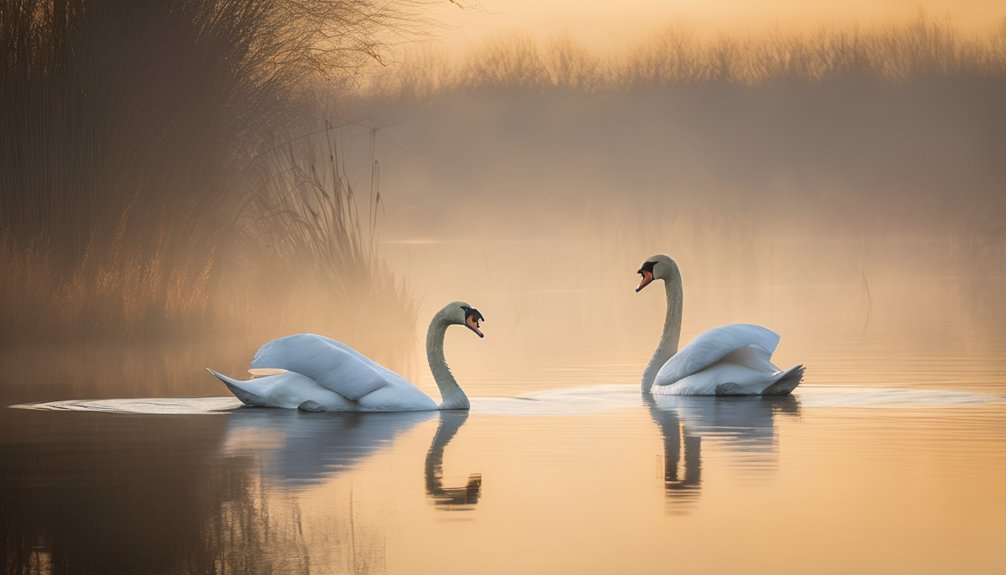
Some animals bond for life because long-term partnerships can improve their chances of survival, reproduction, and successful parenting.
When you look closely, you’ll see that steady companions can share tasks, defend territory, and raise young with less risk and stress. These relationships often grow from emotional connections that deepen with repeated trust, cooperation, and comfort.
Steady companions share tasks, defend territory, and raise young with trust, cooperation, and comfort.
You can think of them as practical and tender at once: each partner gains reliable support while reducing the energy needed to find new mates. Natural selection can favor these habits when they offer clear evolutionary advantages, especially in environments where raising offspring takes time and teamwork.
For you, that bond reflects both instinct and care, showing how loyalty can strengthen life in meaningful ways.

Wolves: Lifelong Pair Bonds
Wolves are known for forming strong pair bonds, and in many cases a mated male and female stay together for years, sometimes for life.
You can see this loyalty in how they hunt, rest, and raise pups as a unit. Their wolf communication helps them stay synchronized through body posture, scent, vocal calls, and subtle gestures.
This bond also shapes pack dynamics, because the pair often guides group decisions and stabilizes daily life.
When you understand wolf bonds, you see more than survival; you see trust, cooperation, and steady devotion.
That closeness gives the pack structure and helps each partner support the other through harsh seasons, territory defense, and the demands of parenting.
Swans: The Classic Lifelong Mates
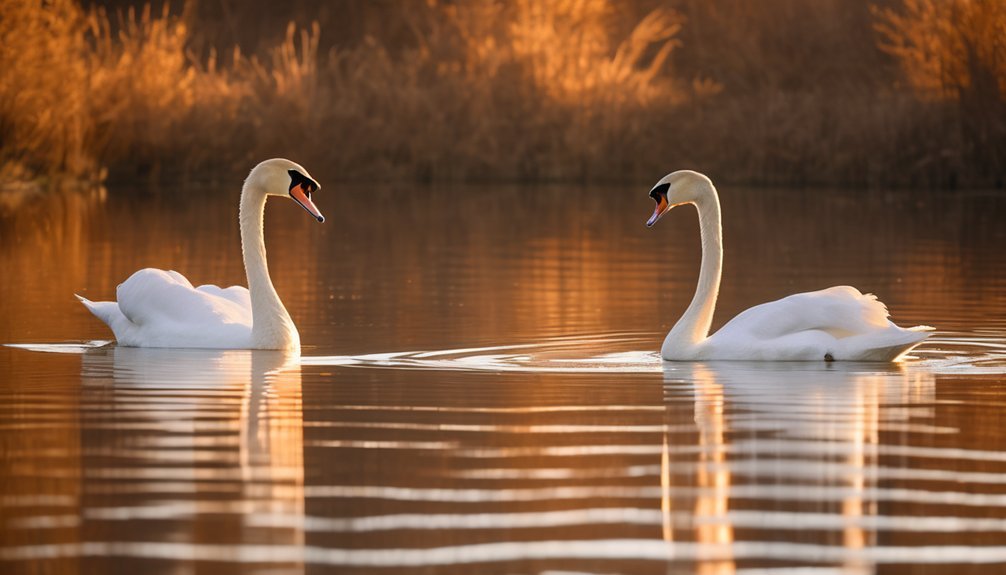
When you watch swans glide across a lake, their calm movements can make their bond seem effortless, but that partnership is often the result of years of steady loyalty.
You’ll notice swans’ courtship in graceful synchronized swimming, gentle head dipping, and quiet mutual grooming, each gesture building trust. Once paired, they often return to the same mate season after season, choosing one another with remarkable consistency.
Their nesting behaviors show the same devotion: both partners help gather reeds, defend the nest, and care for the eggs. This shared effort creates a secure space for new life.
If you observe them closely, you can see how tenderness and cooperation shape a bond that feels deeply intimate, yet remains grounded in practical, enduring commitment.
Gibbons: Strong Family Bonds
If swans show how devotion can endure in pairs, gibbons reveal another kind of lasting attachment: a family unit built on constant closeness.
You’ll notice that these small apes depend on each other for safety, comfort, and daily rhythm. In the treetops, gibbon habitats give them space to swing, rest, and stay near their group.
Their gibbon communication is rich and purposeful, with calls that help family members mark territory, warn of danger, and reconnect after movement. You can hear how their bond supports cooperation without losing independence.
Parents nurture young for years, and each member stays attentive to the others’ needs. That steady care shows you how loyalty can live within a family, not just between partners.
Seahorses: Faithful Pairing in the Sea
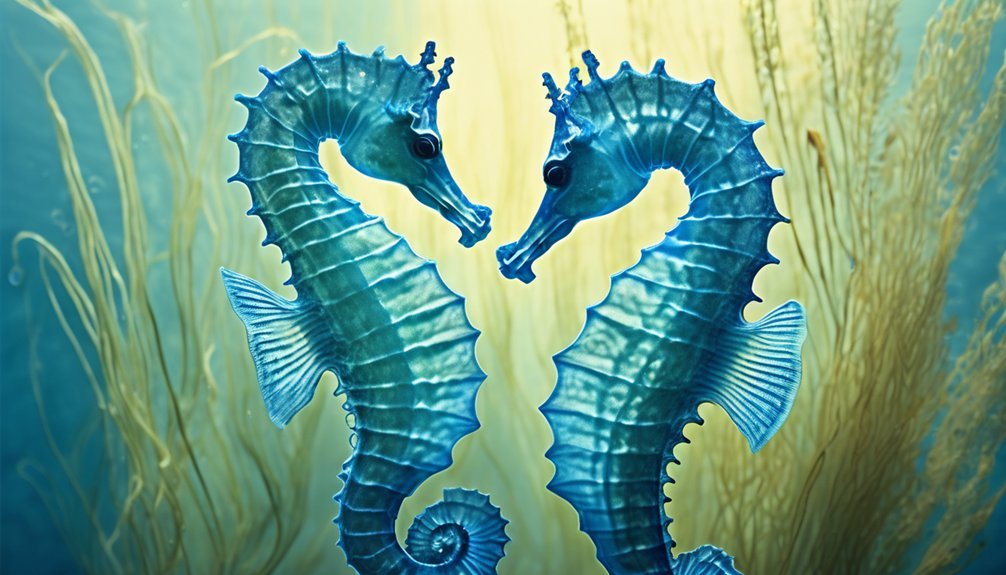
Seahorses show loyalty in an unusual but striking way, because many species form pair bonds that can last through a breeding season or even longer.

You can see this devotion in their unique courtship, when partners brighten, sway, and mirror each other’s movements. During seahorse mating, the female places her eggs into the male’s brood pouch, and he carries them until they’re ready to hatch.
That shared role creates a close rhythm between them, built on trust and timing. You may find their connection especially moving because it depends on careful coordination rather than grand displays.
In the quiet seagrass, you’re witnessing a partnership that’s gentle, practical, and deeply personal, reminding you that fidelity can thrive even beneath the waves.
Albatrosses: Ocean Travelers That Reunite
Albatrosses spend most of their lives far out over the ocean, yet many return year after year to the same nesting sites and, often, to the same mate. You can see their devotion in graceful courtship rituals that help pairs reconnect after long absences. Their migration patterns carry them across immense distances, but home still pulls them back.
| Trait | What you notice | Why it matters |
|---|---|---|
| Lifelong bond | Repeated reunions | Strengthens trust |
| Courtship rituals | Synchronized displays | Confirms the pair |
| Migration patterns | Wide ocean journeys | Enduring site fidelity |
If you watch an albatross closely, you’ll sense patience, memory, and quiet loyalty. These seabirds remind you that love can survive storms, distance, and time.
Penguins: Partners in Parenting
While many animals pair up to raise young, penguins stand out for the steady teamwork they bring to parenthood. You can see their bond in courtship rituals, where pairs call, bow, and offer pebbles to strengthen trust.
Once they mate, they share parenting roles with quiet devotion.
- You may watch one partner guard the nest while the other gathers food.
- You’ll notice both parents take turns warming the egg against the cold.
- You can feel their care in the way they protect chicks and answer each other’s calls.
This shared effort isn’t flashy, but it’s deeply tender. When you look at penguins, you see a relationship built on attention, patience, and mutual support.
Why Lifelong Bonds Help Animals Survive
Lifelong bonds do more than create touching stories; they can give animals a real survival advantage. When you watch animals stay close to one another, you’re seeing social structures that reduce risk and improve survival strategies.
A trusted partner can help you find food, defend territory, and raise young with less energy wasted. These emotional connections also lower stress, which can strengthen health over time.
In harsh seasons, resource sharing becomes vital: one animal may guide another to shelter, water, or safer ground. Bonds like these let each individual respond faster to danger and recover more quickly from setbacks.
In nature, affection isn’t just tender; it’s practical, and it often means the difference between struggle and survival.
Frequently Asked Questions
Which Animals Besides These Also Form Lifelong Bonds?
You’d also see lifelong bonds in swans, wolves, penguins, parrots, and prairie voles. Their social structures, emotional intelligence, cooperative breeding, and attachment styles often support enduring pairings, helping you appreciate their deep, tender loyalty.
Do Lifelong Bonds Guarantee Successful Reproduction Every Time?
No—lifelong bonds don’t guarantee reproductive success, even when your pair seems perfectly matched. Bonding mechanisms can strengthen cooperation, but fertility, timing, health, and environment still shape outcomes. You’ll see devotion; nature won’t always promise babies.
How Do Young Animals Learn Bonding Behaviors?
You see young animals learn bonding behaviors through social learning, watching parents and peers, then practicing grooming, vocalizing, and closeness. Early care shapes attachment styles, helping them trust, connect, and seek comfort confidently.
Can Environmental Changes Break Animal Pair Bonds?
Yes, environmental changes can break pair bonds. If you face environmental stress or habitat loss, you’ll see animals spend more energy surviving, which can weaken trust, disrupt breeding, and sometimes separate bonded partners.
Are Lifelong Bonds Always Between Male and Female Partners?
No—you’ll find lifelong bonds aren’t always male-female. In many species, you’ll see same sex partnerships shaped by social structures, and they can be just as enduring, affectionate, and important for survival.
Conclusion
As you can see, when animals form lifelong bonds, they’re not just making partners—they’re building a safer path through life. You’ll find that wolves, swans, gibbons, seahorses, albatrosses, and penguins each rely on steady companionship to raise young, share duties, and weather hard times. These gentle partnerships don’t erase life’s challenges, but they do soften them, offering comfort, balance, and a lasting edge that helps both mates and their offspring thrive.