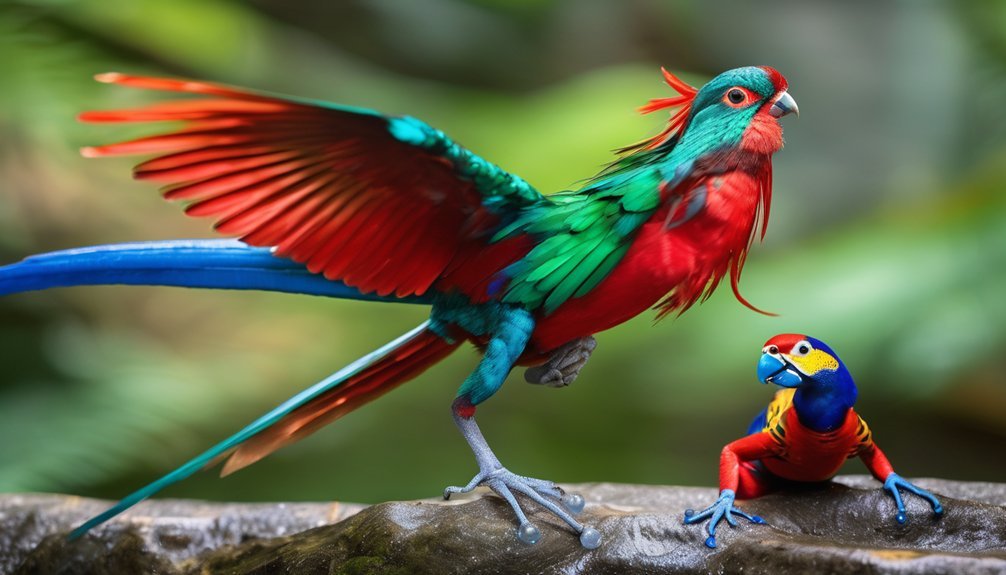
You may not know that many of the brightest animal colors aren’t decorative at all. You’ll find that birds, reef fish, frogs, reptiles, and insects use vivid pigments and structural effects for mating, warning, and camouflage. These traits can shift with habitat and behavior, and some species even appear to glow under certain light. What makes one animal stand out so strongly, however, is only part of the story.
Key Takeaways
- Birds like parrots, birds-of-paradise, and hummingbirds show some of Earth’s brightest plumage through pigments and microscopic feather structures.
- Reef fish often appear neon or glowing because fluorescent pigments and skin structures absorb and re-emit blue light.
- Tropical frogs, especially poison dart frogs, display vivid warning colors that signal toxicity to predators.
- Beetles, butterflies, and mantids can show iridescent, metallic colors caused by microscopic surface structures.
- Bright coloration helps animals survive by attracting mates, deterring predators, and improving camouflage in specific habitats.
Why Animals Develop Bright Colors
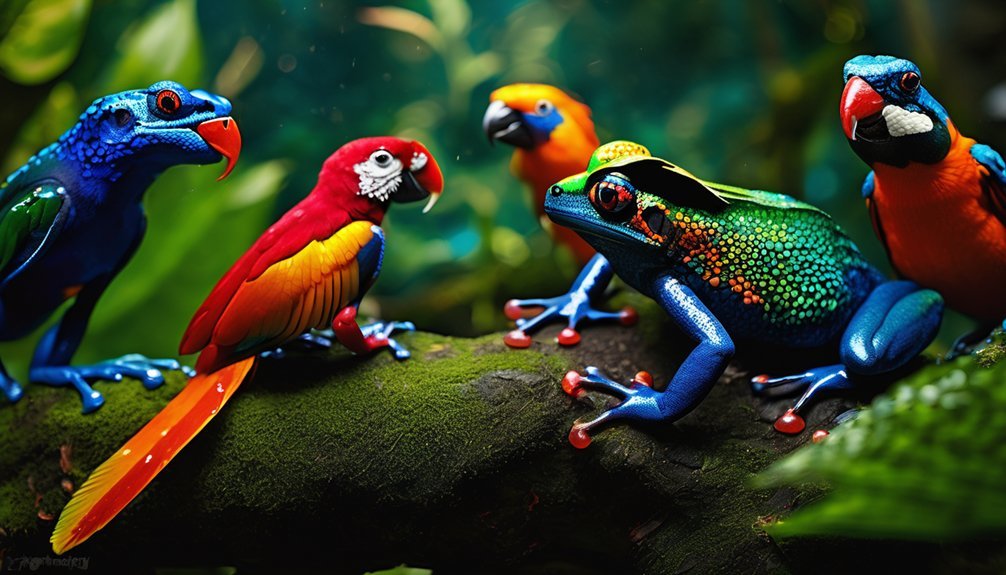
Bright colors in animals often evolve because they help individuals survive and reproduce. You can see them as signals shaped by natural selection, where pigmentation, structural light reflection, or both improve success in specific habitats.
Some species gain camouflage in flowers, reefs, or leaf litter, while others use warning patterns to deter predators. In many cases, sexual selection also favors vivid traits because mates notice and choose them more often.
Some species blend into flowers or reefs, while others flash warning colors or court mates with vivid traits.
You’ll find that environmental adaptation can strengthen or limit these colors, depending on temperature, diet, light, and background.

When you observe bright animals closely, you’re seeing biology balancing attraction, defense, and habitat fit. These colors don’t appear by chance; they reflect long-term evolutionary pressures acting on survival and reproduction.
Birds With the Brightest Plumage
Among vertebrates, birds show some of the most vivid plumage on Earth, with colors produced by pigments such as carotenoids and melanins, as well as by microscopic feather structures that scatter light.
You’ll often notice that tropical birds display the strongest hues, including scarlet, emerald, cobalt, and gold. These color patterns can signal species identity, courtship quality, age, and health.
In parrots, hummingbirds, tanagers, and birds-of-paradise, you can see how feather arrangement and surface texture intensify brightness without changing pigment levels.
You may also observe that many bright species live in dense forests, where vivid plumage helps them stand out to mates while remaining behaviorally specialized.
Their coloration reflects adaptation, not decoration alone, and it varies predictably across lineages, habitats, and ecological roles.
Fish That Glow in Coral Reefs
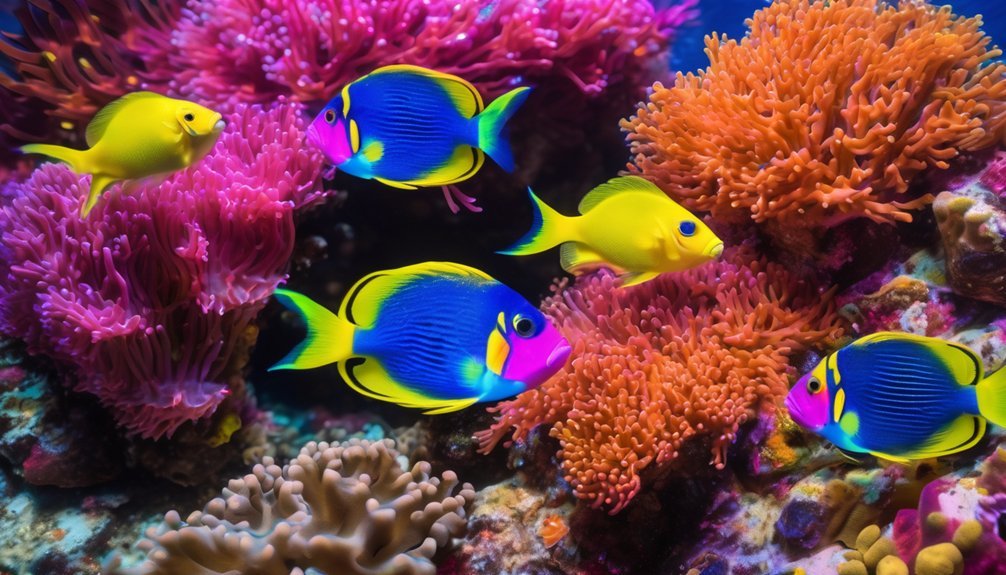
In coral reefs, many fish appear to glow because their bodies contain fluorescent pigments and specialized skin structures that absorb blue light and re-emit it at longer wavelengths. You can see this effect in wrasses, gobies, and parrotfish, which use vivid colors for communication, camouflage, and mate recognition.
In reef ecosystems, low light filters red wavelengths, so these pigments stand out more clearly to your eyes. Some bioluminescent species produce their own light, but most glowing reef fish depend on fluorescence rather than internal chemical emission.
You’re observing an adaptation shaped by water depth, habitat complexity, and predator pressure. This optical signal helps researchers identify species diversity and track how color influences behavior in crowded reef communities.
Frogs, Reptiles, and Insects in Neon
Unlike the reef fish described earlier, many frogs, reptiles, and insects display neon-like colors through pigments, structural reflectance, or ultraviolet patterns that you may not see with ordinary vision.
You can find these signals in neon habitats such as tropical forests, wetlands, and leaf litter. Poison dart frogs often show bright skin pigments, while geckos and chameleons can present intense greens, yellows, or blues from organized skin structures.

Many beetles, butterflies, and mantids add iridescence through microscopic surfaces that bend light. These vibrant adaptations reflect evolutionary diversity, and they vary by species, life stage, and environment.
When you observe them closely, you notice that color can be far more complex than simple brightness, with patterns shaped by chemistry, physics, and development.
How Color Helps Animals Survive
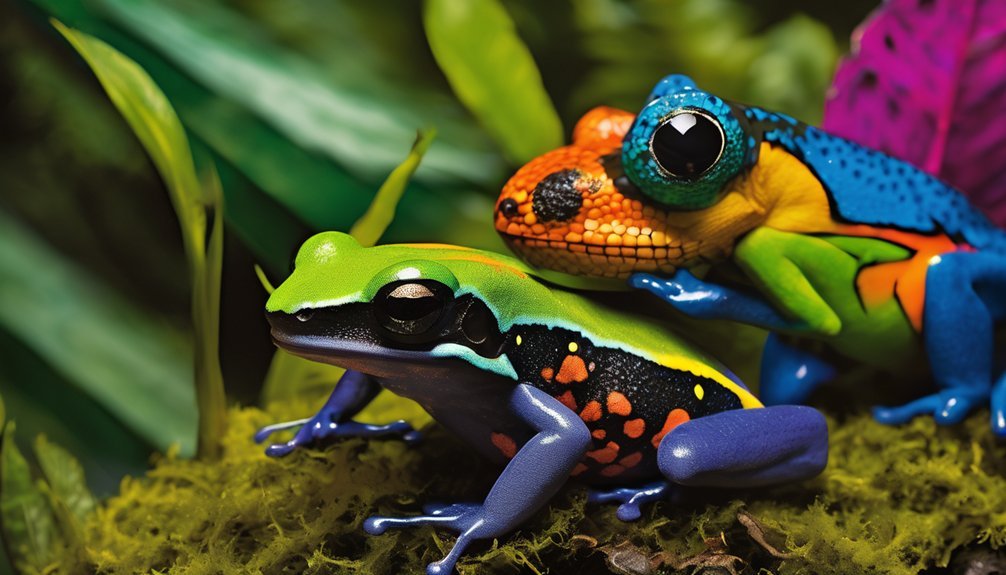
Color in animals often does more than create visual appeal; it helps them avoid predators, find mates, and communicate with others. You can see that coloration works as a survival tool, not just decoration. Many species use camouflage strategies that match leaves, bark, sand, or water, reducing detection by predators. Other animals rely on bright patterns in mating displays, signaling health and genetic quality to potential partners. Color can also warn predators that a species tastes bad or carries toxins.
| Function | Survival effect |
|---|---|
| Camouflage | Lowers visibility |
| Signaling | Improves mating success |
When you study these traits, you notice that selection favors colors that fit each species’ environment and behavior.
Most Colorful Animals in Nature
Among the world’s most striking species, some animals display colors so vivid that they seem almost impossible in nature. You can see this in mandarin fish, poison dart frogs, peacocks, and reef cuttlefish, each of which uses distinct color patterns for signaling, camouflage, or warning.
In birds, pigments and feather structure often create intense blues, greens, and reds. In amphibians and insects, skin chemistry and microscopic surfaces can amplify brightness.
You’ll also notice strong habitat influence: tropical reefs, rainforests, and sunlit grasslands favor vivid display, while dimmer environments often support subtler tones.
These animals don’t look colorful by chance; evolution shapes their appearance through survival pressures, mate choice, and ecological demands.
Frequently Asked Questions
Which Animals Change Color With Seasons?
You’ll find animals like snowshoe hares, arctic foxes, ptarmigan, and ermine changing coat color with seasons. They use color adaptation for seasonal camouflage, helping you blend into snow or summer landscapes and avoid predators.
Do Colorful Animals Use Pigments or Structural Colors?
You’ll find colorful animals use both pigments and structural colors: pigments absorb light through pigment production, while microscopic tissues create structural adaptation that reflects specific wavelengths. Many species combine both mechanisms for vivid, controlled coloration.
Can Bright Colors Affect Animal Health?
Yes—bright colors can signal your health, like a lantern’s glow. You’ll see color perception shaping mates’ choices, while health indicators, such as pigment intensity, often reveal diet, stress, or disease in animals.
Which Colorful Animals Are Endangered?
Many colorful animals are endangered species, including pandas, macaws, poison dart frogs, sea turtles, and reef fish. You’ll often find habitat loss, pollution, and illegal trade driving their declines, scientifically and measurably.
How Do Scientists Measure Animal Coloration?
Scientists measure animal coloration with spectrophotometers, cameras, and calibrated light sources. You compare reflectance across wavelengths, then analyze color perception and visual communication statistically, so you can quantify what animals actually display.
Conclusion
In conclusion, you can see that color in animals is more than decoration; it is a survival tool shaped by evolution. Across birds, fish, frogs, reptiles, and insects, bright pigments and structural colors support mating, warning signals, and camouflage. One striking fact is that nearly 99% of animal species are invertebrates, and many of them use vivid coloration. By observing these traits, you can better understand how nature turns color into function.