It’s funny how a simple trip to the store can lead you to realize just how many potential hazards lurk in your home for your pet. Every room can present its own set of challenges, from exposed wires to small objects waiting to be swallowed. Understanding how to effectively pet-proof your space is crucial for their safety and your peace of mind. Let’s explore the best strategies to ensure your home is a secure haven for your furry friend.
Key Takeaways
- Assess each room for hazards like exposed wires, toxic plants, and small objects that pets could swallow.
- Invest in pet gates and safety locks to restrict access to dangerous areas and harmful items.
- Use corner protectors and non-slip mats to minimize injuries from sharp furniture and reduce accidents.
- Designate safe zones with comfortable bedding, toys, and water for pets to retreat when needed.
- Regularly monitor your pet’s behavior and adjust safety measures as they grow and their needs change.
How to Identify and Address Pet Hazards

When you bring a pet into your home, it’s essential to assess your environment for potential hazards. Start by walking through each room, looking for items that could pose a risk. Common dangers include exposed wires, toxic plants, and small objects your pet might swallow.
Don’t forget to check your cleaning supplies—many are harmful if ingested. Consider your furniture too; sharp edges and unstable items can lead to accidents.
You can enhance pet safety by securing loose items and using childproof latches on cabinets. Regular hazard assessments will help you stay one step ahead.

Choosing the Right Pet-Proofing Products
Finding the right pet-proofing products can make all the difference in creating a safe home for your furry friend. Start by investing in sturdy pet gates to restrict access to areas that might pose hazards. Look for gates that are easy to install and can withstand your pet’s enthusiasm.
Next, consider safety locks for cabinets and drawers, ensuring that harmful substances remain out of reach. These locks can prevent your curious companion from exploring cleaning supplies and other dangerous items.
Additionally, opt for corner protectors and non-slip mats to minimize accidents. By choosing the right products, you not only enhance your home’s safety but also provide peace of mind, allowing you to enjoy your time together worry-free.
Securing Furniture and Fragile Items
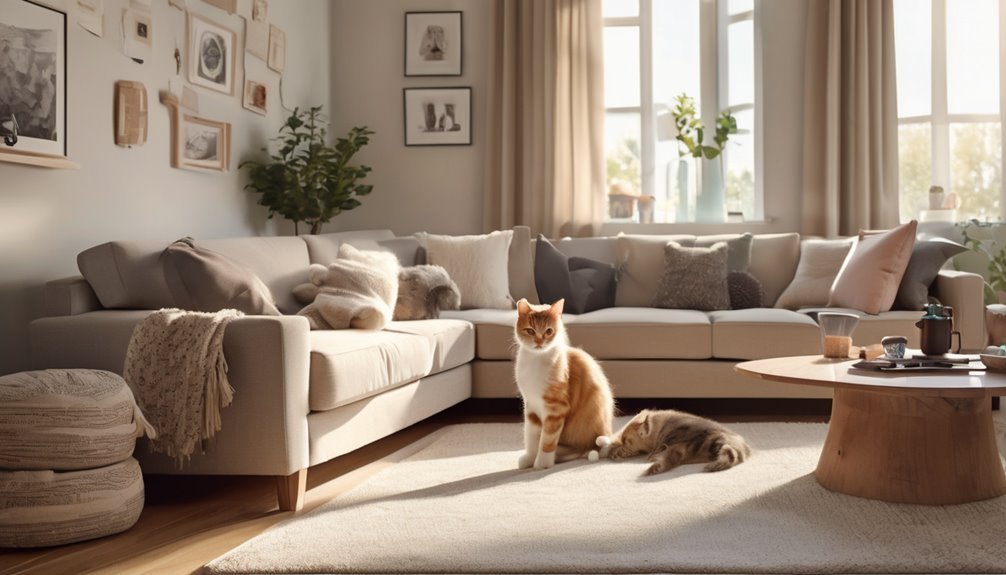
After ensuring your home is equipped with the right pet-proofing products, it’s time to focus on securing your furniture and fragile items. Start by using furniture barriers to keep your pets away from areas where they might cause damage. Consider rearranging your space to minimize access to delicate items.
| Action | Solution | Benefit |
|---|---|---|
| Use furniture barriers | Block off areas | Prevents accidents |
| Store fragile items | High shelves | Reduces breakage |
| Anchor heavy furniture | Secure to walls | Prevents tipping |
Pet-Proofing: Creating Safe Spaces for Your Pets
Creating safe spaces for your pets is essential to ensure their well-being and your peace of mind.
Designate safe zones in your home where your pets can retreat when they need quiet or feel overwhelmed. These areas should be free from hazards and equipped with comfortable bedding, toys, and fresh water.
Consider creating pet retreats in different rooms, using barriers like gates to limit access to more hazardous areas. Ensure these safe zones are cozy and inviting, so your pets feel secure.
Creating cozy pet retreats with barriers ensures your furry friends feel secure and safe while exploring your home.
Regularly check these spaces to keep them clean and stocked. By providing dedicated safe zones, you help your pets relax and thrive while keeping your home safe and welcoming for everyone.
Training Techniques to Keep Your Pets Safe
While pets can bring joy to our lives, their safety often hinges on effective training techniques. One of the best methods is clicker training, which uses a sound to mark desired behaviors.

Begin by pairing the clicker with treats, reinforcing positive actions like sitting or staying. This method builds a clear connection between behavior and reward.
Incorporate positive reinforcement consistently; when your pet follows commands, reward them immediately. This approach not only encourages good behavior but also strengthens your bond.
Make training sessions short and engaging, keeping your pet mentally stimulated. With patience and practice, you’ll create a safe environment where your pet understands expectations, reducing the likelihood of accidents and mishaps around the house.
Monitoring Your Pet’s Behavior for Safety
To ensure your pet’s safety, it’s essential to actively monitor their behavior throughout the day. Pay attention to their behavioral cues; they often indicate how your pet feels in different situations. Look for safety signals like sudden changes in energy or unusual reactions to sounds or objects.
| Behavioral Cues | Safety Signals | Actions to Take |
|---|---|---|
| Excessive barking | Hiding or cowering | Investigate the source |
| Aggressive play | Whining or pacing | Redirect their focus |
| Loss of appetite | Vomiting or lethargy | Consult a vet |
Adjusting Pet-Proofing for Growing Pets
As your pet grows, their needs and behaviors evolve, requiring you to adjust your pet-proofing strategies accordingly.
As your pet matures, adapt your home to meet their evolving needs and ensure a safe, stimulating environment.
Puppies and kittens may start off small, but as they grow, their curiosity and energy levels increase. You’ll need to reassess your home for potential hazards, like low shelves or easily accessible cords that weren’t a concern before.
Watch for behavioral changes as your pet matures; they might start climbing or jumping onto surfaces you thought were safe.
Consider investing in taller barriers or more secure storage solutions for hazardous items. Regularly updating your pet-proofing measures ensures a safe environment that meets your pet’s growing needs while nurturing their adventurous spirit.
Always be proactive to keep your home a safe haven.
Choosing Pet-Friendly Plants for Your Home
With your pet’s growing curiosity and adventurous spirit, it’s important to consider the plants you bring into your home. Choosing non-toxic varieties ensures your furry friend stays safe while you enjoy indoor gardening.
Look for pet-friendly options like spider plants, Boston ferns, and bamboo palms, which not only thrive indoors but also purify the air. Avoid plants like lilies, philodendrons, and sago palms, as they can be harmful if ingested.
When selecting plants, think about placement too; keeping them out of reach can prevent unwanted snacking. Regularly check for any fallen leaves or debris that might tempt your pet.
Conclusion
By taking the time to pet-proof your home, you’re crafting a safe haven for your furry family members, much like a gardener tends to their plants. With careful attention to hazards, the right products, and designated safe spaces, you’re nurturing their well-being and happiness. Remember, as your pets grow and their needs change, so should your safety measures. Stay vigilant and adaptable, and you’ll ensure a secure environment where your pets can thrive.