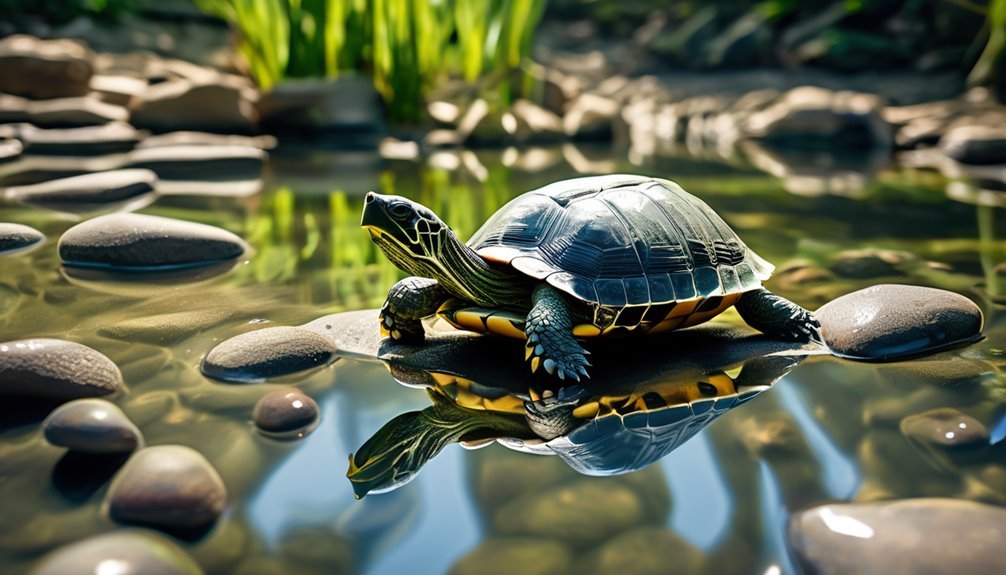
When you bring home a pet turtle, like a red-eared slider, you quickly realize their needs are specific and must be met for them to thrive. A proper habitat, balanced diet, and regular health check-ups are crucial. Understanding these elements not only ensures your turtle’s well-being but also enriches your experience as a pet owner. What are the essential components of their care that you might be overlooking?
Key Takeaways
- Provide a spacious tank with proper filtration, maintaining water temperature between 75°F and 80°F for optimal health.
- Create a basking area using a heat lamp to help regulate your turtle’s body temperature.
- Offer a balanced diet with protein, vegetables, and occasional fruits tailored to your turtle’s species.
- Schedule regular veterinary check-ups and monitor for shell health and behavioral changes.
- Enhance the habitat with hiding spots, interactive toys, and natural substrates for a stimulating environment.
How to Choose the Right Habitat for Your Pet Turtle
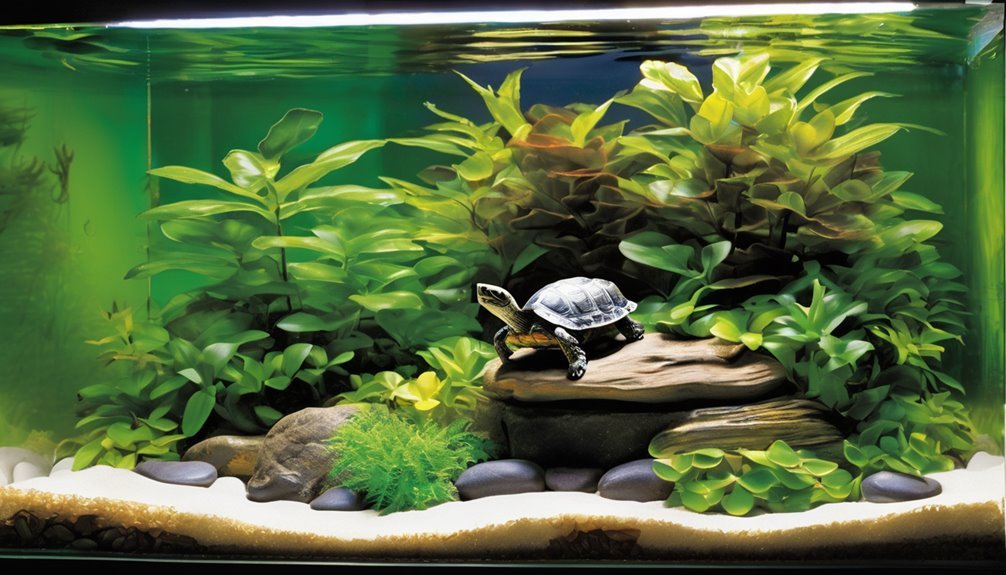
When choosing the right habitat for your pet turtle, what factors should you consider to ensure a healthy environment?
First, ensure the habitat size is adequate; a larger tank promotes swimming and exploration.
Invest in reliable tank filtration to maintain clean water and optimal water temperature, ideally between 75°F and 80°F.

Reliable tank filtration is essential for maintaining clean water and keeping your turtle’s habitat at the optimal temperature of 75°F to 80°F.
Create a basking area with a heat lamp, allowing your turtle to regulate its body temperature.
Choose suitable substrate options, like sand or gravel, to support natural behaviors.
Incorporate hiding spots using rocks or decorations for security.
Don’t forget the lighting requirements; UVB lighting is crucial for shell health.
Finally, adding aquatic plants enhances the environment, offering shelter and improving water quality.
Understanding Your Turtle’s Dietary Needs
Understanding your turtle’s dietary needs is crucial for maintaining its health and vitality. Proper turtle feeding involves a balanced diet rich in protein, vegetables, and occasional fruits. It’s important to recognize that different species have specific requirements. Incorporating nutritional supplements can also enhance your turtle’s diet, ensuring they receive essential vitamins and minerals.
| Food Type | Examples | Frequency |
|---|---|---|
| Protein Sources | Insects, Fish | 2-3 times/week |
| Vegetables | Kale, Carrots | Daily |
| Fruits | Strawberries | Occasionally |
Top Health Care Tips for Your Turtle
Caring for your turtle’s health requires consistent attention and proactive measures. Start by ensuring your turtle receives regular veterinary check-ups, including necessary turtle vaccinations to keep illnesses at bay.
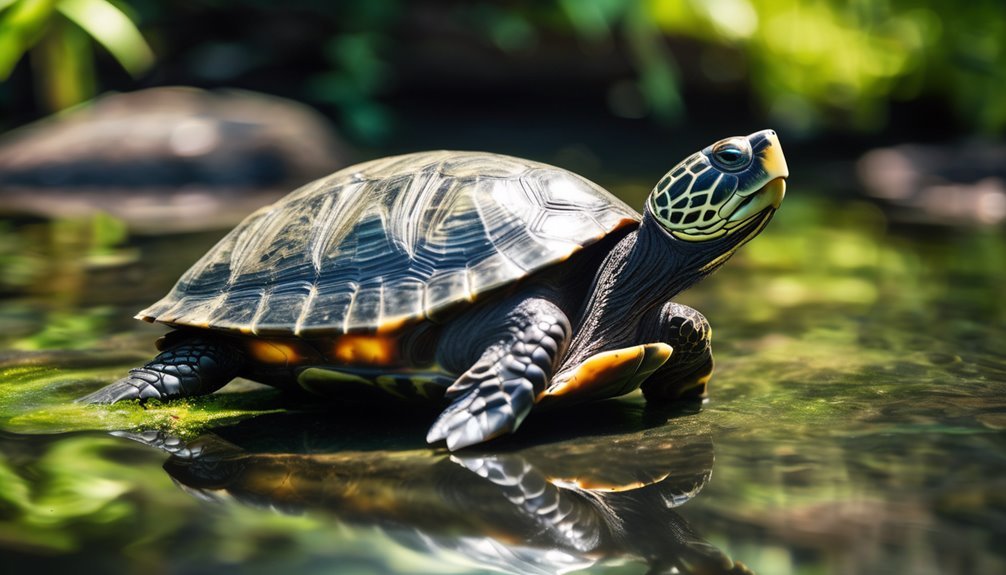
Proper shell maintenance is crucial; regularly inspect for cracks or discolorations, and provide a basking area to promote healthy shell growth. Ensure the habitat is clean and the water is filtered to prevent bacterial infections.
Monitor your turtle’s diet closely, offering a balanced mix of proteins, vegetables, and supplements. Hydration is essential, so provide fresh water daily.
Lastly, watch for any behavioral changes, as these can indicate health issues. By staying vigilant and proactive, you can help your turtle thrive.

Identifying Common Health Issues in Turtles
Turtles, like all pets, can face a variety of health issues that owners need to recognize early.
One common concern is shell discoloration, which can arise from poor diet, water quality, or infections. If you notice yellowing or soft spots, it’s crucial to assess their habitat and nutrition.
Additionally, be vigilant for respiratory infection symptoms, such as wheezing, lethargy, or watery eyes. These signs often indicate a need for immediate veterinary attention.
Regularly monitor your turtle’s behavior and physical condition, as early detection can lead to better outcomes.
How to Create a Stimulating Environment for Your Turtle
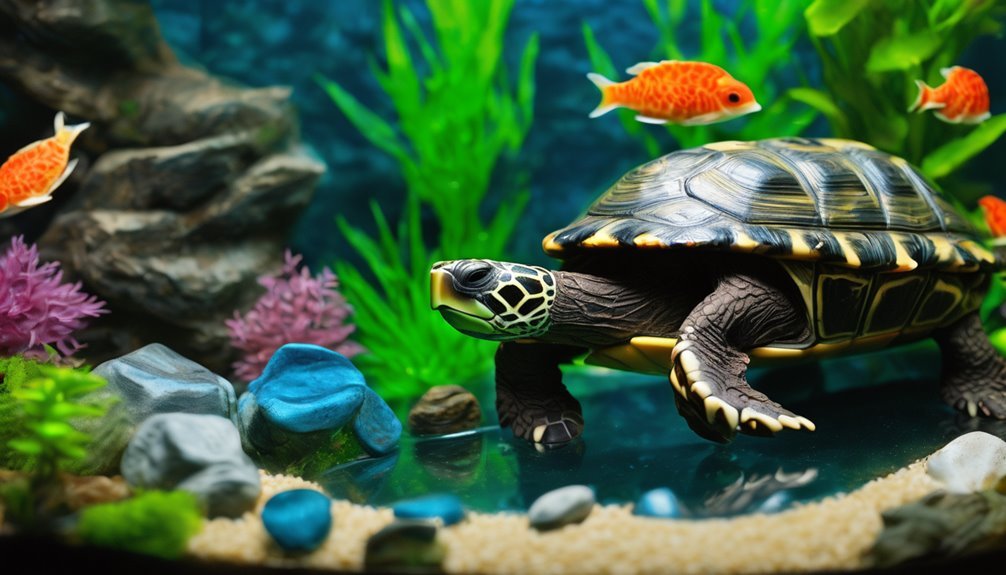
A healthy turtle thrives in an environment that stimulates its natural behaviors and instincts. Start by ensuring the water temperature is optimal, typically between 75-80°F, to keep your turtle active. Incorporate interactive toys like floating logs or tunnels to encourage exploration and play.
Here’s a simple guide to enhance your turtle’s habitat:
| Element | Purpose |
|---|---|
| Water Plants | Provide hiding spots and food |
| Substrate | Mimics natural habitats |
| Basking Area | Essential for thermoregulation |
| Interactive Toys | Stimulate mental activity |
Tips for Socializing With Your Turtle
While socializing with your turtle may take time, building trust can lead to a rewarding bond. Start by observing your turtle’s behavior; patience is key.
Engage in gentle turtle interaction by talking softly or playing calming music nearby. Try bonding exercises like hand-feeding treats; this can create positive associations.
Spend time near their habitat, allowing your turtle to become familiar with your presence without forcing interaction. Gradually introduce short sessions of handling, supporting their shell securely to minimize stress.
How to Handle Seasonal Changes in Turtle Care?
As the seasons change, your turtle’s care needs will shift, requiring you to adapt your approach to ensure their health and well-being.
Monitor the seasonal temperature closely, as fluctuations can impact your turtle’s metabolism and activity levels. During warmer months, provide ample UVB lighting and maintain water temperatures between 75-80°F to encourage feeding and basking.
Monitor seasonal temperatures closely, as they impact your turtle’s metabolism. Provide UVB lighting and maintain water temperatures between 75-80°F during warmer months.
As temperatures drop, begin hibernation preparation if your turtle is a species that requires it. Gradually decrease the temperature and feeding frequency, allowing your turtle to enter a state of dormancy safely.
Always provide a suitable hibernation environment, ensuring it’s dark, cool, and secure. By staying vigilant and responsive to seasonal changes, you’ll help your turtle thrive year-round.
Conclusion
By providing a nurturing haven for your pet turtle, you’re not just meeting their needs; you’re enriching their lives. As you guide them through their aquatic ballet and basking moments, remember that every little effort counts. Your dedication to their habitat, diet, and health ensures they thrive in their serene world. Embrace the joy of watching them explore, and you’ll forge a bond that transcends the everyday, turning routine care into a beautiful journey of companionship.