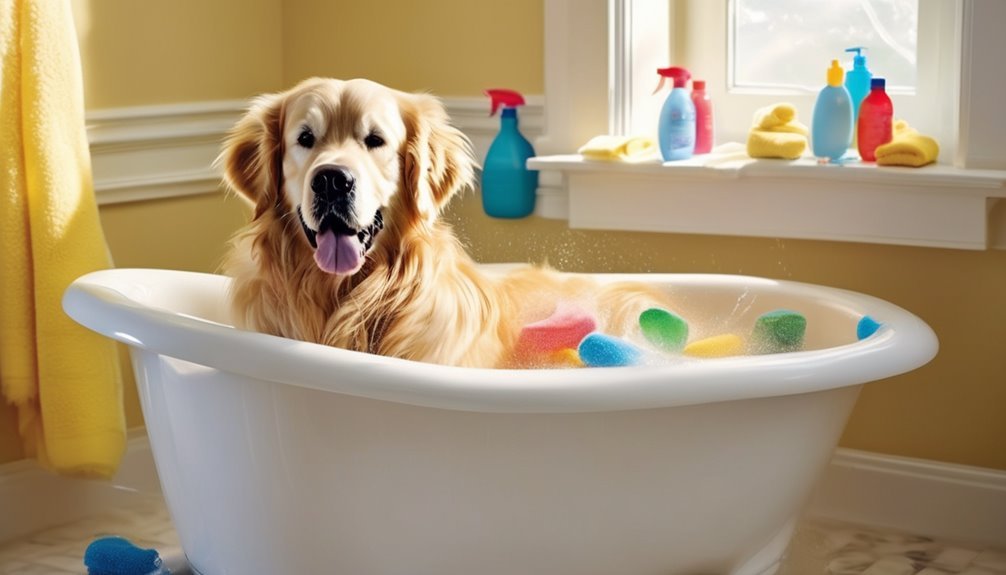
Imagine your dog, Max, a golden retriever who loves to roll in the mud after every rainstorm. Bathing him properly is essential not just for cleanliness but also for his skin health. You want to ensure the experience is as stress-free as possible, both for you and Max. Understanding the right techniques and tools can make all the difference. So, how do you set the stage for a successful bath?
Key Takeaways
- Use a gentle, natural dog shampoo to avoid irritation and maintain skin health.
- Gradually wet the coat with lukewarm water, ensuring comfort throughout the bath.
- Rinse thoroughly to remove all shampoo, avoiding sensitive areas like ears and eyes.
- Dry with a towel by patting, and brush the coat afterward to check for skin issues.
- Reinforce positive behavior with treats and maintain a calm, enjoyable environment.
Why Bathing Your Dog Matters
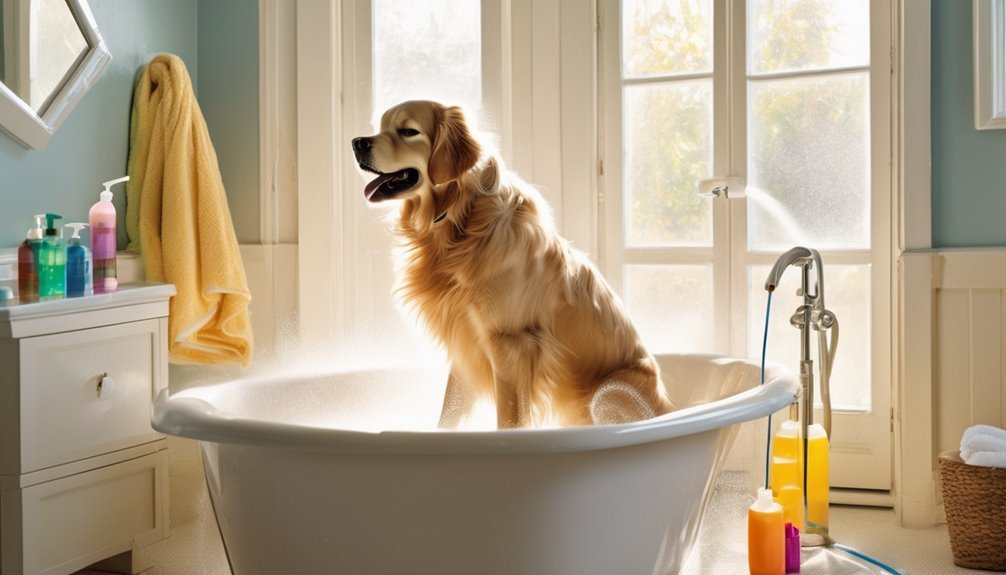
Bathing your dog isn’t just about keeping them looking clean; it plays a crucial role in their overall health and well-being.
Regular baths help maintain skin health by removing dirt, allergens, and excess oils that can irritate their skin. A clean coat not only feels good but also promotes a shiny, healthy appearance.
When you wash your dog, you’re also checking for any unusual lumps, bumps, or skin issues that might need attention. This routine care helps prevent infections and other health problems.
Plus, a well-groomed dog often enjoys better comfort and happiness.

Choosing the Best Dog Shampoo for Bathing
When selecting the best dog shampoo for bathing, it’s important to consider your pet’s specific needs.
Look for shampoos that feature natural ingredients, as these are gentler on your dog’s skin and coat. If your dog has skin sensitivities, avoid harsh chemicals and synthetic fragrances, as they can cause irritation.
Choose natural ingredient shampoos to protect your dog’s skin and coat, especially if they have sensitivities. Avoid harsh chemicals and synthetic fragrances.
Opt for products formulated for your dog’s breed or coat type, which can enhance their natural beauty and health. Additionally, consider shampoos with soothing properties like oatmeal or aloe vera, which can calm irritated skin.
Always do a patch test first to ensure your dog won’t react negatively. By choosing the right shampoo, you’ll make bath time a more enjoyable experience for both of you.
Preparing Your Dog for a Smooth Bath Time
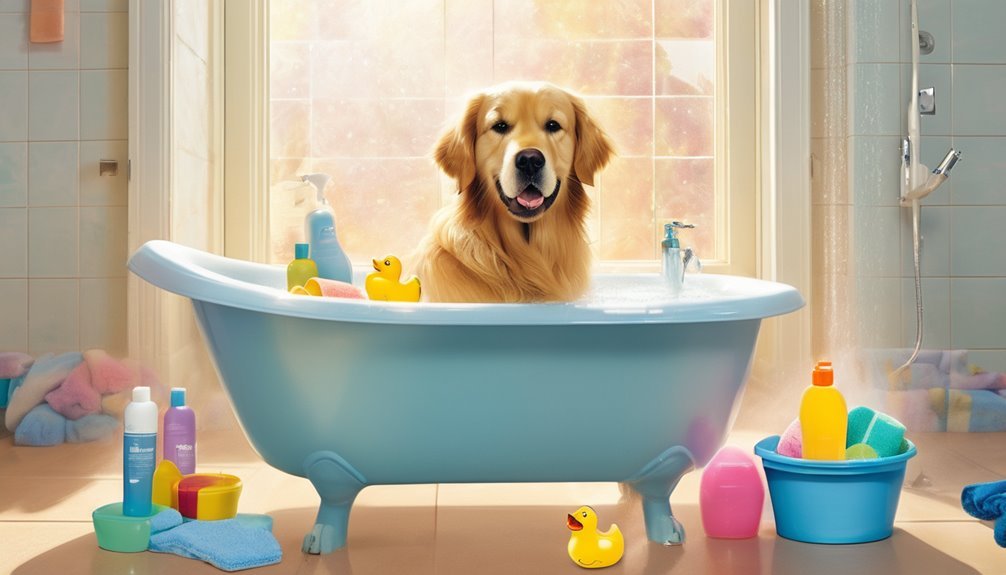
To ensure a smooth bath time, it’s essential to create a calm environment for your dog. Understanding your dog’s behavior can significantly reduce anxiety. If your dog dislikes water, consider giving them a gentle brush beforehand to help them relax.
Here’s a helpful guide on preparing your dog:
| Step | Action | Purpose |
|---|---|---|
| Assess Dog’s Mood | Observe their behavior | Gauge readiness for a bath |
| Create a Routine | Establish a regular bathing schedule | Promote comfort and familiarity |
| Use Treats | Reward them during preparation | Build positive associations |
| Ensure Safety | Remove hazards from the area | Prevent accidents during bathing |
Bathing frequency varies by breed, so find a balance that suits your dog’s needs while keeping them comfortable.
Create a Stress-Free Bathing Area
Creating a stress-free bathing area can significantly enhance your dog’s experience. Start by choosing a space that feels safe and familiar, like your bathtub or a designated washing area.
To ensure bathtub safety, place a non-slip mat at the bottom to prevent slips. Dim the lights and use calming scents, such as lavender or chamomile, to create a soothing atmosphere. You might even play gentle music to help ease any anxiety.
Keep all necessary supplies within reach, so you won’t need to leave your dog unattended. Lastly, consider having treats on hand to reward your furry friend for their bravery. A well-prepared environment can make bath time a pleasant bonding experience for both of you.
Wetting Your Dog’s Coat Effectively
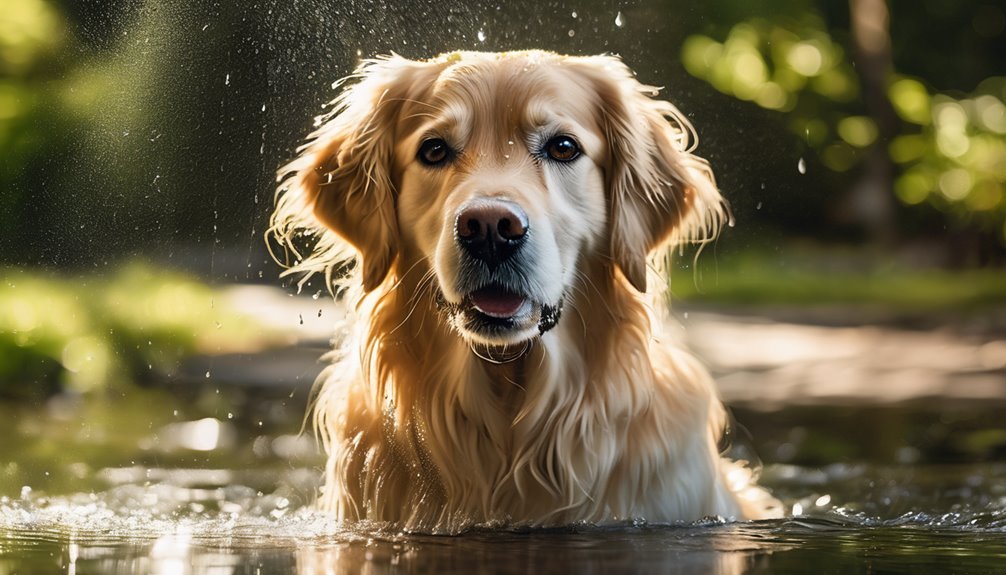
As you begin wetting your dog’s coat, it’s essential to approach the process gently to keep them calm and comfortable.
Start by using lukewarm water, as extreme temperatures can frighten or discomfort them. If your dog has a thick coat, ensure you’re thoroughly saturating it, while for short-haired breeds, a quick rinse is often sufficient.
Begin with lukewarm water to keep your dog comfortable, thoroughly saturating thick coats while a quick rinse works for short-haired breeds.
Use a handheld sprayer or a cup, aiming to wet from the neck down to avoid splashing water in their face. Pay attention to their skin and coat type; some may need more water to penetrate their fur, while others might require less.

Always reassure your dog with a soothing voice, making the experience as pleasant as possible for both of you.
Applying Shampoo the Right Way
Gently massaging the shampoo into your dog’s coat is key to a successful bath. Choosing the right shampoo types, such as hypoallergenic or moisturizing, can make a big difference.
Here are some effective application techniques to consider:
- Dilute the Shampoo: Mix with water for easier distribution and a lighter application.
- Start from the Neck: Apply shampoo at the neck and work your way down, avoiding the eyes and ears.
- Use Your Fingers: Gently massage the shampoo into the coat with your fingers, ensuring you reach the skin.
- Focus on Trouble Areas: Pay extra attention to areas that tend to get dirty, like paws and underbelly.
These steps ensure your dog gets a thorough clean while enjoying the process.
Rinsing Your Dog Thoroughly
After applying the shampoo, rinsing your dog thoroughly is vital to remove any leftover product and prevent skin irritation.
Start by adjusting the water temperature to lukewarm; it should feel comfortable for both you and your dog. Use gentle rinse techniques, like a handheld showerhead or a cup, to avoid overwhelming your pup.
Begin at the neck and work your way down, ensuring you get into all the fur and crevices. Pay special attention to areas like under the belly and behind the ears, where shampoo can linger.
As you rinse, keep an eye on your dog’s body language—if they seem anxious, take a break. A thorough rinse ensures a happy, clean pup!
Drying Your Dog After Bathing
Drying your dog after bathing is crucial for their comfort and health. Wet fur can lead to chills and skin issues, so use effective towel techniques and drying tools. Here’s how to do it right:
- Start with a towel: Choose a large, absorbent towel. Wrap it around your dog and gently squeeze to soak up water.
- Pat, don’t rub: Use a patting motion to avoid tangling their fur. Focus on areas that hold more water, like the belly and paws.
- Use a blow dryer: If your dog tolerates it, set a dryer on low heat. Keep it at least a foot away.
- Finish with a brush: Once mostly dry, use a brush to remove any remaining moisture and prevent mats.
Your dog will appreciate the extra care!
Post-Bath Grooming and Care Tips
Once your dog is mostly dry, it’s the perfect time to focus on post-bath grooming and care.
Start by selecting the right brush based on your dog’s coat type. A slicker brush works wonders for longer fur, while a bristle brush suits shorter coats. Pay attention to your dog’s skin sensitivity; if they show signs of discomfort, switch to a softer option.
Gently brush away any tangles, working from the tips to the roots to avoid pulling. This not only helps prevent matting but also stimulates the skin and distributes natural oils.
After brushing, consider applying a dog-safe conditioner to keep their coat soft.
Lastly, reward your pup with praise or a treat to make the experience enjoyable for both of you!
How to Handle Common Bath Time Challenges
Bath time can be a challenge, especially if your dog isn’t a fan of water. To ease their bath time fears and make the experience smoother, try these tips:
- Secure a Non-Slip Mat: Place a non-slip mat in the tub or on the floor to prevent slipping on slippery surfaces.
- Use Warm Water: Ensure the water’s at a comfortable temperature to help your dog relax.
- Introduce Gradually: Let your dog explore the bath area before getting wet. Use treats to create positive associations.
- Stay Calm and Reassuring: Your energy affects your dog; a calm demeanor can help soothe their nerves.
With patience and care, you can turn bath time into a more enjoyable routine for both of you!
Conclusion
Bathing your dog doesn’t have to be a Herculean task. With the right prep and approach, you can transform it into a bonding experience reminiscent of the legendary tales of loyalty between dogs and their humans. By using gentle shampoo, maintaining a calm environment, and rewarding your pup, you’ll not only keep them clean but also strengthen your bond. So roll up your sleeves and get ready to splash some joy into your dog’s bath time!