Imagine a vibrant underwater paradise, teeming with colorful fish and lush plants, all thriving in harmony. To achieve this, you must first understand the critical process of cycling your fish tank. This foundational step establishes beneficial bacteria, ensuring a stable environment for your aquatic life. Whether you choose the fishless method or the fish-in approach, you’ll need to monitor water quality closely. Let’s explore the best practices to set your tank up for success.
Key Takeaways
- Establish a stable environment by cycling the tank to promote beneficial bacteria that break down ammonia and nitrites.
- Choose a cycling method: either the fish-in method with hardy fish or the fishless method using pure ammonia.
- Monitor ammonia and nitrite levels regularly to ensure a safe environment for beneficial bacteria growth.
- Allow the nitrogen cycle to stabilize, usually taking two to six weeks, and be patient during this process.
- Gradually introduce fish post-cycling while continuing to monitor water parameters and perform regular maintenance.
Why Cycling a Fish Tank Is Critical for Your Fish’s Health
Cycling a fish tank is crucial because it establishes a stable environment for your aquatic pets. This process involves cultivating beneficial bacteria that break down harmful ammonia and nitrites produced by fish waste.
Without these bacteria, your tank can become toxic, leading to stress or even death for your fish. By creating a cycle, you enhance tank stability, allowing your fish to thrive in a balanced ecosystem.
You can achieve this through methods like fishless cycling, where you add ammonia to simulate fish waste, or by introducing hardy fish gradually.

Monitoring water parameters regularly ensures the beneficial bacteria flourish, maintaining the necessary conditions for your aquatic life.
Ultimately, cycling your tank safeguards your fish’s health and longevity.
Understanding the Nitrogen Cycle in Your Fish Tank
Establishing a healthy ecosystem in your fish tank relies heavily on the nitrogen cycle. This process transforms harmful ammonia, primarily from fish waste and uneaten food, into less harmful compounds. Understanding this cycle is crucial for maintaining a stable environment for your fish.
Here’s what you need to know:
- Ammonia Sources: Identify where ammonia comes from, including fish waste and decaying organic matter.
- Beneficial Bacteria: These microorganisms convert ammonia into nitrites and then nitrates, which are less toxic to fish.
- Cycle Completion: The nitrogen cycle can take several weeks to stabilize, so patience is vital during this phase.
Effective Methods for Cycling a Fish Tank
While setting up your fish tank, you’ll want to choose an effective method for cycling it to establish a thriving aquatic environment.
One popular approach is the “fish-in” method, where you introduce a few hardy fish to stimulate the growth of beneficial bacteria. This method, however, can stress your fish and requires careful monitoring of ammonia and nitrite levels.
Alternatively, you could use the “substrate” method, which involves adding live rock or seeded filter media to accelerate bacterial colonization.
Cycling duration typically ranges from two to six weeks, depending on factors like temperature and water conditions.
Whichever method you choose, ensure a stable environment for your beneficial bacteria to flourish and maintain a balanced ecosystem.
Using Fishless Cycling for Your Aquarium
If you’re looking for a stress-free way to cycle your aquarium, fishless cycling is an excellent choice. This method eliminates the risks associated with adding fish during the cycling process.
For a hassle-free aquarium setup, consider fishless cycling—it’s a safe alternative that protects your fish from harmful conditions.
Here are three fishless benefits you’ll enjoy:
- Safer Environment: You won’t expose fish to harmful ammonia levels, allowing for a healthier tank.
- Controlled Ammonia Sources: You can use pure ammonia or ammonia-rich sources like fish food, ensuring precise control over the cycling process.
- Faster Cycle Time: Without fish, you can more effectively cultivate beneficial bacteria, often leading to a quicker establishment of a stable ecosystem.
How to Set up Your Tank With Fish: the Fish-In Method
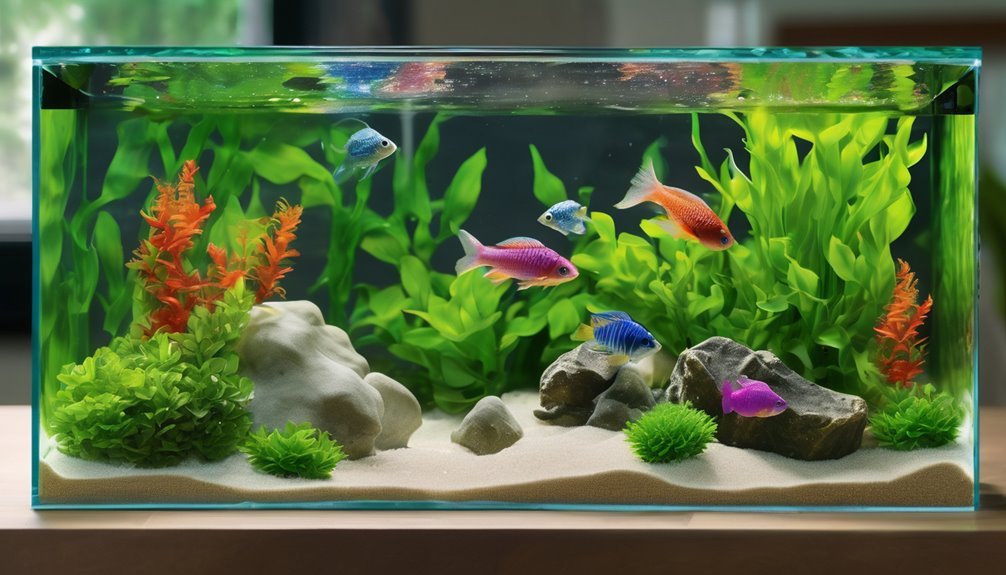
Setting up your tank using the fish-in method requires careful planning and execution to ensure a safe environment for your fish.
Begin with fish selection; choose hardy species that can tolerate fluctuating water conditions, such as Danios or Guppies.

Once you’ve selected your fish, prepare for the acclimation process. Float the sealed bag in your tank for about 15 minutes to equalize temperatures.
Gradually mix tank water into the bag over the next 30 minutes to help your fish adjust to the new environment.
After this, gently release them into the tank, avoiding excess bag water.
Monitor their behavior closely, and be prepared to address any stress signs immediately.
Proper execution at this stage is crucial for your fish’s well-being.
Monitoring Water Quality During Tank Cycling
Monitoring water quality during tank cycling is essential for creating a stable environment for your fish. Regular testing helps you manage key parameters and prevent harmful conditions. Here’s what you should focus on:
- pH Levels: Keep your pH within the ideal range for your fish species to avoid stress.
- Ammonia Spikes: Watch for ammonia spikes, which can harm fish and hinder beneficial bacteria growth.
- Nitrate Buildup: Monitor nitrate levels, as excessive buildup can lead to algae growth and affect tank stability.
Perform water changes as needed to maintain quality, using reliable test kits to track these parameters.
Common Mistakes When Cycling a Fish Tank
When cycling a fish tank, many aquarists unknowingly make critical mistakes that can jeopardize both the tank’s stability and their fish’s health.
One common error is adding too many fish too quickly, leading to dangerous ammonia spikes. This can overwhelm your beneficial bacteria, which are essential for breaking down waste.
Another mistake is neglecting to monitor nitrate buildup; high nitrate levels can also stress your fish and disrupt the cycling process.
Additionally, skipping water changes during the cycle can exacerbate these issues.
Always test your water parameters regularly and adjust your approach based on the results.
Steps to Take After Cycling Your Fish Tank
After successfully cycling your fish tank, it’s time to implement the next steps that will ensure a thriving aquatic environment.
Proper post cycling maintenance is crucial to support the beneficial bacteria that have established themselves. Here’s what you should do:
- Add Fish Gradually: Introduce fish slowly to prevent overwhelming the beneficial bacteria. Start with a few hardy species.
- Monitor Water Parameters: Regularly check ammonia, nitrite, and nitrate levels to ensure they remain stable. This ensures a healthy balance in your tank.
- Maintain Regular Cleaning: Perform partial water changes and clean the substrate weekly to remove waste and debris. This helps sustain the beneficial bacteria and keeps your tank clean.
Following these steps will help your aquarium flourish!
Conclusion
In the end, cycling your fish tank isn’t just a chore; it’s the key to a thriving aquatic community. You might think tossing a few fish in will kickstart the process, but that’s like throwing your car keys in the ocean to get to work faster. By patiently cycling your tank, you’re not just avoiding disaster; you’re crafting a safe haven. So, take the time to do it right, and your fish will thank you with vibrant health and happiness.