Crate training your puppy can be a rewarding experience, providing them a safe space while fostering good behavior. By understanding the right techniques, you can create a positive environment that your puppy associates with comfort and security. It’s essential to start with the proper size crate and introduce it gradually. But how do you ensure your puppy feels at ease and develops a healthy relationship with their new space? Let’s explore the steps together.
Key Takeaways
- Measure your puppy for the right-sized crate, ensuring enough space for standing, turning, and lying down comfortably.
- Introduce the crate positively with soft bedding and toys, allowing your puppy to explore at their own pace.
- Establish a consistent routine for feeding, play, and crate time to create familiarity and comfort.
- Gradually increase crate duration, rewarding calm behavior with treats or praise to reinforce positivity.
- Recognize and address signs of anxiety, using familiar toys and calming techniques to create a cozy space.
Why Crate Training Benefits Your Puppy
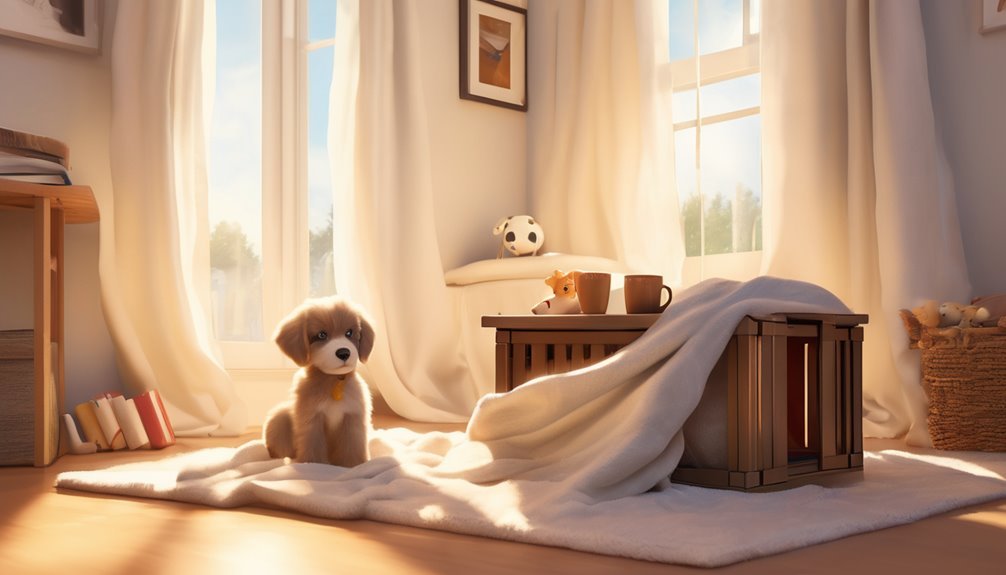
Crate training offers numerous benefits for your puppy, making it a valuable tool for both you and your furry friend.
When you introduce your puppy to a crate, you create a safe, cozy space where they can feel comfortable. This sense of puppy comfort helps reduce anxiety, especially during stressful situations like thunderstorms or when you leave the house.
Additionally, a crate promotes crate safety by keeping your puppy out of potential hazards when you can’t supervise them. It also aids in house training, teaching your puppy to control their bladder and bowels.
Choosing the Right Crate Size for Your Puppy
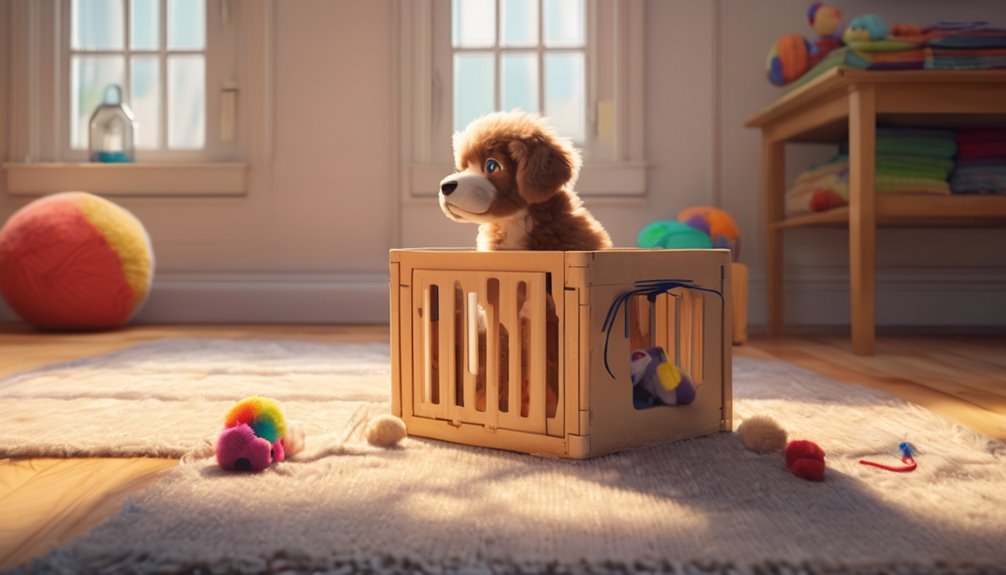
When selecting a crate for your puppy, it’s crucial to consider their size and growth potential.
Start by measuring your puppy’s current height and length, and then choose crate dimensions that allow them to stand, turn around, and lie down comfortably.

Measure your puppy’s height and length to select a crate that allows them to stand, turn, and lie down comfortably.
Remember, different puppy breeds grow at different rates, so think ahead! If you know your pup will grow significantly, opt for an adjustable crate or one that can accommodate their adult size.
A crate that’s too big may encourage messes, while one that’s too small can feel confining.
How to Introduce Your Puppy to the Crate

To help your puppy feel comfortable in their new crate, start by making it a positive and inviting space.
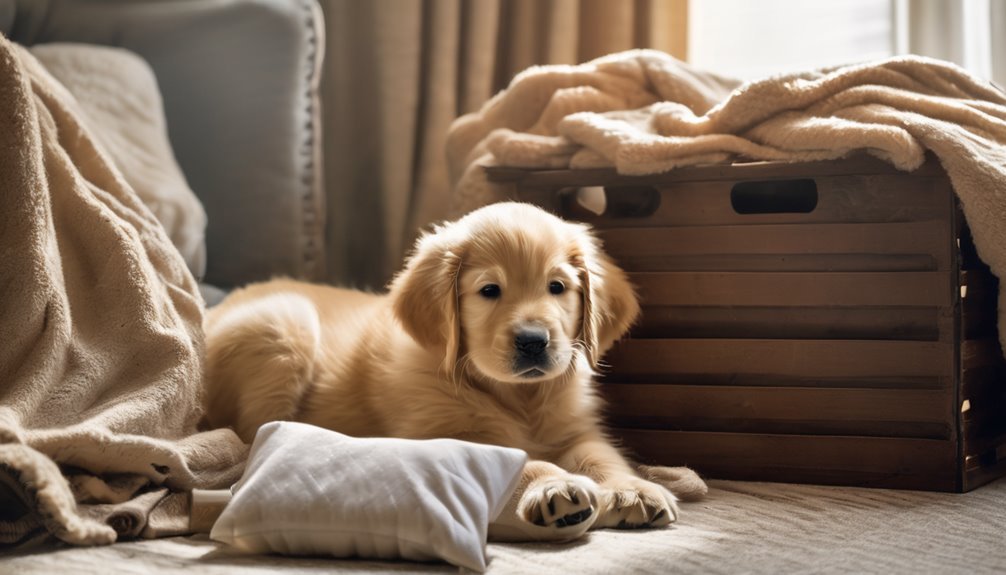
Place soft bedding and a favorite toy inside to enhance crate comfort. Let your puppy explore the crate at their own pace, leaving the door open initially. You can toss in treats to encourage curiosity and make the crate feel safe.
It’s essential to avoid forcing your puppy inside, as this can create anxiety. Instead, praise them when they approach or enter the crate.
Gradually, you can close the door for short periods while staying nearby, reinforcing that the crate is a safe haven. This gentle introduction sets the stage for a happy, secure relationship with their crate.
Creating Positive Associations With the Crate
Establishing positive associations with the crate is crucial for your puppy’s comfort and security. Start with a gradual introduction, allowing your pup to explore the crate freely. Use reward treats to create a playtime association; toss a favorite toy inside to encourage curiosity.
Positive reinforcement is key—praise them when they enter willingly. Incorporate crate games to make it fun, turning the crate into a safe space rather than a confinement.
Help your puppy relax with relaxation techniques, like gentle petting or calming music, to foster crate comfort. Over time, your puppy will see the crate as a cozy retreat, making crate training a smoother, more enjoyable experience for both of you.
Establishing a Consistent Crate Training Routine
Building on those positive associations with the crate, a consistent training routine helps solidify your puppy’s comfort and understanding of crate time. Creating a routine schedule not only benefits your puppy but also gives you peace of mind. Stick to regular feeding, play, and crate times, and watch as your puppy thrives.
| Time | Activity |
|---|---|
| Morning | Feeding & playtime |
| Midday | Crate time (1-2 hrs) |
| Evening | Training session |
| Night | Crate time (sleep) |
Essential Crate Training Tips for Leaving Your Puppy
While leaving your puppy in the crate might feel daunting at first, implementing a few essential tips can make the transition smoother for both of you.
Start by ensuring your puppy’s comfort; add a cozy blanket or a favorite toy to make the space inviting. Gradually increase the time your puppy spends in the crate, allowing them to adjust at their own pace.
Make sure the crate is a safe haven by checking for any sharp edges or loose parts. When you leave, use a calm, reassuring tone, and avoid long goodbyes to help your puppy feel secure.
With patience and consistency, you’ll create a positive environment where your puppy can thrive, ensuring both crate safety and comfort.
How to Help Your Puppy Overcome Crate Anxiety?
Crate anxiety can be challenging for both you and your puppy, but with the right strategies, you can help them feel more at ease.
Start by recognizing anxiety signs, like whining or pacing, and respond gently. Create a cozy space with familiar toys to enhance puppy comfort.
Use gradual exposure; begin with short crate durations, slowly increasing them as your puppy adjusts. Implement calming techniques, like soft music or a calming spray, to soothe their nerves.

Positive reinforcement is key—reward your puppy with treats or praise when they enter the crate calmly.
With patience and consistency, you’ll help your puppy overcome their anxiety and see the crate as a safe haven, not a confinement.
When to Use the Crate: Daytime vs. Nighttime
Knowing when to use the crate can make a significant difference in your puppy’s training and comfort. During the daytime, use the crate for short periods, allowing your puppy to relax while you’re busy. It’s a great way to prevent accidents and keep them safe. For your nighttime routine, the crate can provide a cozy sleeping space, promoting better sleep for both of you.
Here’s a quick comparison:
| Daytime Use | Nighttime Routine |
|---|---|
| Short intervals | Longer durations |
| Supervised time | Quiet, dark space |
| Prevent accidents | Establish sleep cues |
| Safe play area | Comfort and security |
| Gradual increase | Consistency is key |
Using the crate correctly during these times fosters a healthy, trusting relationship.
Top 5 Crate Training Mistakes and How to Fix Them
Training your puppy can come with its fair share of challenges, and crate training is no exception. One common mistake is using the crate as punishment; instead, make it a safe haven for your pup.
Training your puppy can be challenging; remember, the crate should be a safe haven, not a place for punishment.
Another error is leaving your puppy in the crate for too long; remember, they need breaks for healthy puppy behavior.
Not introducing the crate gradually can lead to anxiety—ensure your puppy associates it with comfort.
Also, avoid cramming the crate with toys; this can overwhelm them.
Finally, don’t forget to reward your puppy when they enter the crate willingly, reinforcing positive behavior.
How to Gradually Transition Your Puppy From Crate to Freedom
Once your puppy has become comfortable in their crate, it’s time to start giving them more freedom around the house.
Begin with gradual exposure; let them explore one room while you supervise. Set clear freedom boundaries to help them feel secure.
During supervised play, reward their good behavior with positive reinforcement, reinforcing their understanding of what’s acceptable.
Create safe spaces where they can retreat if they feel overwhelmed.
As they gain confidence, encourage outdoor exploration to expand their comfort zones.
Remember, independence training is a process; be patient and supportive.
Celebrate small victories as your puppy learns to embrace their newfound freedom while still feeling secure in their environment.
Frequently Asked Questions
Can I Use a Crate for My Adult Dog?
Yes, you can use a crate for your adult dog! Just ensure the crate size allows for adult comfort, giving them enough space to stand, turn, and lie down comfortably. It’s a safe retreat for them.
How Long Can a Puppy Stay in a Crate?
A puppy can stay in a crate for one hour per month of age, up to a maximum of six hours. Remember, it’s vital to ensure comfort and avoid overwhelming your furry friend.
What if My Puppy Refuses to Enter the Crate?
If your puppy refuses the crate, try using positive reinforcement. Encourage them with treats and praise. You might also consider crate alternatives, like a cozy bed nearby, to help them feel more secure and comfortable.
Is Crate Training Suitable for All Dog Breeds?
Crate training can suit most breeds, but breed characteristics matter. Some dogs thrive with structured training techniques, while others may resist. Tailor your approach to your pup’s unique needs for the best results.
How Do I Clean the Crate Effectively?
To clean your puppy’s crate effectively, use safe cleaning supplies. Remove bedding, scrub surfaces, and rinse well. For odor elimination, a vinegar-water solution works wonders. Regular cleaning keeps the crate fresh and inviting for your furry friend.
Conclusion
Crate training your puppy is like unlocking a treasure chest of joy and security for both of you! By following these steps, you’re not just teaching your pup where to chill; you’re crafting a safe haven that transforms chaos into calm. Remember, patience is key, and with a sprinkle of love and consistency, your puppy will thrive. Before you know it, your little furball will see the crate as a cozy retreat, ready to conquer the world one wag at a time!