Your pet is signaling more than you may realize. When you watch posture, tail position, ear angle, and eye contact together, you can often tell whether your animal feels safe, tense, or ready to engage. A wagging tail doesn’t always mean joy, and a still body can mean more than caution. The details matter, and one small shift can change what you think you know.
Key Takeaways
- Read the whole animal—posture, ears, tail, eyes, and movement together reveal the clearest message.
- A loose, wagging tail, forward ears, and soft eyes usually signal comfort, interest, or friendliness.
- Tense posture, tucked tail, pinned ears, pacing, or hiding often indicate stress, fear, or anxiety.
- Bright eyes, bouncy movement, and playful vocalizations often show excitement and a desire to play.
- Respond calmly, mirror relaxed behavior, and give pets space to choose when and how to interact.
How to Decode Pet Body Language

Decoding pet body language starts with observing the whole animal, not just one signal, because posture, ears, tail, eyes, and movement work together to show how your pet feels.
You can read body posture for tension, softness, or readiness. Pair that with vocal cues, facial expressions, and relaxation signals to judge comfort or distress.
Watch social interactions for reciprocity, avoidance, or appeasement, and note play behavior when your pet’s movements stay loose and brief.

Grooming habits can signal calm, self-soothing, or stress. Territorial behavior often appears as guarding, stiffening, or repeated boundary checks.
When you compare these patterns over time, you’ll recognize your pet’s baseline and respond with care, consistency, and respect for your bond.
Tail, Ear, and Eye Signals
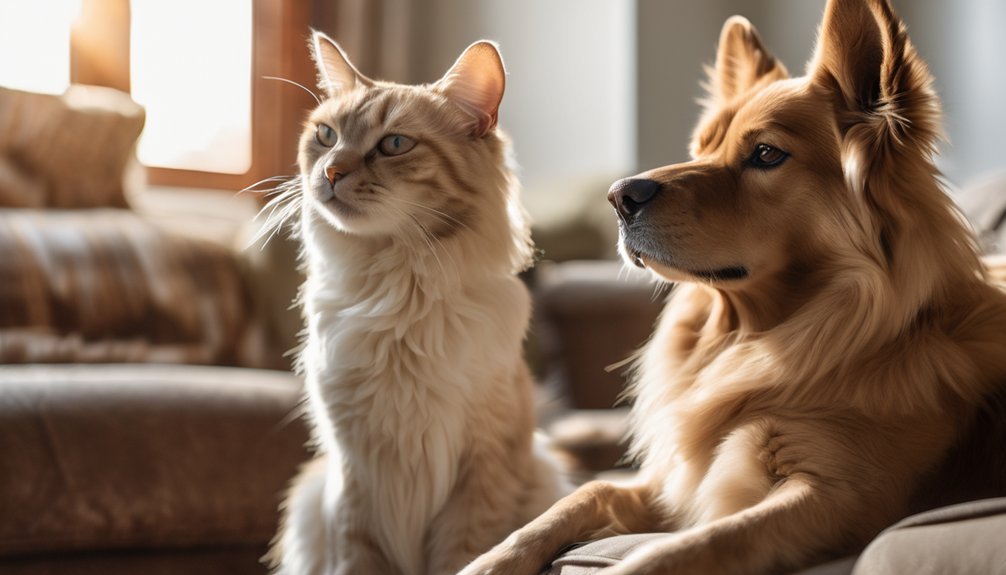
Your pet’s tail, ears, and eyes often provide the clearest clues to emotional state when you read them together with posture and movement.
You can interpret tail wagging by noting speed, height, and looseness: a relaxed sweep usually signals comfort, while a rigid motion needs context.
Ear positioning also matters; forward ears suggest interest, sideways ears suggest divided attention, and pinned ears alter the whole picture.
Watch eye contact closely. Soft, brief gaze can indicate trust, while a hard stare changes meaning.
Compare these signals with body posture and facial expressions to avoid misreading excitement as anxiety.
When vocal cues join the pattern, you get a fuller, more intimate understanding of what your pet is trying to tell you right now.
Signs Your Pet Is Stressed
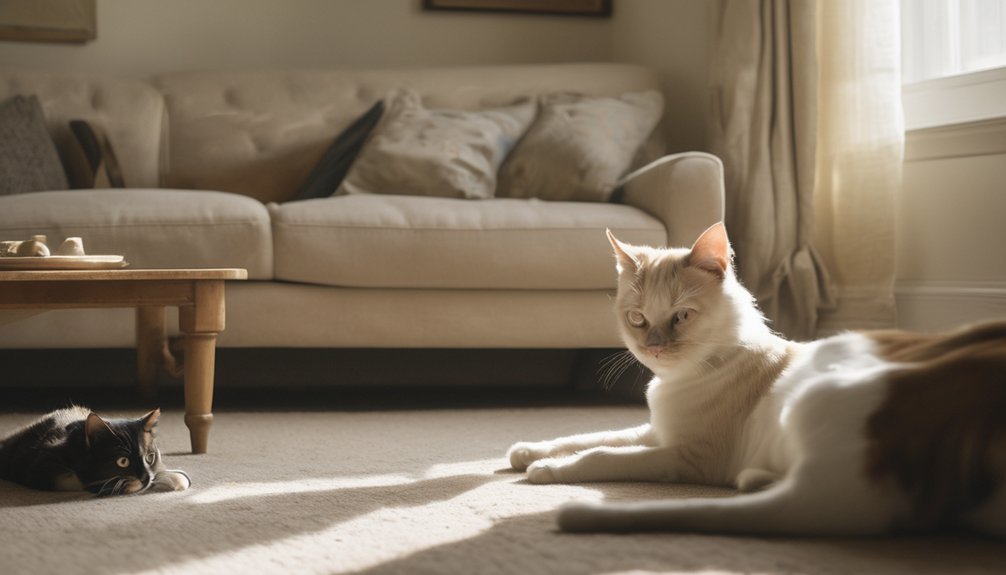
Stress in pets often shows up as changes in posture, movement, and attention before it becomes obvious in behavior. You may notice a tight body posture, lowered head, or a tucked tail, along with anxiety behaviors like pacing, startle responses, or persistent vigilance.
Watch for vocalization cues such as whining, meowing, barking, or abrupt silence. Stress can also affect grooming habits, causing overgrooming or neglect.
Environmental factors like noise, visitors, confinement, or routine changes can intensify distress, especially when paired with specific stress triggers. If your pet seeks hiding spots, that’s often a sign they need space and reassurance.
You can help by reducing stimulation, keeping routines predictable, and using calming techniques like quiet presence, soft voices, and gentle contact when they welcome it.

Signs Your Pet Wants to Play
Playful pets often display a relaxed, forward-leaning posture with bright eyes, loose muscles, and quick, bouncy movements.
You may notice a playful posture with a lifted tail, soft ears, and brief pauses before a burst of sudden energy. Many pets add playful vocalizations, such as chirps, yips, or quiet growls, to signal interest.
A lifted tail, soft ears, and a sudden burst of energy often signal playful interest.
Your pet might offer playful nudges with the nose or shoulder, then dart away as a clear chase invitation. Some animals bring interactive toys, drop them near you, or crouch low with a wriggling rear.
These cues usually reflect healthy social engagement, not distress. When you read them accurately, you can recognize your pet’s invitation to connect, share attention, and deepen trust through safe, mutual play.
How to Respond to Your Pet

When you notice signs that your pet wants to play, respond in a calm, inviting way so the interaction stays safe and rewarding. You should mirror their behavioral cues with soft movements, relaxed posture, and a steady voice.
Offer positive reinforcement when they approach gently, pause, or disengage appropriately. This helps them link play with trust and clear boundaries.
Watch for changes in energy, hesitation, or vocalization, because these can reflect emotional needs or health indicators. Use brief training techniques, such as “sit” or “wait,” to reset excitement without breaking connection.
During social interactions, let your pet choose distance, pace, and intensity. If they seem overstimulated, stop, breathe, and give space.
Your attentive response deepens confidence and supports a healthier bond between you both.
Frequently Asked Questions
Can Pets Hide Pain While Still Acting Normal?
Yes, they can hide pain while seeming normal. Watch for subtle pain indicators like reduced appetite, stiffness, or withdrawal. Small behavioral changes often mean discomfort, so you should contact your veterinarian promptly.
Do Different Breeds Use Body Language Differently?
Yes—like regional accents, different breeds can use breed specific cues and cultural influences differently. You’ll see distinct posture, eye, and tail signals, but individual temperament still matters. Read your pet closely and kindly.
How Does Body Language Change With Age?
With age, your pet’s body language becomes quieter and more deliberate. You’ll notice puppy behavior shifting from bouncy, loose movements to calmer postures, while senior signals can include stiffness, slower responses, and more subtle communication.
Can a Pet’s Body Language Indicate Illness?
Yes—about 1 in 3 pets show illness first through subtle body language. You can spot symptom identification through behavioral changes like hiding, stiffness, or restlessness; trust these clues and seek veterinary care promptly.
Why Do Pets Stare Without Making Other Signals?
Your pet’s staring behavior can signal curiosity, learned anticipation, stress, pain, or an emotional connection; you should watch for subtle changes in posture, breathing, and responsiveness, and consult your veterinarian if it seems new or intense.
Conclusion
Your pet’s body language isn’t random—it’s a reliable map of how they feel. When you notice a loose tail, soft eyes, and relaxed ears, you can trust you’re seeing comfort or play. When you spot a tucked tail, pinned ears, or tense posture, you’re likely witnessing stress. By reading these signals early, you can respond with calm, safety, and care. That awareness strengthens trust and helps your pet feel understood.