
If you watch a giraffe rest, you’ll notice it often stays upright, and that isn’t accidental. You’re seeing an adaptation shaped by predator pressure, where brief sleep helps the animal stay alert in open habitats. Its legs lock to support balance, while the neck relaxes just enough to conserve energy. But standing sleep is only part of the story, because giraffes don’t always rely on it in the same way.
Key Takeaways
- Giraffes sleep standing up to stay alert and quickly escape predators.
- Their leg joints lock, helping them balance with minimal muscle effort.
- They take short, light sleep bouts, often lasting only brief periods.
- A relaxed neck and slight head drop help them rest upright safely.
- They usually sleep about 4 to 5 hours daily, with deeper sleep only when secure.
Why Giraffes Sleep Standing Up?

Giraffes often sleep standing up because it helps them stay ready to react to predators in open habitats where danger can appear quickly. You can see this as a key part of giraffe behavior shaped by predator avoidance.
Their sleep patterns are brief and light, so they can resume movement fast if lions or hyenas approach. Standing rest also reflects evolutionary adaptations that suit their long legs, high vantage point, and exposed feeding grounds.

When you study these animals, you notice they spend less time in deep sleep than many mammals do. That tradeoff supports survival, even though it limits comfort.
In your view, this strategy shows how natural selection balances rest with vigilance in a species that lives under constant risk.
How Giraffes Sleep While Standing?
To sleep upright, giraffes rely on a specialized locking system in their legs and feet that reduces the muscular effort needed to stay balanced.
You’ll notice that they don’t enter deep sleep for long periods while standing; instead, they cycle through brief, light rest phases that fit their sleep patterns. During these moments, your giraffe lowers its head slightly, relaxes its neck, and keeps most of its body still.
This wildlife behavior lets it rest without fully collapsing into vulnerable positions. You can think of standing sleep as a cautious compromise: the animal conserves energy, stays alert to predators, and maintains readiness to move.
When conditions feel safer, giraffes may shift to short bouts of deeper sleep, but standing rest remains the most common form.
How Giraffes Stay Balanced Asleep?

Even while dozing, a giraffe keeps its balance through a combination of skeletal support, muscular control, and highly stable limb positioning. You can picture these balance mechanisms as a quiet tripod of neck, hips, and locked legs. During muscle relaxation, postural tension drops only slightly, so joints don’t collapse. Sleep cycles shift briefly between light and deeper stages, and the animal’s alertness strategies preserve enough tone to correct tiny sways.
| Factor | Effect | Visual cue |
|---|---|---|
| Limbs | Lock | Pillars |
| Neck | Stabilize | Tower |
| Muscles | Tense lightly | Springs |
| Ground | Matters | Firm dust |
| Threats | Shape vigilance | Shadowed grass |
Environmental factors, like wind or uneven terrain, can disturb posture, while predation risks keep you aware that stillness isn’t total surrender.
How Much Sleep Giraffes Get?
How much sleep does a giraffe actually get? You usually see only 4 to 5 hours across a full day, and some individuals rest even less. Their giraffe sleep patterns are brief, fragmented, and shaped by vigilance against predators.

- You’ll notice most rest happens in short bouts.
- You can expect the deepest sleep to be rare.
- You’ll often see wakeful pauses between rests.
- You may find nocturnal behavior strongest after dusk.
In darkness, they stay alert while feeding, scanning, and conserving energy. This limited sleep supports survival in open habitats where danger never fully disappears.
When you compare them with other mammals, you can see how efficiently their bodies function on little rest.
When Giraffes Lie Down to Sleep?
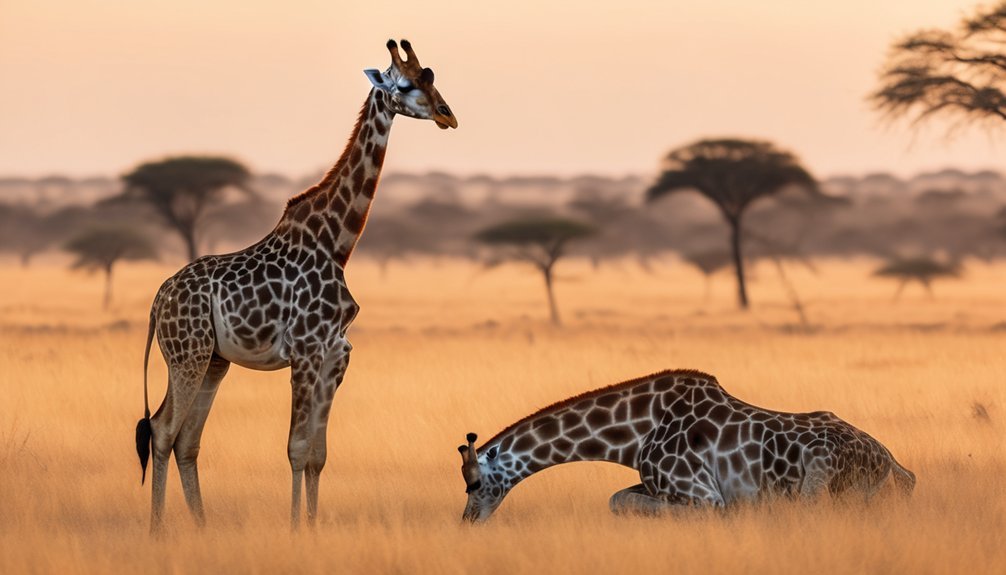
Although giraffes sleep very little, they don’t always remain standing. When you watch them at night, you may see a giraffe lower its neck, fold its long legs beneath its body, and rest its chest on the ground.
This posture usually appears only when the animal feels secure, because lying down reduces its ability to react quickly to predators. In this position, giraffes often keep their heads upright or tucked back along the body, preserving balance and alertness.
Their sleep patterns include brief bouts of deep sleep, often lasting only minutes, so lying down supports the most restorative phase. You’ll notice this giraffe behavior mostly in calm, protected areas, where the animal can afford to relax without constant vigilance.
Frequently Asked Questions
Do Giraffes Ever Dream While Standing?
Yes, you’ll likely find giraffes dream while in standing posture, though they usually sleep lightly then. Their dream patterns probably resemble other mammals’ brief REM episodes, with occasional lying down for deeper rest and muscle relaxation.
Can Baby Giraffes Sleep Standing up Safely?
Yes, you can say baby giraffes often sleep standing up safely, especially when alert. Their baby giraffe behavior includes brief naps and varied sleeping positions, and they’ll lie down when they feel secure and rested.
Do Giraffes Sleep With Their Eyes Open?
No, you usually won’t see a giraffe asleep with eyes open; you’ll notice brief eye closure behavior during giraffe sleep patterns. You’re seeing light, vulnerable rest, not constant shut-eye, and they can wake almost instantly.
How Do Predators Affect Giraffe Sleep Habits?
Predators shape your giraffe’s sleep patterns by forcing brief, vigilant rest. You’ll see lighter sleep, frequent waking, and standing sleep, because predator behavior makes deeper, longer sleep risky; safety wins over restoration.
What Sounds Wake up Sleeping Giraffes?
You’ll find sleeping giraffes wake to sudden environmental noises, especially predator movement, thunder, or nearby herd disturbances. Their giraffe vocalizations can also rouse them, since low grunts and snorts signal nearby activity and danger.
Conclusion
You can see that giraffes sleep standing up because it helps them stay safe from predators while resting. Their legs use a locking mechanism to keep them balanced, and their heads remain lowered slightly to conserve energy. They usually sleep only 4 to 5 hours a day, often in short bouts. When conditions are safer, they may lie down for deeper sleep, like a cautious watchtower briefly lowering its guard.