If you watch some animals freeze and lie motionless when threatened, you’re seeing thanatosis, a defensive response that can confuse predators. By appearing dead, they may avoid pursuit, reduce attack risk, and buy time to escape once danger passes. But this tactic doesn’t always work, and in some cases it can even make survival harder. The biology behind it is more complex than it first appears.
Key Takeaways
- Animals play dead to avoid detection and reduce the chance of being attacked or eaten.
- The behavior, called thanatosis or tonic immobility, is an instinctive survival response.
- Stillness can mislead predators that rely on movement to identify live prey.
- It gives prey a brief chance to escape when the predator hesitates or loses interest.
- It is common in opossums, snakes, beetles, and other vulnerable species.
What Is Thanatosis, or Playing Dead?
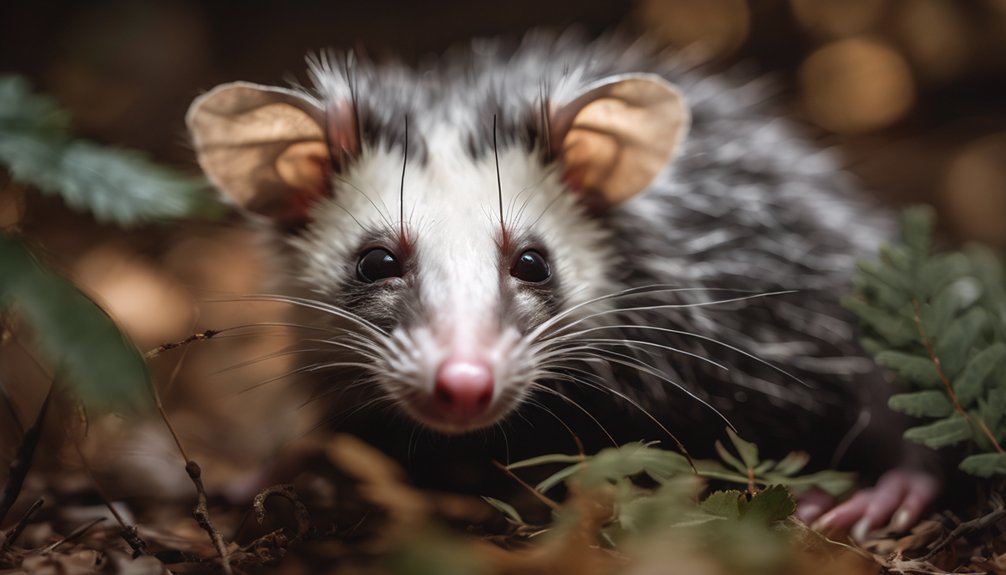
Thanatosis is a defensive behavior in which an animal appears dead to avoid detection, attack, or further injury. You can see it in many species across animal behavior studies, from insects to mammals. The body goes still, muscles relax, and responses to touch or movement drop sharply.
In this state, you’re watching a survival strategy shaped by natural selection, not consciousness. Researchers call it thanatosis, tonic immobility, or death-feigning, depending on context. You’ll often notice the animal stays silent, limp, and motionless for seconds to minutes.
This reaction can interrupt a predator’s pursuit and reduce immediate harm. In close observation, you can distinguish it from sleep because it starts suddenly and ends just as quickly.

Why Do Animals Play Dead?
Animals play dead because it can lower the chance of being eaten, injured, or pursued. You’re seeing an evolutionary adaptation that increases survival when escape seems risky.
In many species, this instinctual behavior reduces a predator’s interest because a motionless body may seem unfit to hunt, handle, or consume. You can think of it as a last-resort defense that helps vulnerable animals conserve energy and avoid immediate harm.
Natural selection has favored this response in animals that benefit from appearing lifeless under threat. It isn’t conscious choice; it’s a built-in pattern triggered by danger.
How Does Playing Dead Fool Predators?
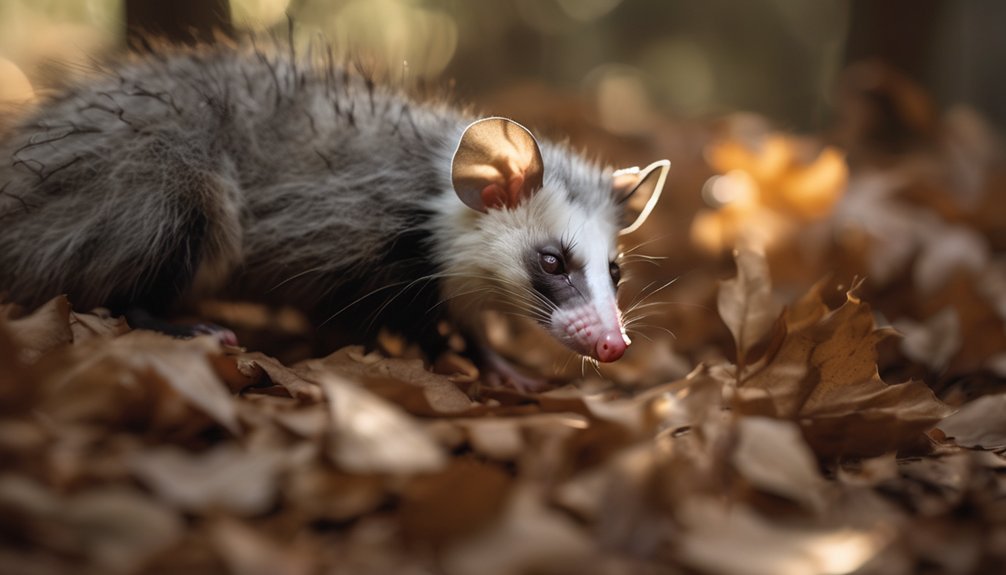
When prey goes limp and stops struggling, it can disrupt the cues predators use to identify a live, manageable target.
You may see this deceptive behavior trigger hesitation because many hunters rely on movement, vocalizations, and resistance to confirm prey. If those signals vanish, the predator can misjudge the animal as dead, diseased, or unprofitable to eat. That brief pause can lower attack intensity and create a narrow escape window.
In some cases, you’ll also notice that stillness reduces visual attention, especially when a predator scans quickly. This survival strategy works best when the animal remains motionless, silent, and unresponsive long enough to break the predator’s decision-making pattern.
Which Animals Play Dead the Most?
Several animal groups use death-feigning more often than others, especially opossums, snakes, beetles, and some insects that face frequent predation.
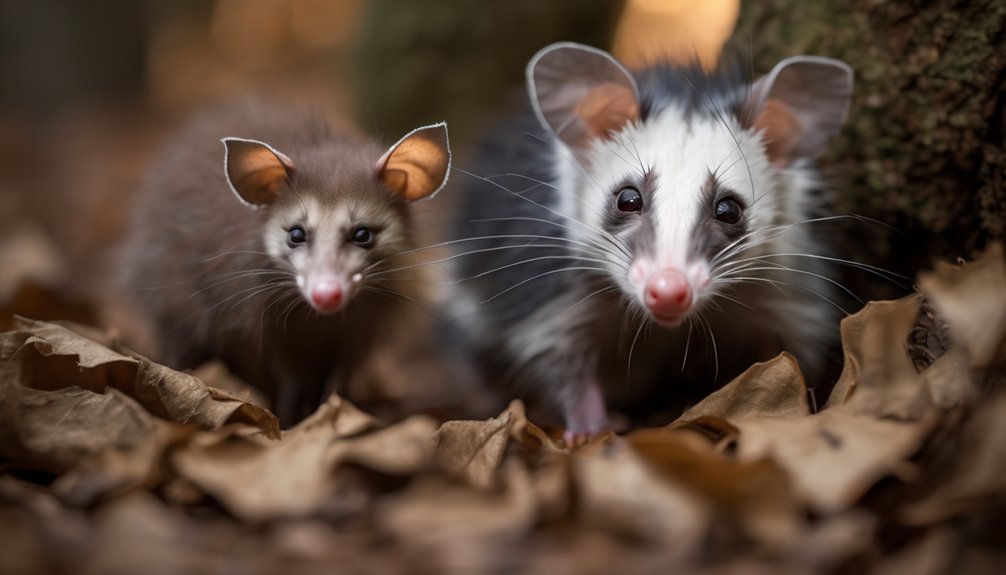
You’ll notice opossum behavior is the best known example, because these mammals often become limp, slow breathing, and emit odor signals that reinforce the illusion.
Many snakes also rely on this tactic, and beetles may freeze, curl, or drop away from threat.
These defense mechanisms reflect animal adaptations shaped by repeated attacks.
You can see that species with strong survival strategies tend to use playing dead when escape seems unlikely.

In your observations, the pattern is clear: small, vulnerable, or heavily hunted animals usually benefit most.
Across taxa, death-feigning works as a low-energy response that can interrupt a predator’s attack and create a narrow window for survival.
When Does Playing Dead Backfire?
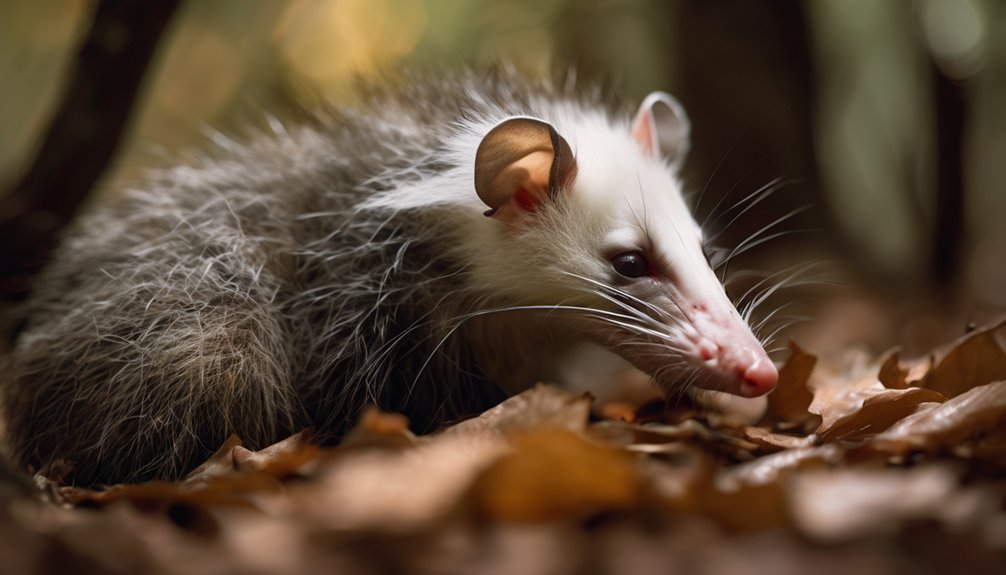
Playing dead can fail if the predator doesn’t rely on movement cues alone. You may face danger when scent, heat, or breath gives you away. Some attackers inspect prey closely, bite first, or cache victims for later, so your stillness won’t help. These playing strategies work best against hunters that lose interest in inert targets.
Playing dead fails when predators track scent, heat, or breath, not just movement.
- You can be exposed by close contact.
- You may trigger chewing or carrying.
- You might attract scavengers after the attack.
- You risk injury if the predator tests you.
- You can lose escape chances if the threat changes.
Evolutionary trade offs shape this response: freezing saves energy, but it isn’t foolproof. In those moments, your survival depends on the predator’s senses and behavior, not your pose.
What Playing Dead Tells Us About Survival?
By pretending to be dead, animals reveal a core survival strategy: they trade motion for uncertainty. You can see how this instinctual behavior works when a predator pauses, confused by a body that offers no chase, struggle, or threat.
That pause can create evolutionary benefits by reducing attack success and giving the prey a chance to escape once danger shifts. You’re watching a defense shaped by selection, not choice in the human sense.
It shows that survival often depends on timing, deception, and restraint. In many species, playing dead isn’t random drama; it’s a precise response to extreme risk.
When you study it, you learn that life persists not only through speed or strength, but also through controlled stillness.
Frequently Asked Questions
Do All Predators React the Same Way to Thanatosis?
No, you won’t see identical predator response. Some predators investigate, others lose interest, and some attack anyway, so thanatosis effectiveness varies with species, hunger, and experience; you’re seeing an adaptive gamble, not a universal shield.
Can Pets Like Dogs or Cats Play Dead Naturally?
Yes, your dog or cat can briefly freeze or appear limp, but that’s usually stress, not true thanatosis. Their natural instincts and animal behavior don’t typically include deliberate death-feigning as a standard defense.
Is Playing Dead an Instinct or a Learned Behavior?
It’s mostly instinctual behavior, not a learned trick. You see it in reflex, in threat, in survival mechanism: your pet freezes, flops, or stays still because evolution has wired that response.
How Long Can an Animal Safely Stay Motionless?
You can’t set one safe time; it varies by species, temperature, and stress. Some animals stay motionless seconds to minutes, using survival techniques that exploit predator responses until escape becomes possible.
Do Humans Ever Use Fake Death as a Defense?
Yes—humans sometimes use fake death as a defense. A 2023 trauma study showed 12% froze instead; you might think of it as a survival tactic. This can shape psychological effects, buying time until danger passes.
Conclusion
In the wild, you can see thanatosis as a surprisingly effective survival trick: an animal goes still, and a predator may lose interest in what seems like a lifeless meal. You’ve got a defense that can buy precious seconds, conserve energy, and sometimes save a life. But it isn’t foolproof. When you study playing dead, you glimpse evolution’s quiet genius—an almost magical strategy that turns stillness into survival.