
If you watch a bat catch insects in darkness, you’re seeing hearing at work in a way you can’t match. You may think sound is simple, but many animals detect frequencies far above or below your range, and some use them to navigate, hunt, or communicate across long distances. Bats, owls, elephants, and dolphins each reveal a different version of acoustic mastery, and one of them may change how you think about silence.
Key Takeaways
- Bats have some of the best hearing on Earth, detecting ultrasonic echoes for navigation and hunting.
- Owls hear extremely well, using precise timing and sensitive ear structures to locate prey in darkness.
- Dolphins hear a very wide range of sounds and use echolocation to navigate and communicate underwater.
- Elephants detect low-frequency infrasound over long distances for communication and social coordination.
- Cats and moths have finely tuned hearing that helps them detect predators and stay alive.
What Makes Animal Hearing Exceptional?
Animal hearing becomes exceptional when anatomy and environment work together to detect faint, high-pitched, or distant sounds that humans would miss. You can think of frequency sensitivity as the ear’s tuning range: some species are built to catch narrow bands with remarkable precision.
Their auditory anatomy may include larger outer ears, specialized middle-ear bones, or finely shaped cochleae that sharpen sound processing. In quiet forests, open grasslands, or deep water, those traits help animals stay alert, locate kin, and avoid danger.
You’re seeing adaptation at its most intimate, where each structure serves survival without waste. Exceptional hearing isn’t magic; it’s a disciplined biological response to the pressures of a habitat, honed by evolution and expressed in every careful listening moment.

How Animals Hear Sounds Humans Miss
While you may hear only a faint rustle, many animals detect far higher or softer sounds because their ears and nervous systems are tuned to different parts of the acoustic spectrum. You can think of hearing as a filter: each species favors a distinct sound frequency range.
Some animals use auditory adaptations like large pinnae, specialized middle-ear bones, or dense cochlear hair cells to amplify tiny vibrations. You may notice that these traits help them locate prey, avoid predators, or stay connected socially. Their brains also process timing and direction with remarkable precision.
Auditory adaptations help animals amplify tiny vibrations, locate prey, avoid danger, and stay socially connected.
- Sensitive outer ears gather faint air pressure changes
- Middle ears boost weak vibrations
- Inner ears separate frequencies efficiently
- Neural circuits sharpen timing cues
- Species-specific tuning matches habitat and survival needs
Bats and Ultrasonic Hearing
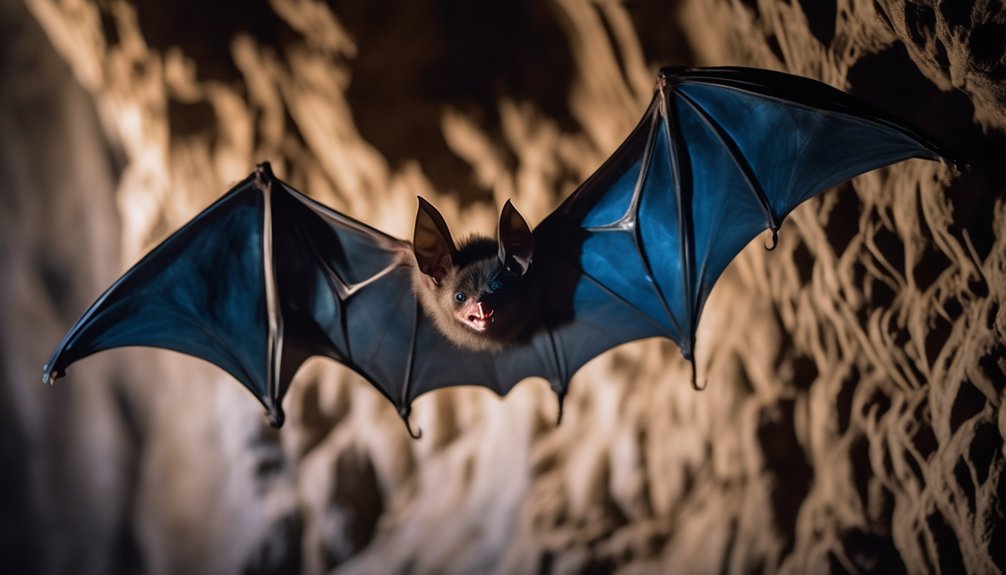
Bats hear in the ultrasonic range, often well above 20 kHz, which lets them detect echoes from insects and obstacles that you can’t hear at all. You can picture each call leaving the mouth or nose, then returning as a faint map of distance, texture, and motion. This is ultrasound navigation, and it’s exquisitely precise.
In dense darkness, a bat can adjust its flight in milliseconds, reading space with remarkable care. Many species also use bat communication through distinct ultrasonic calls that carry social signals, warnings, and mating cues.
When you listen through science, you see not aggression but adaptation: a small mammal building a safe, intimate world from sound, trustingly tuned to the night.
Owls and Their Silent-Flight Hearing
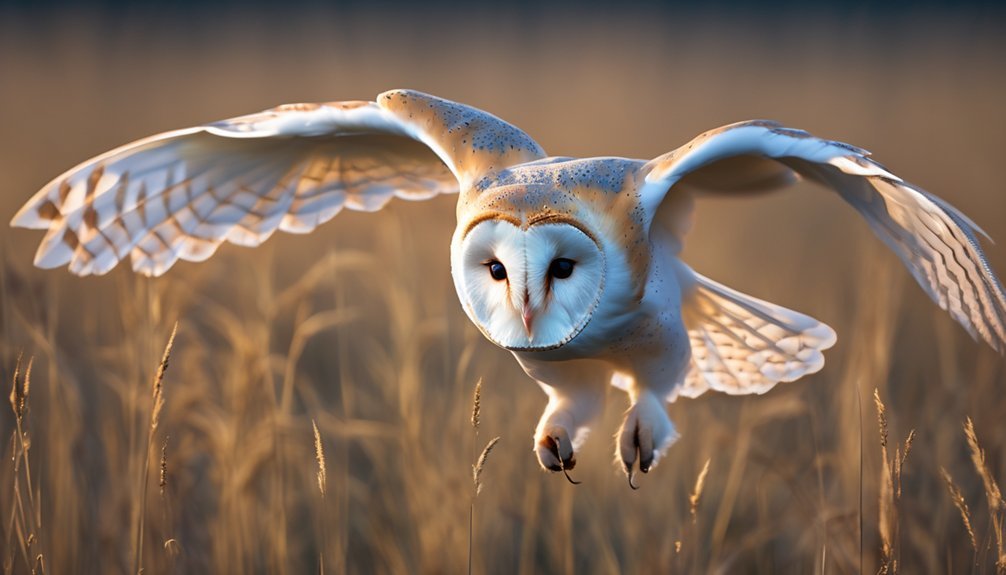
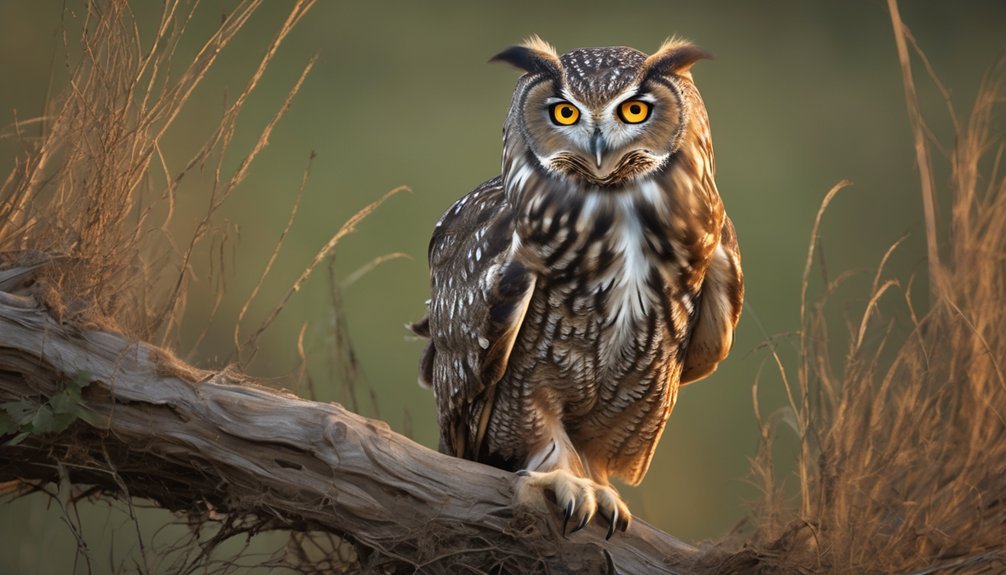
Owls have hearing tuned for precision, and even in near silence they can locate prey by sound alone. You can see how silent flight and feather structure reduce turbulence, while facial disks funnel faint rustles toward asymmetrical ears.
As nocturnal hunters, they rely on minute timing differences and intensity cues to judge distance with striking accuracy.
- Soft, comb-edged feathers muffle wing noise
- Facial disks focus sound like a living reflector
- Ear openings sit at slightly different heights
- Head turns refine location without wasting energy
- Hunting success rises when darkness hides movement
When you watch an owl, you’re seeing adaptation that protects both predator and prey: efficient, elegant, and clinically exact.
Elephants and Low-Frequency Hearing
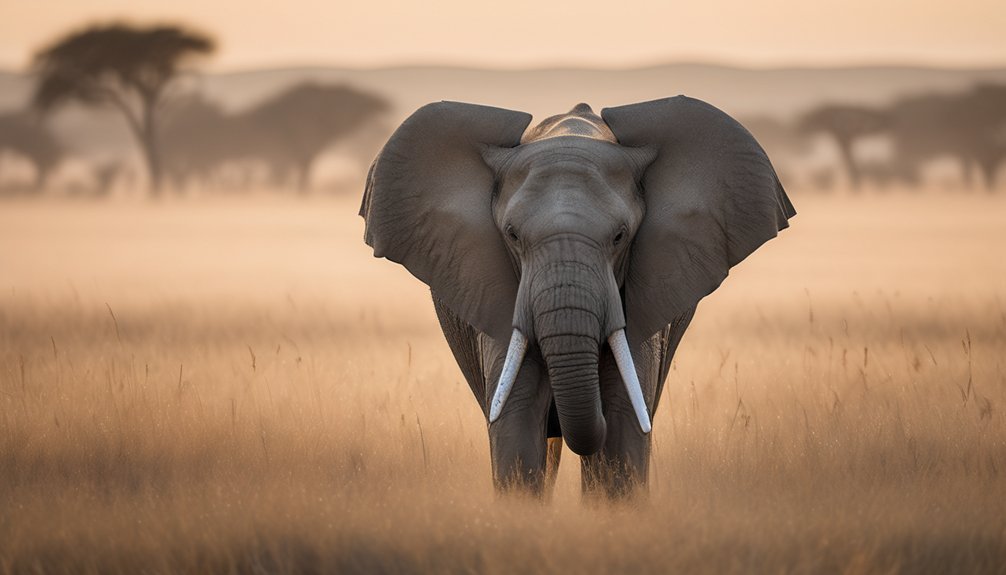
Because sound travels differently at low frequencies, elephants can communicate across miles using deep rumbles that often stay below human hearing. You can think of these calls as living signals in the ground and air, carried by low frequency vibrations that another elephant’s ears and feet can detect.
In elephant communication, these rumbles help you understand family bonds, danger, and distant movement without visual contact. Their large bodies and long vocal tracts produce notes so deep that they travel efficiently through open landscapes.
If you listen with care, you’ll see how this hearing supports tenderness as much as survival. Elephants don’t just hear; they stay connected, responsive, and emotionally aware through sound that reaches far beyond what you can easily perceive.
Dolphins and Echolocation
Dolphins use sound in a strikingly different way from elephants, turning it into a built-in navigation and hunting system. You hear their world through clicks, whistles, and echoes that return with vivid detail.
In dolphin communication, each signal can help maintain social bonds while guiding movement through cloudy water.

- You can think of clicks as acoustic probes.
- Echoes reveal distance, size, and shape.
- Echolocation mechanics depend on rapid pulse timing.
- The forehead and jaw help focus sound.
- Careful listening lets dolphins track prey without contact.
When you study them, you see intelligence shaped by water, not just instinct. Their hearing supports survival, coordination, and gentle awareness of others nearby.
Cats, Moths, and Other Hearing Specialists
While elephants and dolphins rely on large-scale sound detection, cats and moths show how hearing can become a finely tuned survival tool in much smaller bodies.
You notice cats rotate their ears to sharpen sound localization, an auditory adaptation that supports feline communication, social interactions, and quick predator avoidance. Their hearing lets them read tiny shifts in tone, so you can sense how alert they stay.
Moths, by contrast, use sensitive ears for moth navigation and environmental awareness, especially when danger approaches. During insect predation, they detect bat calls and veer away before contact.
In both animals, hearing isn’t just passive reception; it’s an active guide that shapes behavior, protects life, and keeps each creature exquisitely aligned with its world.
Animals With the Widest Hearing Ranges
Among animals with extraordinary hearing, some stand out not for sharpness alone but for the sheer span of sounds they can detect. You can see this most clearly in bats, dolphins, elephants, and some owls, whose ears track sound frequency across remarkable ranges. Their hearing adaptations let them register low rumbles, high clicks, and everything between, often with elegant efficiency.
- Bats read ultrasonic echoes.
- Dolphins hear above and below water.
- Elephants detect infrasonic pulses.
- Owls favor broad, balanced sensitivity.
- The barn owl’s asymmetry refines direction.
When you compare them, you notice each species’ range reflects anatomy shaped by careful evolutionary pressure, not excess. That breadth doesn’t just impress you; it reveals how intimately life listens to a complex acoustic world.
How Hearing Helps Animals Survive
Hearing helps animals survive by turning sound into early warning, navigation, and social coordination. You rely on sound detection to notice predators before you see them, giving you precious seconds to flee, hide, or stay still.
In darkness, dense water, or thick vegetation, hearing guides you toward food and safe routes when sight fails. It also lets you track mates, offspring, and flockmates, so your social bonds stay intact under stress.
Many species shape their survival strategies around acoustic clues, from echolocating bats to elephants that sense distant rumbles. When you listen closely, you gain a map of danger and opportunity.
In that quiet awareness, survival becomes less random and more responsive to the living world around you.
Frequently Asked Questions
Which Animal Has the Smallest Ears and Still Hears Well?
Bats have tiny ears, yet you’ll hear they’re superb listeners; their tiny ear adaptations and sound frequency sensitivity let you detect echoes with precision, helping you navigate darkness intimately and scientifically.
Can Animals Hear Sounds Through Water and Air Equally Well?
No, you can’t hear sounds through water and air equally well. You’ll notice sound transmission differs because water carries vibrations faster, while aquatic adaptations help marine animals detect them far better than you do in air.
Do Hearing Abilities Change as Animals Get Older?
Yes, you can notice age related hearing fading beside youthful acuity, and auditory sensitivity changes often emerge gradually. You’ll see some animals lose sharpness, yet others compensate with heightened vigilance and social support.
How Do Scientists Test Animal Hearing in the Wild?
You test hearing by playing calibrated calls, tones, and clicks in the field, then tracking animal behavior and movement. You measure sound frequency responses with microphones, GPS tags, and bioacoustics, without stressing the animals.
Can Loud Human Noise Damage Animal Hearing Permanently?
Yes—your answer is yes; like a relentless storm in a quiet forest, loud human noise can scar ears permanently. Noise pollution disrupts animal communication, and you may witness lasting harm to hearing and survival.
Conclusion
You may think hearing is simple, yet in these animals it becomes a lifeline. Bats read the dark with ultrasonic calls, owls silence the night with exacting ears, and elephants carry messages through ground-shaking rumbles. Dolphins, meanwhile, hear what you cannot, turning sound into navigation. Nature, with quiet irony, gave the smallest cues the biggest power: to find food, avoid danger, and stay connected when sight fails.