Nearly 80% of the ocean remains unexplored, and you’re looking at a world where pressure can crush most life. In the deep sea, you’ll find anglerfish using bioluminescent lures, lanternfish sending faint signals, and gulper eels stretching their jaws to seize scarce prey. You might assume survival looks impossible here, yet these creatures have evolved solutions that still raise questions about how far adaptation can go.
Key Takeaways
- Deep sea creatures survive crushing pressure, freezing temperatures, and darkness with flexible bodies and slow metabolisms.
- Many use bioluminescence to find mates, communicate, lure prey, or hide from predators.
- Strange hunters like anglerfish, dragonfish, and viperfish have huge jaws, sharp teeth, and expandable stomachs.
- Different ocean zones host unique species, from lanternfish in the mesopelagic to snailfish in the hadal zone.
- Their adaptations, including gelatinous bodies and energy-saving traits, show evolution’s remarkable creativity.
What Makes Deep Sea Creatures Extreme?
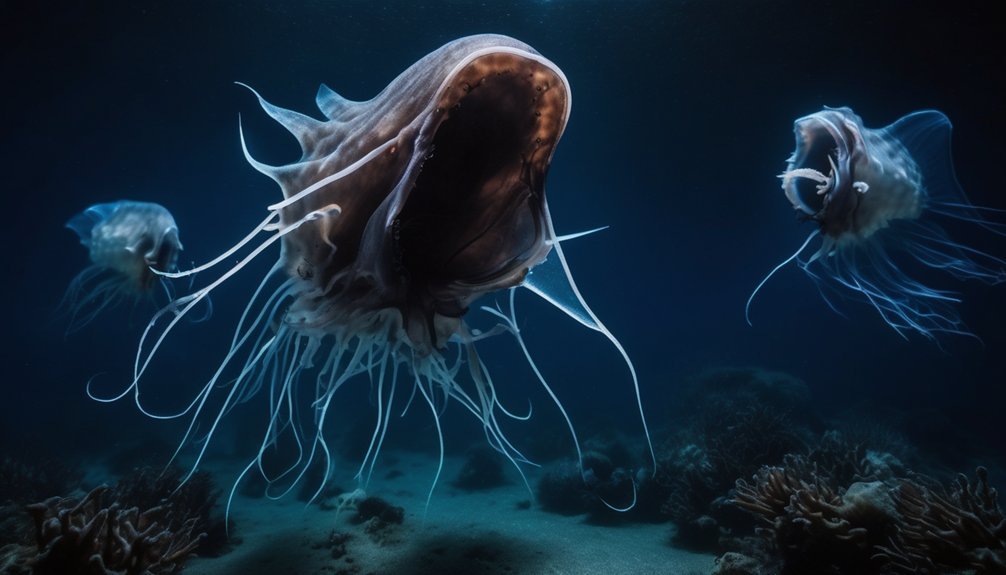
Deep sea creatures are extreme because they survive in one of Earth’s harshest environments, where darkness is complete, pressure is crushing, temperatures are near freezing, and food is scarce.
Deep sea creatures endure crushing pressure, total darkness, and scarce food with remarkable adaptations for survival.
When you study them, you see bodies built to endure intense force without collapsing. Their tissues often stay flexible, their metabolism runs slowly, and their senses can detect tiny chemical, mechanical, or electrical signals.
You also notice how they conserve energy and seize rare meals with remarkable efficiency. In these extreme environments, every adaptation serves survival.

Many species use bioluminescent strategies, but even without light, they remain masters of persistence.
If you look closely, you’ll understand that their strangeness isn’t ornamental; it’s a precise response to conditions that would overwhelm most life.
Deep Sea Creatures That Glow in the Dark
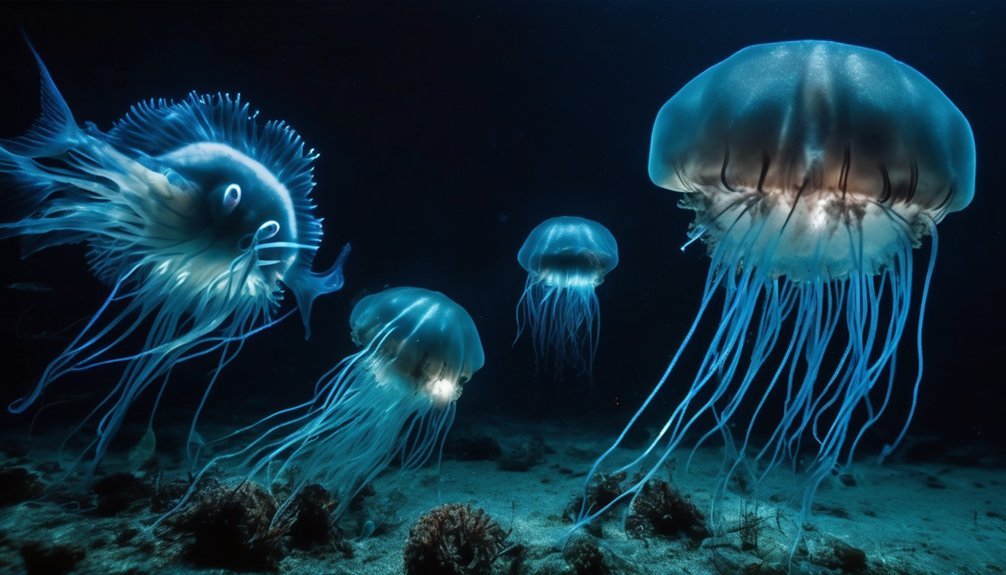
Among the many adaptations that help these animals survive, bioluminescence stands out as one of the most striking. When you descend into the dark ocean, you’ll notice that many deep sea creatures produce their own light through chemical reactions in specialized cells.
This glow can signal mates, coordinate group behavior, or confuse observers through bioluminescent communication. You’ll also find species that use glowing camouflage, matching the faint light filtering from above so their shadows disappear.
Lanternfish, anglerfish, and certain jellyfish each rely on this illumination in different ways, but all turn darkness into an advantage.
In your imagination, the deep sea stops feeling empty and becomes a living network of soft flashes, pulses, and brief blue-green sparks.
Strange Predators of the Deep Ocean
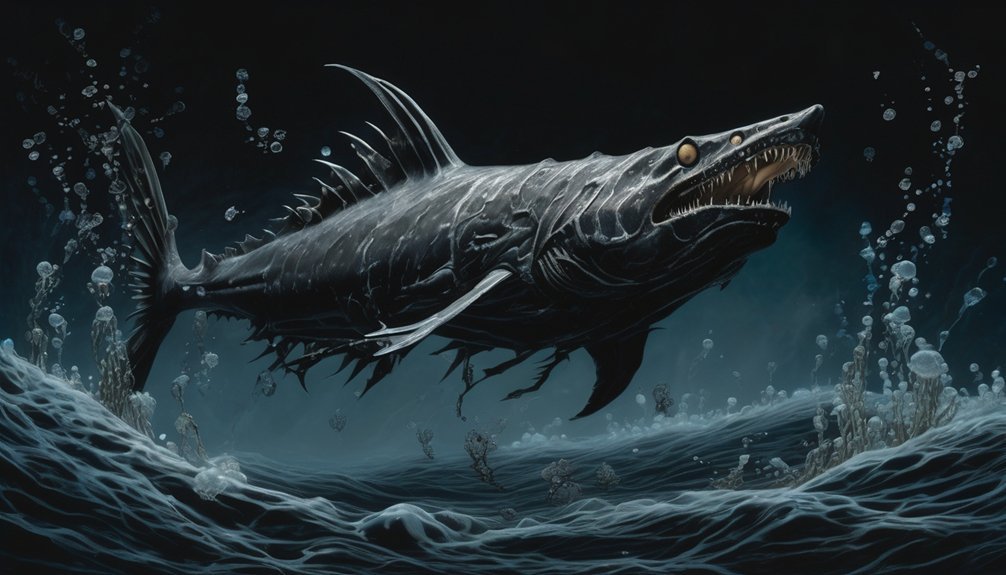
In the abyss, predators often look stranger than the prey they hunt. You’d notice that deep sea hunters rely on oversized jaws, needle teeth, and expandable stomachs to seize rare meals in darkness.
Many bioluminescent predators use glowing lures or flashing organs to draw fish close, then strike with startling speed. The anglerfish, for example, dangles a luminous bait above its head, while dragonfish emit faint light that helps them see and signal.
You’re watching a world where every trait serves precision: stealth, ambush, and efficient feeding. These animals patrol immense pressure and cold, yet they remain finely tuned killers, revealing how evolution shapes intimate, eerie strategies for survival and predation in the ocean’s deepest layers.
Deep Sea Creatures With Unusual Survival Adaptations
When you move beyond the predators, you find deep sea creatures with equally remarkable survival adaptations that help them endure crushing pressure, near-freezing water, and scarce food.
You can see extreme pressure adaptation in their flexible proteins, gelatinous bodies, and cell membranes that stay functional where other life would fail. Many species also slow their metabolism, so you’re looking at animals that conserve energy with impressive precision.

Some rely on bioluminescent communication to signal mates, warn rivals, or lure prey in darkness, turning light into a survival tool. Others store energy-rich oils or let their jaws expand, helping them seize rare meals.
Every trait feels finely tuned, and you’re witnessing evolution’s quiet ingenuity at work.
Deep Sea Creatures by Zone
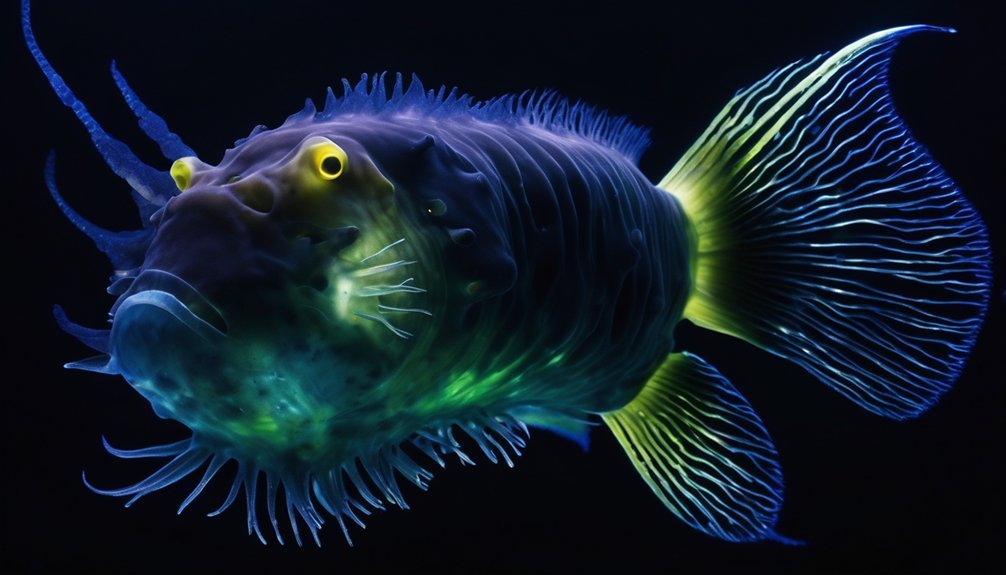
As the ocean deepens, its zones shape which creatures can survive there, from the dim twilight of the mesopelagic to the pitch-black hadal trenches.
In the mesopelagic, you’ll meet lanternfish and squid, each using bioluminescent adaptations to hide, hunt, or signal.
Descend into the bathypelagic, and you’ll find anglerfish, gulper eels, and viperfish that conserve energy while sensing faint movement.
Descend into the bathypelagic, where anglerfish, gulper eels, and viperfish conserve energy and hunt by sensing the faintest movement.
In abyssal habitats, pressure rises, food thins, and animals like grenadiers and sea cucumbers dominate the seafloor.
Deeper still, the hadal zone shelters snailfish and amphipods that endure crushing pressure with specialized tissues and slow metabolism.
When you trace these layers, you see the deep sea not as one world, but as a stacked series of intimate, unforgiving ecosystems.
Frequently Asked Questions
How Do Scientists Discover New Deep Sea Species?
You discover new deep sea species by deploying submersibles, collecting samples, and analyzing DNA. You’ll spot bioluminescent organisms, map deep sea ecosystems, and compare anatomy with known life to identify previously undescribed animals.
What Equipment Is Used to Explore the Deep Ocean?
You use submersible technology, remotely operated vehicles, sonar, pressure-resistant cameras, and sampling tools to explore the deep ocean. In oceanic research, these instruments let you map trenches, observe organisms, and collect specimens safely.
How Do Deep Sea Creatures Reproduce in Darkness?
In darkness, you’d find deep-sea creatures use bioluminescent signals, chemical cues, and synchronized mating rituals; like hidden dancers, they attract partners precisely. You can imagine these intimate exchanges, where survival depends on finding one another.
Can Deep Sea Animals Survive in Captivity?
You can keep some deep sea animals alive in captivity, but captivity challenges are severe. You’ll need exact pressure, temperature, darkness, and food. Their behavioral adaptations often fail in tanks, shortening survival.
Why Are Some Deep Sea Creatures so Rare?
They’re rare because they live deep, breed slowly, and occupy tiny habitats; you’re seeing bioluminescent adaptations and extreme pressure survival that limit populations, reduce encounters, and make their existence exquisitely difficult to study.
Conclusion
As you’ve seen, deep sea creatures are living proof that evolution can sculpt life in astonishing ways. From glowing hunters to pressure-proof survivors, each species reveals a different solution to the ocean’s darkest challenges. The deep sea isn’t just a void; it’s a hidden laboratory of adaptation, where life shines like a signal in the black. If you look closer, you’ll find that the abyss still holds many secrets waiting to surface.