
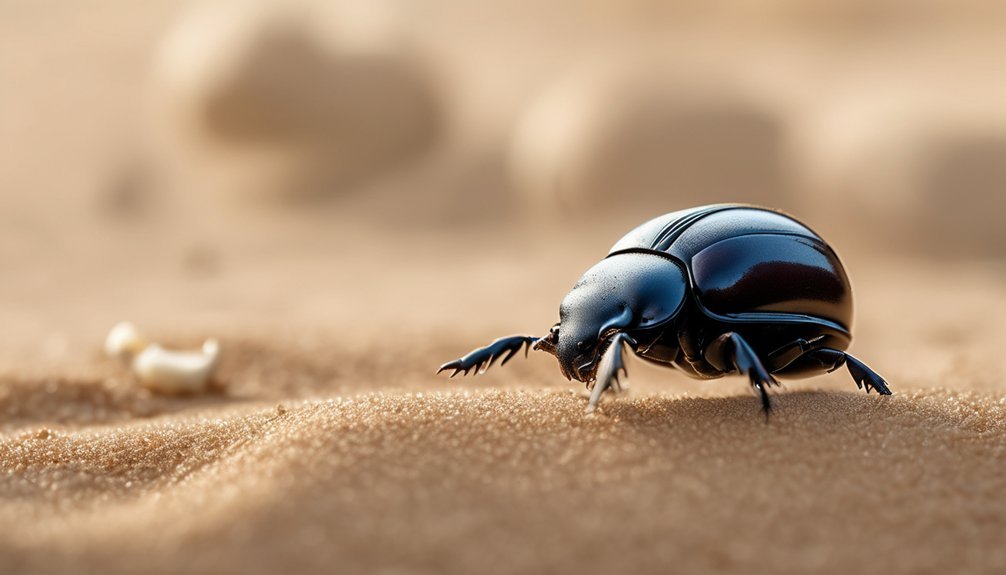
If you compare animals by strength relative to body size, you’ll find some surprising leaders. Dung beetles can move objects many times their own mass, ants can carry loads far beyond what looks possible, and rhinoceros beetles use specialized body structures to generate force. Scientists measure these feats with different methods, and the results raise a simple question: what makes small bodies so efficient?
Key Takeaways
- Relative strength compares how much force an animal can generate versus its body size, often favoring smaller species.
- Dung beetles are among the strongest, able to move dung balls many times heavier than themselves.
- Ants can lift and carry several times their body weight because of compact bodies and efficient muscle mechanics.
- Leafcutter ants show even greater overall transport power through coordinated teamwork and division of labor.
- Hercules beetles, rhinoceros beetles, and mantis shrimp are notable for exceptional strength or striking power relative to size.
Which Animals Are Strongest for Their Size?
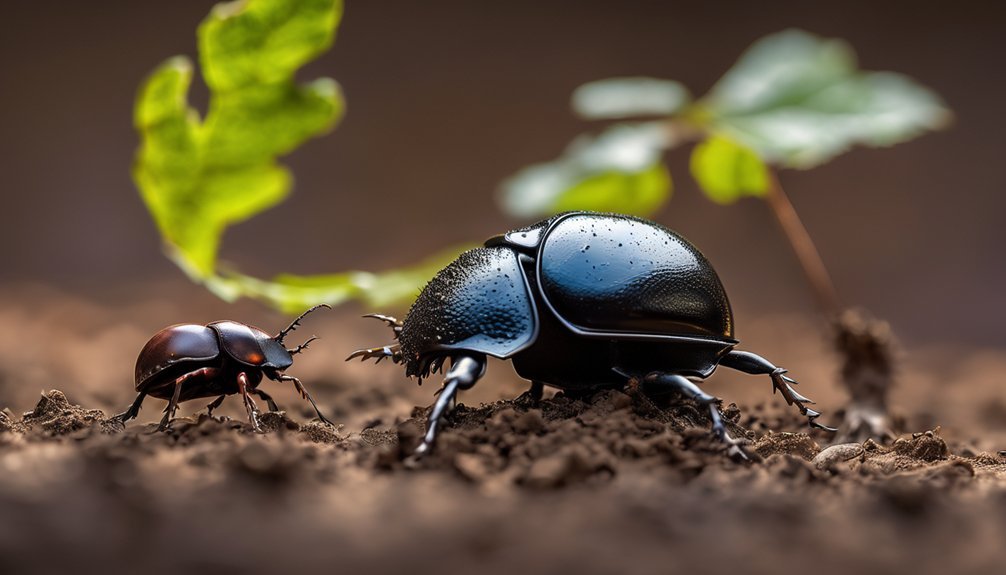
When you compare animals by strength relative to body size, a few species stand out far above the rest. You’ll notice that ants, rhinoceros beetles, leafcutter ants, and horned dung beetles often rank near the top, depending on how scientists measure load and leverage.
Their power comes from compact bodies, efficient muscle efficiency, and evolutionary adaptations that let them move or lift weights many times their own mass. You can see the pattern across taxa: smaller animals often generate higher force relative to body size because their structures waste less energy on support.
In objective terms, these animals don’t just look strong; their anatomy and mechanics make them remarkably effective at carrying, pushing, or pulling loads that would overwhelm larger species.
Dung Beetles: The Strongest Pound-for-Pound
Dung beetles are among the clearest examples of pound-for-pound strength in the animal kingdom. You can see this in how they move balls many times their body mass. Their dung beetle anatomy includes a compact exoskeleton, powerful leg muscles, and sturdy forelegs that grip and lift efficiently. This strength adaptation lets them transport food, shape nesting chambers, and compete successfully in harsh environments.

| Trait | Function |
|---|---|
| Compact body | Supports load |
| Strong forelegs | Grips material |
| Dense muscles | Produces force |
| Hardened shell | Resists strain |
| Efficient leverage | Improves lifting |
You’re looking at a system optimized for force, not size. This makes dung beetles a precise model of biological power.
Ants: Tiny Lifters With Huge Power
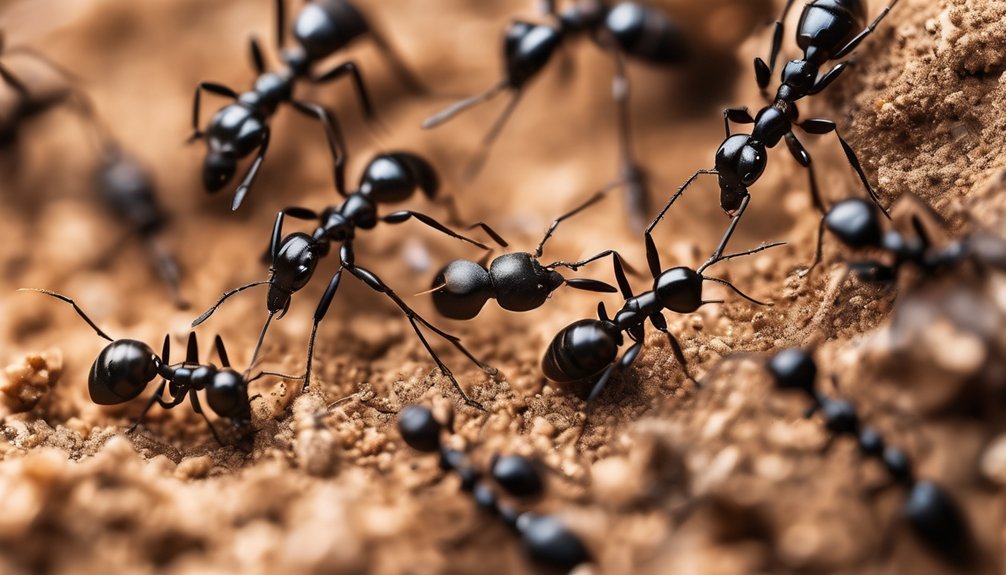
Ants show another extreme case of relative strength, even though they’re much smaller than dung beetles and many other insects. You can observe ant strength in how they move loads many times their body mass, depending on species and test conditions.
Their lifting capacity comes from a compact body plan, strong exoskeleton, and muscle arrangement that efficiently transfers force. You’ll notice that scaling matters: as size decreases, body mass drops faster than muscle cross-sectional area, so power relative to weight rises.
- Small bodies reduce load stress.
- Muscles act with high mechanical advantage.
- Surface area supports strength better than mass.
This makes ants effective terrestrial lifters, but it doesn’t mean they’re universally stronger than larger animals.
Leafcutter Ants: Teamwork That Multiplies Strength
Leafcutter ants push the idea of relative strength even further because their apparent power comes not just from individual muscle force, but from coordinated group transport.
You can see leafcutter cooperation when workers cut vegetation, then carry fragments that may exceed each ant’s own load-bearing capacity. Their ant strength isn’t only mechanical; it depends on communication, spacing, and synchronized movement along trails.
You’ll notice that a team can move heavy plant material efficiently because each worker adjusts to terrain and load position, reducing wasted effort. This division of labor lets colonies transport far more biomass than a lone ant could manage.
In relative terms, you’re looking at strength distributed across many small bodies, creating an effect that’s scientifically impressive and biologically precise.
Rhinoceros Beetles: Armor-Backed Power
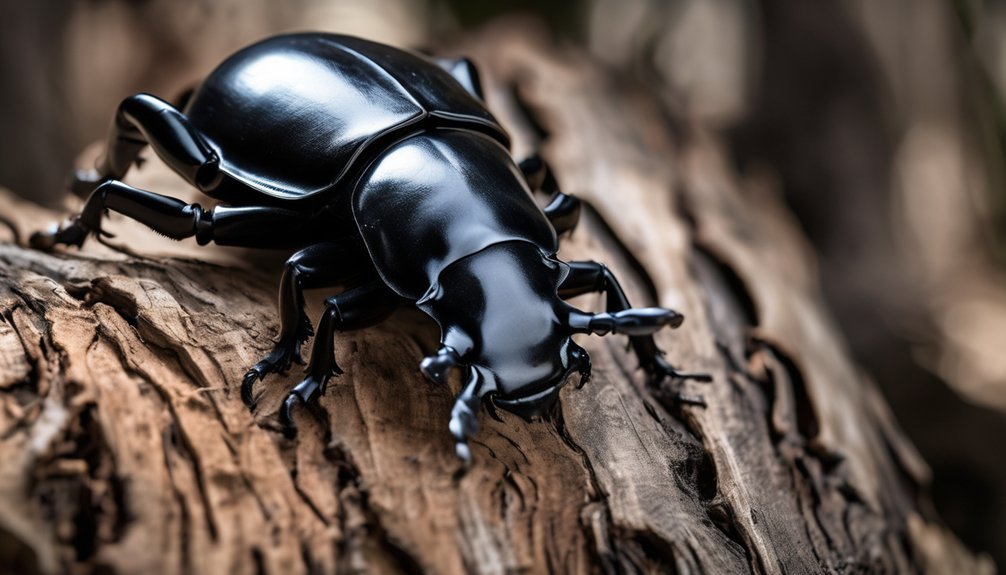
Rhinoceros beetles combine compact bodies with extraordinary leverage, making them among the strongest animals relative to size. You can see how their horned head, dense exoskeleton, and enlarged leg muscles work together to generate force.
These rhinoceros beetle adaptations let them push, lift, and wrestle rivals with efficiency that seems disproportionate to their small mass. Their strength reflects evolutionary strength shaped by competition, digging, and mating behavior.
- Horns provide leverage in contests.
- The exoskeleton resists compression.
- Muscles anchor tightly for powerful motion.
When you observe them closely, you notice that their power comes from structure, not bulk. That design keeps energy use efficient while maximizing force output, which helps you understand why scientists study them as a model of size-relative strength.
Hercules Beetles: Incredible Carrying Strength
Hercules beetles are famous for carrying and moving loads far heavier than their own bodies, a feat driven by their oversized horn, sturdy exoskeleton, and powerful thoracic muscles.
When you examine Hercules beetle adaptations, you see how the horn helps leverage objects, while the legs and body wall stabilize each lift.

Researchers use strength measurement techniques such as weighted trials and force sensors to compare individuals under controlled conditions.
These tests show that males can support remarkable loads relative to mass, especially when conditions reduce slipping.
You can think of this beetle as a compact mechanical system, optimized for transfer of force rather than speed.
Its strength reflects evolution, not bulk, and it offers you a precise example of how anatomy can amplify performance in small animals.
Mantis Shrimp: Small Body, Massive Punch
Mantis shrimp deliver one of the fastest and most powerful strikes in the animal kingdom relative to body size. You see these underwater warriors use colorful claws to store elastic energy, then release it with extreme speed. Their clubs can smash shells and stun prey in milliseconds.
You can notice three key traits:
- The strike accelerates so quickly that water cavitation adds extra force.
- The exoskeleton absorbs impact without breaking easily.
- The eyes detect complex motion and color with remarkable precision.
You’re looking at a compact predator whose anatomy supports repeated high-energy blows. This design lets mantis shrimp hunt efficiently in reef habitats, where quick reactions matter more than large size.
How Scientists Compare Strength to Body Size
Scientists compare strength to body size by using ratios that relate force, mass, or power to an animal’s weight or length. You can see this approach in bite force, lift capacity, jump height, or grip strength, each divided by body mass or another size measure. This lets you compare a beetle, crab, and mammal on a common scale.
Researchers also use scaling laws to test how performance changes as size increases, because raw force alone can mislead you. A larger animal may produce more total force, yet still be weaker relative to its body. Mechanical advantage matters too, since limb shape, lever length, and muscle attachment can amplify output.
These metrics give you a clear, objective way to judge strength across species without relying on size alone.
Why Small Animals Can Be So Strong
Small animals can be extraordinarily strong because their bodies are built on favorable physics, not because they generate huge absolute force. You see this when body mass drops faster than muscle cross-section, so strength scales more favorably than weight. Their short limbs also reduce leverage demands, letting each contraction move more effectively.
- Lower body mass means less load to lift.
- Compact geometry improves muscle efficiency and force transmission.
- Evolutionary advantages favor movements like burrowing, gripping, and escaping.
Because you’re comparing relative strength, a small animal can outperform a larger one in ratios even when its total force stays modest. This pattern isn’t magical; it’s a predictable result of size, structure, and selection.
Frequently Asked Questions
What Animal Has the Strongest Bite for Its Size?
You’d likely point to the saltwater crocodile; it has the strongest bite force of any living animal, especially in size comparison. Its jaws can crush bone, and you’re seeing one of nature’s most powerful predators.
Can Humans Ever Match Pound-For-Pound Animal Strength?
No, you can’t match most pound-for-pound animal strength. Your human strength is impressive, but animal comparisons show many species produce far greater force per unit mass, due to muscle architecture, leverage, and biomechanics.
Why Do Some Insects Have Exoskeletons Instead of Bones?
You see insects use exoskeletons because one millimeter-thick shell can support much more load than soft tissue. Exoskeleton advantages include protection and water retention, and insect evolution favored them before internal bones could develop.
How Does Temperature Affect Tiny Animals’ Strength?
Temperature changes alter tiny animals’ strength by affecting muscle speed, enzyme activity, and body fluid viscosity. In cooler conditions, you’ll often see reduced tiny strength; warmth usually boosts performance until heat stress starts limiting it.
Are Strongest Small Animals Also the Fastest?
Not always: you’ll find strength metrics and speed factors don’t align neatly. Like a compact forge, a tiny ant can lift immensely yet still lose races to a flea, whose anatomy favors rapid acceleration.
Conclusion
When you compare strength to body size, you’ll see that the animals you might overlook often reveal the most impressive performance. Dung beetles, ants, rhinoceros beetles, Hercules beetles, and mantis shrimp each use different structures to produce extraordinary force. That coincidence—small size paired with exceptional power—shows how evolution can optimize form for function. In the end, you’ll find that strength isn’t always about scale; sometimes, the smallest bodies carry the greatest advantage.