When you look for an animal in the wild, you’re often seeing less than you think. Camouflage works by matching color, breaking up shape, and even hiding movement, so a lizard, moth, or fish can disappear into its setting. But the trick isn’t always perfect, and a small shift in angle, light, or motion can expose it. What you notice next may change how you see survival itself.
Key Takeaways
- Animal camouflage uses colors, patterns, textures, and behaviors to avoid detection by predators or prey.
- It works by blending with backgrounds, breaking outlines, or mimicking other objects.
- Countershading, stripes, spots, and disruptive patterns make animals harder to recognize.
- Seasonal color changes help some animals match changing environments and stay concealed.
- Camouflage improves survival by reducing predation risk, energy loss, and competition stress.
What Is Animal Camouflage?
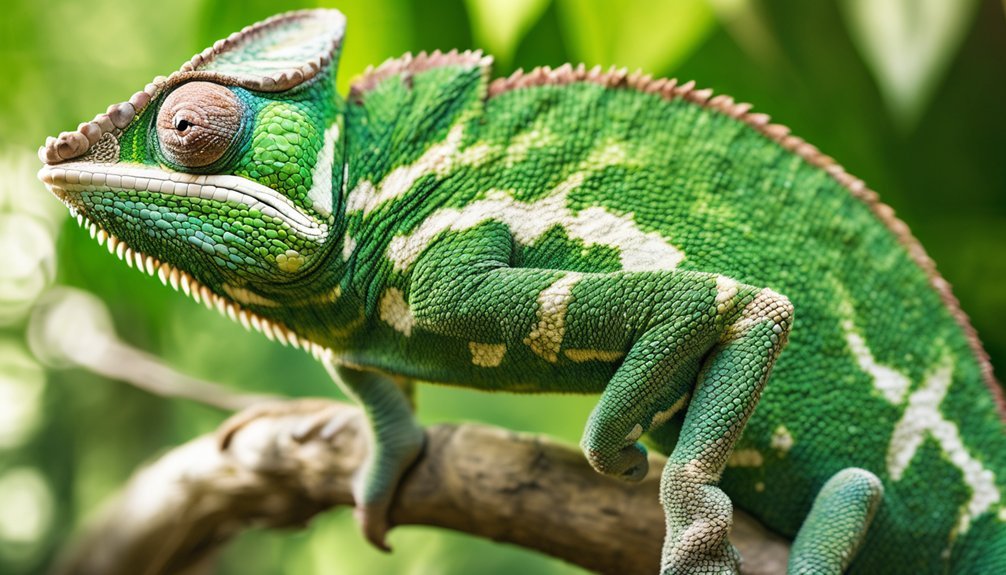
Animal camouflage is the set of physical traits and behaviors that help an animal avoid detection by blending into its environment, breaking up its outline, or mimicking another object or species.
Animal camouflage is the blend of traits and behaviors that helps an animal avoid detection by blending, breaking outline, or mimicry.
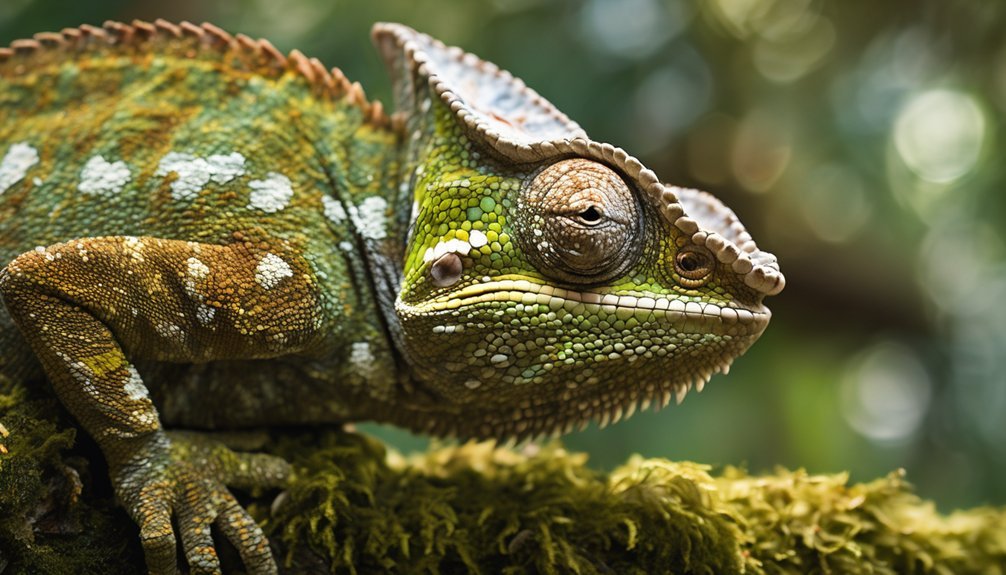
You can observe it as color pattern, texture, posture, or motion that alters how your visual perception registers an animal. These adaptive strategies don’t require conscious thought in most species; evolution shapes them across generations.
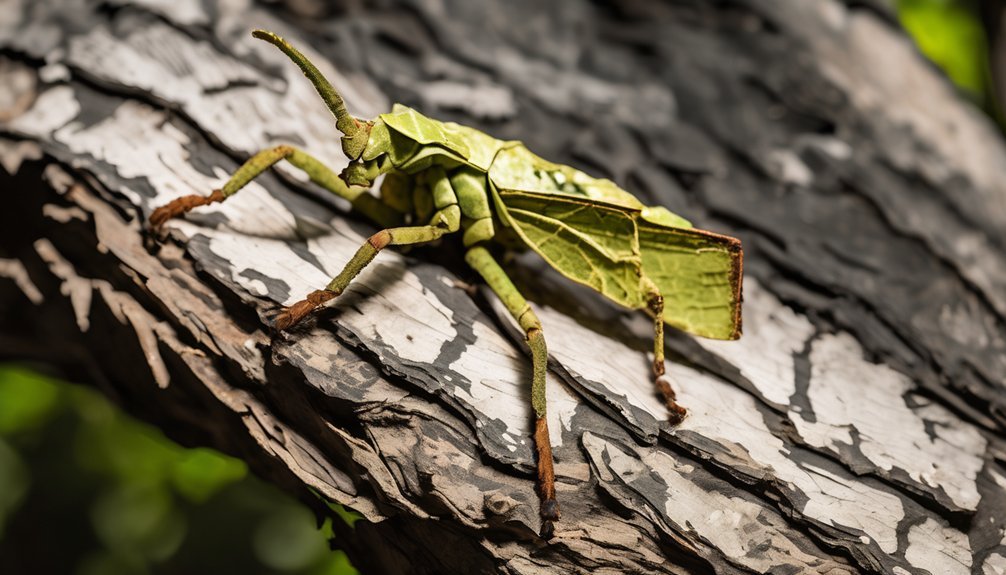
You’ll see background matching in a leaf insect, countershading in a deer, and disruptive markings in a zebra. Each trait changes contrast, shape, or silhouette under natural light.
When you study camouflage closely, you notice it isn’t one effect but a precise suite of responses tuned to habitat, viewer angle, and the limits of detection.

How Animal Camouflage Helps Survival
Camouflage improves survival by lowering the chance that predators, prey, and even rivals detect an animal at the wrong moment. You can see it as a set of survival strategies that buys time: a hidden insect keeps feeding, a stalking hunter closes distance, and a nesting bird protects its young.
In each case, predator avoidance reduces injury, energy loss, and stress. You also gain an edge in competition, because rivals may miss your position or misjudge your size. When detection drops, you’re less likely to flee constantly, so you conserve calories and stay active longer.
Observations show that this advantage matters most in exposed habitats, where every pause, movement, and shadow can reveal you.
Animal Camouflage Colors That Blend In
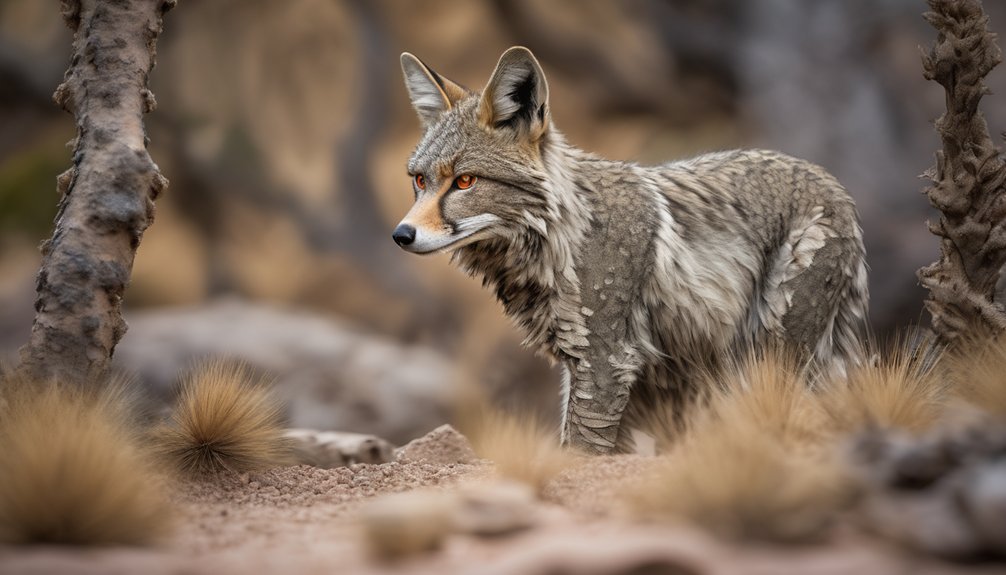
Colors do most of the hiding work by matching an animal’s surroundings, from sandy tans and leaf greens to bark browns and winter whites.
Colors help animals hide by blending with their surroundings, from sandy tans to winter whites.
You can see color adaptation at work when fur, feathers, or scales closely reflect the local light and background. In open deserts, pale tones reduce contrast; in forests, darker greens and browns absorb visual edges.
Seasonal changes matter too: some animals shed or regrow pigment-rich coats as snow arrives or melts. Others shift from bright summer hues to muted winter ones, keeping their outline less detectable.
You’ll notice that this isn’t random decoration. It’s a precise biological response that helps animals remain less visible to hungry eyes, especially when the environment changes quickly around them.
Shapes and Patterns That Hide Animals
Beyond color, form itself can erase an animal’s outline. You notice how stripes, spots, and patches break a body into uncertain fragments, so your eye can’t read its true edges. This disruptive coloration works by confusing shape recognition, especially when markings cross the head, flanks, or limbs.
You also see countershading, where a darker back and lighter belly flatten the body’s volume under natural light. Together, these patterns make depth seem less reliable and contour harder to judge.
In a leaf litter or coral reef, you may miss a resting animal because its surface echoes the surrounding geometry. The result isn’t invisibility; it’s misidentification. Your brain receives incomplete cues, and the animal stays hidden by looking like part of the scene.
How Movement Can Ruin Camouflage
Even the best patterning can fail the moment an animal moves. When you shift your body, break, or turn, you create motion cues that our visual systems detect quickly.
Predators rely on movement detection because a still outline blends into background noise, while a moving one separates cleanly from it. You can watch this in grass, where a slight tail flick, head bob, or limb step gives away position.
Predators catch what moves: a flick of tail, a bob of head, a step in grass.
Many predator strategies exploit this: they scan edges, track irregular motion, and lock onto contrast changes. Even slow movement can expose you, especially against uniform surfaces or when light is sharp.
Stillness helps camouflage hold, but once you move, you alter the visual signal and invite attention from a nearby observer.

Camouflage vs. Mimicry
Camouflage hides an animal by blending it into its surroundings, while mimicry helps it resemble something else entirely. You can observe both as distinct survival strategies.
Camouflage depends on color adaptation, pattern, and texture that reduce detection; mimicry exploits recognition errors in predators or prey. When you study them closely, you’ll notice different evolutionary advantages.
- Camouflage lowers visual contrast.
- Mimicry redirects attention elsewhere.
- Both can increase survival.
- Each responds to selective pressure.
You’re seeing two solutions to the same problem: avoiding harm.
Camouflage asks you to disappear; mimicry asks you to be misread. In either case, natural selection preserves traits that improve immediate safety and reproductive success.
Animal Camouflage Examples in the Wild
In the wild, you can see camouflage at work in species that match the colors, textures, and shapes of their habitats with remarkable precision. You notice predator adaptations in the stalking of a leopard, whose rosettes blur into dappled light, and in the flatfish, which settles beside sand and disappears from view. Prey strategies are equally exact: a stick insect extends still limbs, while a leaf-tailed gecko folds its outline into bark.
| Species | Tactic | Effect |
|---|---|---|
| Leopard | Patterned coat | Breaks outline |
| Flatfish | Bottom coloration | Reduces detection |
| Stick insect | Body form | Mimics twig |
When you watch closely, these examples reveal how survival depends on visual restraint, not spectacle.
Camouflage Across Different Habitats
Across habitats, camouflage works by matching an animal’s body to the dominant visual cues around it, whether those cues are mottled leaves, pale sand, rough bark, or open water.
You can see forest adaptations in leaflike shapes and broken patterns that dissolve edges. In water, aquatic concealment uses silvery flanks and shadowed bellies to merge with light gradients.
Desert strategies favor pale coats and heat-baked textures that echo dunes. Tundra techniques rely on white fur and seasonal shifts, while urban tactics copy concrete, metal, and shadow.
Nocturnal hiding adds dark tones and low contrast for dusk.
- Match color.
- Break outlines.
- Track background.
- Shift with season.
How Scientists Study Animal Camouflage
Scientists study animal camouflage by testing how well a body pattern blends with different backgrounds and lighting conditions. You can see them compare images, measure contrast, and track detection rates in field experiments and lab trials.
They often use cameras, model animals, and computer analyses to estimate visual perception from the viewpoint of birds, fish, or predators with different eyes. You notice that researchers also vary distance, texture, and movement, because camouflage changes as an animal shifts position.
In the field, they record whether observers spot the subject quickly or miss it entirely. These results reveal which colors, shapes, and edge patterns reduce recognition.
Frequently Asked Questions
Do Baby Animals Camouflage Better Than Adults?
You’ll often see babies camouflage better than adults because baby animal patterns usually break up outlines, while adult colorations can signal maturity or sex. Yet you’ll find exceptions, since habitat, predators, and behavior shape effectiveness.
Can Camouflage Change Seasonally in Some Species?
Yes, you can see camouflage shift seasonally in some species; like a clockwork cloak, fur or feathers change with environmental triggers. This seasonal adaptation helps you blend in, stay hidden, and survive.
Do Nocturnal Animals Use Camouflage Differently?
Yes, you’ll see nocturnal animals use camouflage to match low-light backgrounds, relying on nocturnal adaptations and reduced visual perception in predators. They often favor silhouettes, texture, and shadow-breaking patterns rather than bright color matching.
How Do Predators Detect Camouflaged Prey?
You detect camouflaged prey through contrast, motion, and scent; stillness masks, movement reveals. Your visual perception and hunting strategies compare shapes against backgrounds, then track subtle disruptions in light, texture, or sound.
Can Camouflage Work in Complete Darkness?
Yes, you can still benefit from camouflage in complete darkness, but it depends on sensory perception, not color. In darkness, dark adaptation matters more; you’ll hide by reducing movement, sound, and scent, not by pattern.
Conclusion
So, you can see that animal camouflage is more than a visual trick; it is a precise survival strategy shaped by selection. In a forest study, I once watched a moth vanish against lichen-covered bark until it moved, and then its outline broke the illusion. Like a well-fitted lock, camouflage works only when color, pattern, shape, and stillness align. When any one changes, predators and prey can spot what was hidden.