
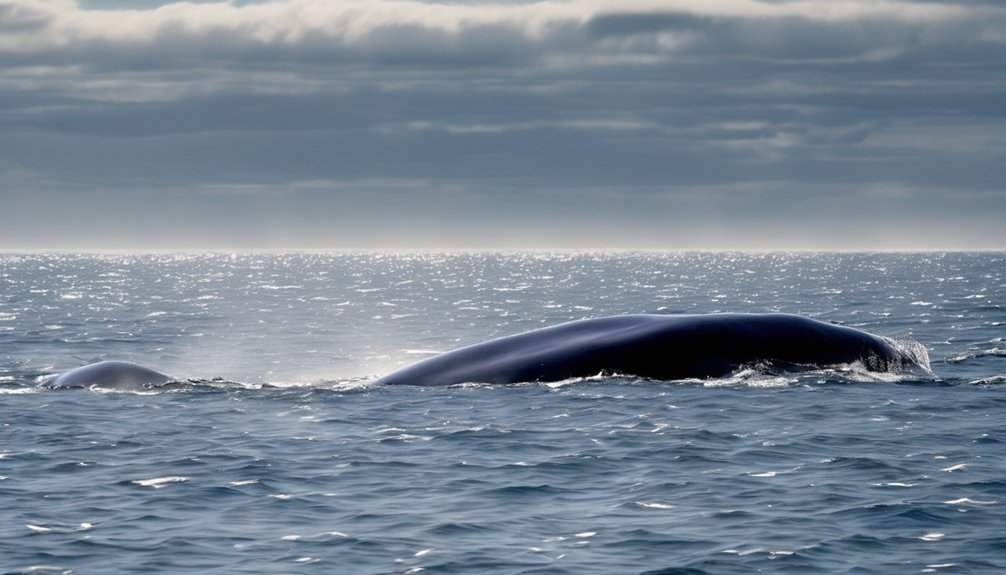
It’s a coincidence that the biggest animals you can study also force you to rethink how size gets measured. You’ll find that mass, not just length, decides the winner, and the record shifts between living blue whales and extinct giants like Perucetus colossus. On land, even the largest dinosaurs seem to fall short. The real question is what physical limits ocean life can bypass, and that answer changes everything.
Key Takeaways
- Blue whales are the largest animals ever discovered, reaching over 30 meters and more than 150 metric tons.
- Extinct Perucetus colossus may rival or even exceed blue whales in estimated mass.
- The largest dinosaurs, including Argentinosaurus and Patagotitan, were enormous but likely still lighter than the biggest whales.
- Giant animal size is estimated from fossils, skeletal reconstruction, and statistical modeling, often with wide uncertainty ranges.
- Ocean giants grew so large because buoyancy, abundant food, and low adult predation favored extreme body size.
Which Animals Were the Biggest Ever?
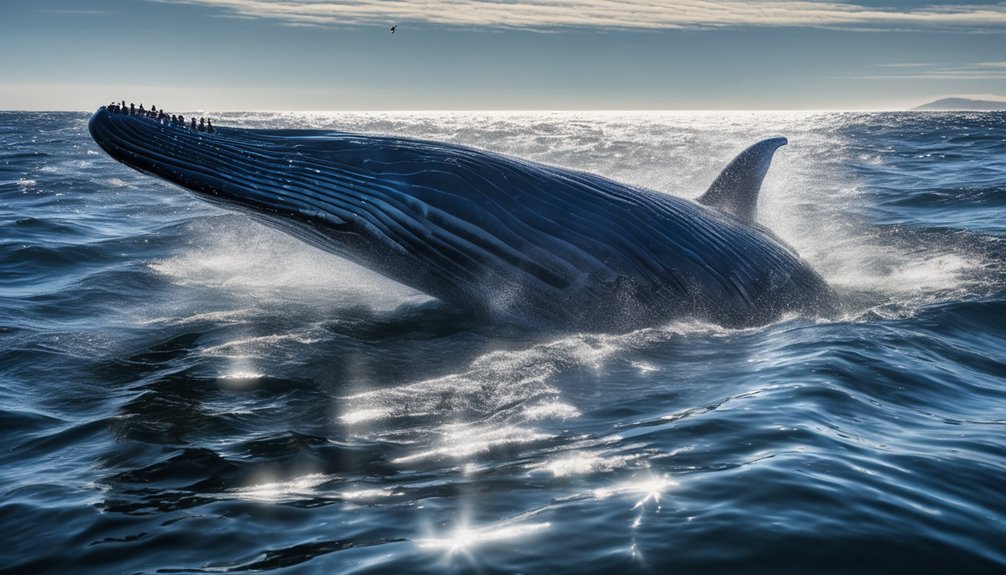
The biggest animals ever discovered weren’t dinosaurs, but giant marine species, especially blue whales and other baleen whales. You can see this in fossil evidence and in living measurements: blue whales exceed 30 meters and can surpass 150 metric tons.
The extinct Perucetus colossus may have rivaled or exceeded that mass, though uncertainty remains. Among dinosaurs, the largest sauropods, like Argentinosaurus and Patagotitan, reached immense lengths, yet they likely weighed less than the largest whales.
Perucetus colossus may have rivaled the biggest whales, while giant sauropods likely still weighed less.
You should note that size evolution favored ocean giants because buoyancy reduced skeletal constraints and supported extreme mass. On land, gravity limited scaling, so terrestrial animals never matched the biggest marine forms.

If you compare lineages, whales dominate the upper end of animal size.
How Scientists Measure Giant Animals
Scientists estimate giant animals by combining direct measurements, skeletal reconstruction, and statistical modeling, because no single specimen is usually complete enough to measure end to end. You can trust these measuring techniques when researchers compare multiple fossils, track preserved proportions, and correct for missing tissue with published coefficients.
| Method | Use |
|---|---|
| Direct measurement | Records preserved length or mass |
| Reconstruction | Fills gaps from anatomy |
| Modeling | Refines size estimation |
You should treat each estimate as a range, not a fixed fact, because preservation bias and deformation can shift results. When you read a study, look for sample size, error margins, and whether the authors calibrated their assumptions against modern animals. That transparency lets you judge the estimate’s reliability without overreading the numbers.
The Biggest Dinosaurs Ever Discovered
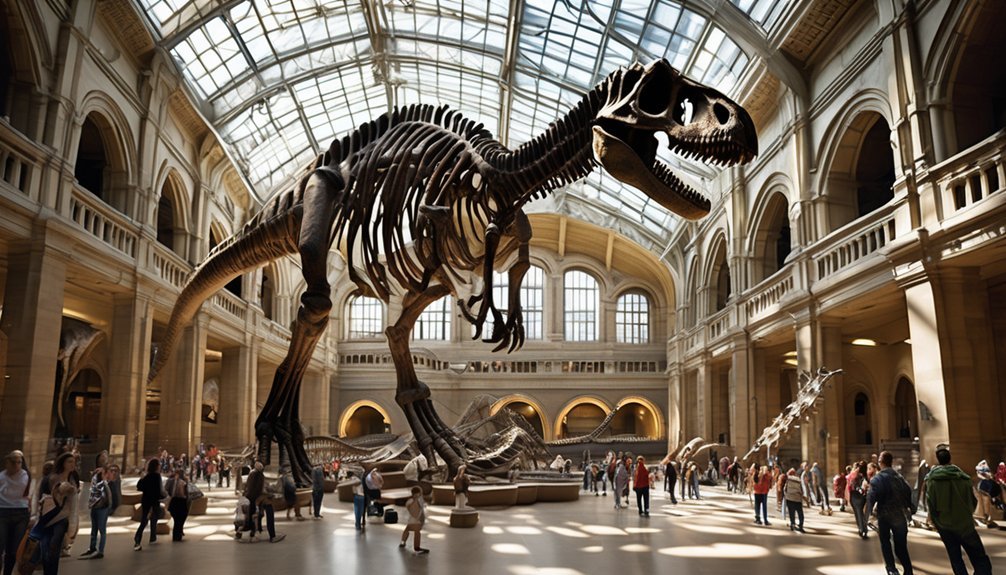
Among dinosaurs, a handful of sauropods reached truly extreme sizes, but you should treat any “biggest” claim as an estimate built from incomplete fossils, not a fixed fact.
When you compare dinosaur size, you’re usually weighing fragmentary vertebrae, limb bones, and scaling models. Argentinosaurus, Patagotitan, and Dreadnoughtus often rank near the top because their remains suggest immense mass and long necks, though exact totals stay uncertain.
You can’t ignore prehistoric habitats, either: rich floodplains and abundant plant growth likely supported such giants. New discoveries may shift rankings as measurements improve.
In practice, you’re looking at ranges, not absolutes, and the evidence points to multiple contenders rather than one undisputed champion. That’s the careful, scientific answer.
The Largest Animals in the Ocean
Out in the ocean, size records are even harder to pin down than on land, because the largest animals are often measured from partial strandings, historical whaling data, and field estimates rather than complete bodies.
You’re usually looking at baleen whales, especially blue whales, which can exceed 30 meters and may weigh over 150 metric tons. Their length and mass vary by sex, age, and condition, so researchers report ranges, not absolutes.
You’ll also encounter fin whales and sperm whales among the giants. During whale migration, these animals traverse vast distances, linking feeding and breeding grounds.

Their presence shapes ocean ecosystems by moving nutrients, supporting predators, and redistributing biomass. When you compare them, you’re seeing the peak of marine vertebrate size.
What Made These Giants Grow So Large?
Large body size in these animals likely evolved through a combination of ecological opportunity, low predation pressure on adults, and efficient energy intake in productive marine environments. You can trace their growth to environmental factors that stabilized metabolism and supported sustained feeding.
- Rich food availability let individuals convert surplus energy into mass.
- Habitat diversity created niches that rewarded larger, more mobile bodies.
- Climate impact altered productivity and migration routes, shaping selection.
- Predator prey dynamics favored size because bigger animals deterred attacks and exploited larger prey.
These conditions produced clear evolutionary advantages: improved energy storage, lower relative heat loss, and greater reproductive output.
When you examine the evidence, you see that size isn’t random; it’s a precise response to long-term ecological pressures.
How Today’s Biggest Animals Compare
Today’s largest animals still stand apart by any measurable standard, but their size is best understood relative to body plan, habitat, and energy strategy rather than length alone.
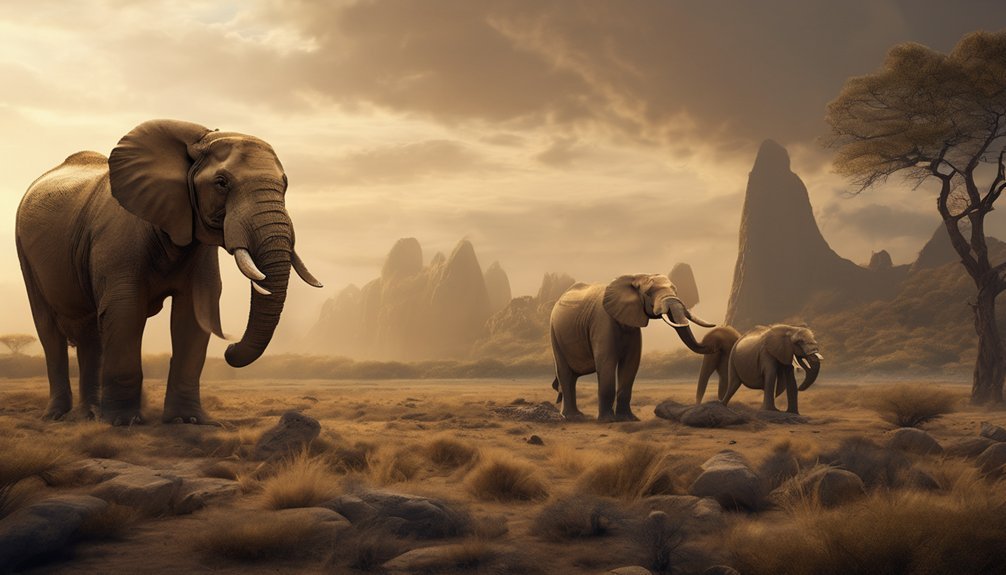
You can compare whale sizes by mass, not just meters, because blue whales distribute weight through buoyant water and filter-feed efficiently. In elephant comparisons, you’ll see a different constraint: terrestrial skeletons must support compressive loads, so African bush elephants top out near several tons, not dozens.
That difference matters biologically. A whale’s elongated torso, reduced limb structure, and low drag let it exceed land mammals by an order of magnitude. Yet elephants excel in maneuverability, endurance, and thermoregulation on land.
When you weigh them side by side, each giant is largest within its own environment, not in absolute terms.
Frequently Asked Questions
Which Giant Animal Fossils Are the Rarest?
You’ll find the rarest giant animal fossils in fragile, incomplete rare fossils from giant species like marine reptiles and early whales; erosion, scavenging, and limited preservation make these specimens exceptionally uncommon and scientifically valuable.
Where Were the Largest Animal Remains First Found?
You’d trace the largest animal remains to fossil locations in South America, especially Argentina and Peru, where excavation techniques uncovered giant prehistoric mammals and whales. Evidence from dated strata pins their first discoveries there.
How Old Are the Oldest Giant Animal Discoveries?
You’d find the oldest giant animal discoveries date to roughly 200 million years ago, from ancient giants in prehistoric habitats. Fossils tell you these remains’re gently preserved echoes of immense, long-vanished life.
Do Giant Animals Have Any Living Descendants?
Yes—you’ll find living giant descendants in whales, elephants, and crocodilians, though not the exact ancient forms. Their evolutionary significance lies in shared ancestry, fossil evidence, and retained adaptations that show how gigantism can persist.
What Tools Do Paleontologists Use to Study Fossils?
You use brushes, chisels, plaster jackets, CT scanners, microscopes, and chemical assays; one site can yield millions of data points. During fossil excavation, you’ll apply dating techniques to verify age, context, and preservation.
Conclusion
You can see the contrast clearly: on land, even the biggest dinosaurs were limited by gravity, bone stress, and circulation, while in the ocean, buoyancy let whales and other marine giants expand far beyond terrestrial limits. Blue whales still stand as the largest known animals, and Perucetus colossus may challenge that claim. When you compare them, you don’t just compare size—you compare the physical rules that shaped each giant.