If you ask which animals show the strongest loyalty, you’ll find the answer isn’t simple. You can observe dogs forming close bonds with people, penguins maintaining long pair bonds, and elephants relying on lifelong family groups. Wolves, swans, dolphins, and beavers also show reliable social attachment in different ways. Each species reveals a distinct pattern of cooperation, protection, and trust that raises a deeper question about what loyalty really means.
Key Takeaways
- Dogs are often considered the most loyal animals because they form strong, responsive bonds with humans through trust and routine.
- Wolves show loyalty through pack cohesion, cooperative care, and disciplined communication that support survival.
- Penguins often keep long-term pair bonds, sharing parenting duties across breeding seasons.
- Elephants display deep family loyalty in matriarch-led herds, using communication and shared care to protect the group.
- Loyalty in animals grows from repeated positive interactions, consistency, and mutual care rather than unconditional attachment.
Dogs: The Classic Loyal Animal Species
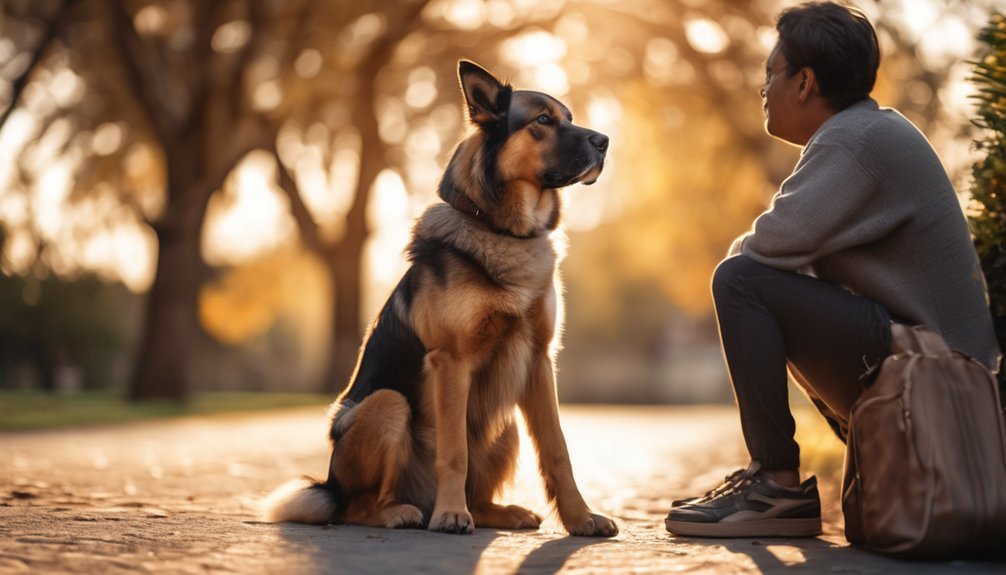
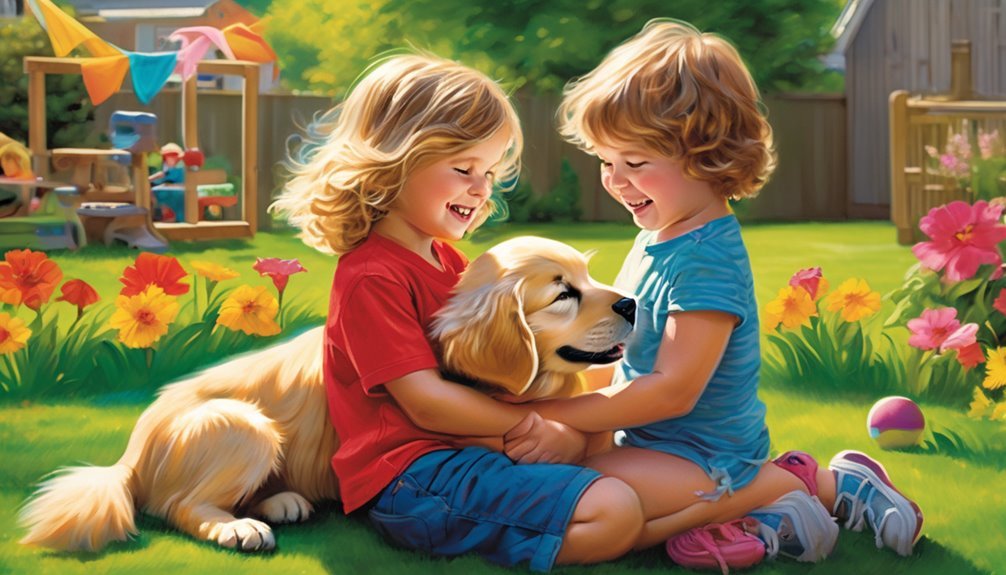
Dogs are widely regarded as the classic example of loyalty in animals because selective breeding and long-term domestication have strengthened their social attachment to humans. You see this bond in your dog’s attentive posture, steady eye contact, and willingness to follow cues.
Canine companionship often reflects social cognition, emotional sensitivity, and learned dependence on human care. When you feed, train, and interact consistently, you reinforce loyalty traits that can persist across contexts.
Canine companionship reflects social cognition, emotional sensitivity, and learned dependence shaped by consistent care.
Research shows dogs detect your tone, scent, and routine, then adjust behavior to match. Their responsiveness makes them reliable partners in households, work, and therapy.
You don’t create devotion by force; you nurture it through trust, predictability, and mutual interaction.
Wolves and Pack Loyalty
Wolves show loyalty primarily through pack cohesion rather than human-like attachment, because survival in the wild depends on coordinated hunting, territory defense, and pup rearing.

You can observe this loyalty in how pack members maintain pack hierarchy and respond quickly to signals from the breeding pair and adults. Each wolf relies on the group’s hunting strategies, which improve success against large prey and reduce individual risk.
You’ll also see cooperative care: older wolves help feed and guard pups, while others patrol boundaries and warn of intruders. This social system favors stable relationships, shared roles, and disciplined communication.
In that sense, wolf loyalty isn’t sentimental; it’s adaptive. Yet you may still notice strong bonds, especially when a pack faces stress, injury, or harsh weather.
Penguins That Mate For Life
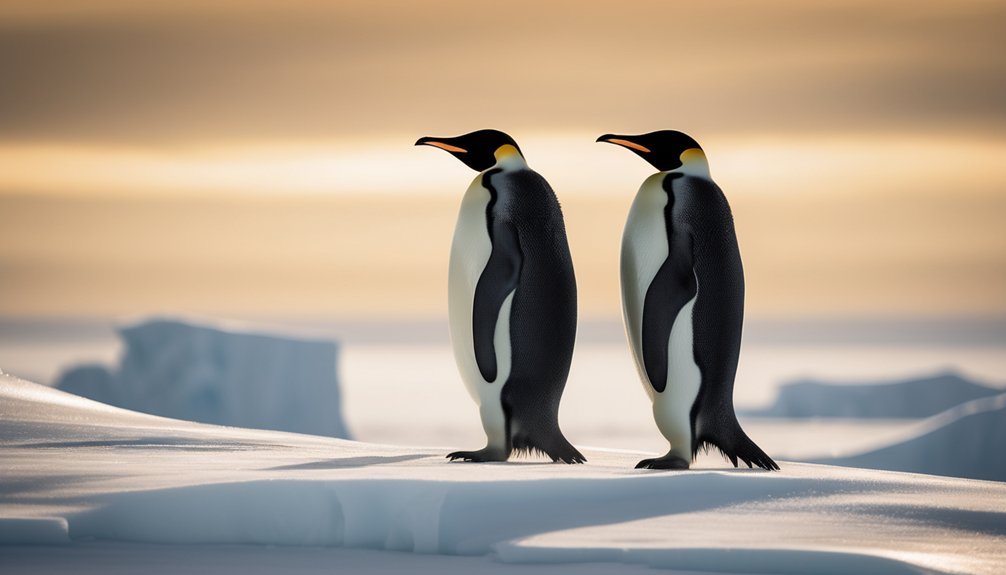
Among many penguin species, you can observe long-term pair bonds that often last across multiple breeding seasons, and in some cases for life.
You’ll notice that mating rituals, communication methods, and habitat choices vary with species differences, but each pair often reinforces social structures through mutual recognition.
You can see shared parenting roles, with both adults incubating eggs and feeding chicks.
Environmental factors like ice stability, food supply, and colony density shape these bonds.
Environmental factors like ice stability, food supply, and colony density shape these bonds.
These evolutionary benefits can improve reproductive success and reduce predation risks. Their survival strategies depend on timing, coordination, and reliable partners.
- You may watch synchronized courtship displays.
- You can hear species-specific calls.
- You’ll find nesting sites selected carefully.
- You can track cooperative chick care.
- You’ll notice bond maintenance under stress.
Swans And Lifelong Pair Bonds
Swans also form enduring pair bonds, and in many species you’ll see the same pair reunite across breeding seasons and maintain a shared territory.
You can observe swans’ courtship through synchronized swimming, mutual preening, and matching head movements that strengthen pair recognition.
Once a bond forms, both birds usually defend the nest site, share incubation duties, and coordinate care of the young with remarkable precision.
This pattern supports lifelong fidelity in many populations, although a bond can end if one partner dies or breeding fails repeatedly.
You may find this closeness striking because it blends instinct, communication, and stability into a single social system.
In behavioral terms, swans offer one of the clearest examples of long-term avian partnership.
Elephants And Strong Family Bonds
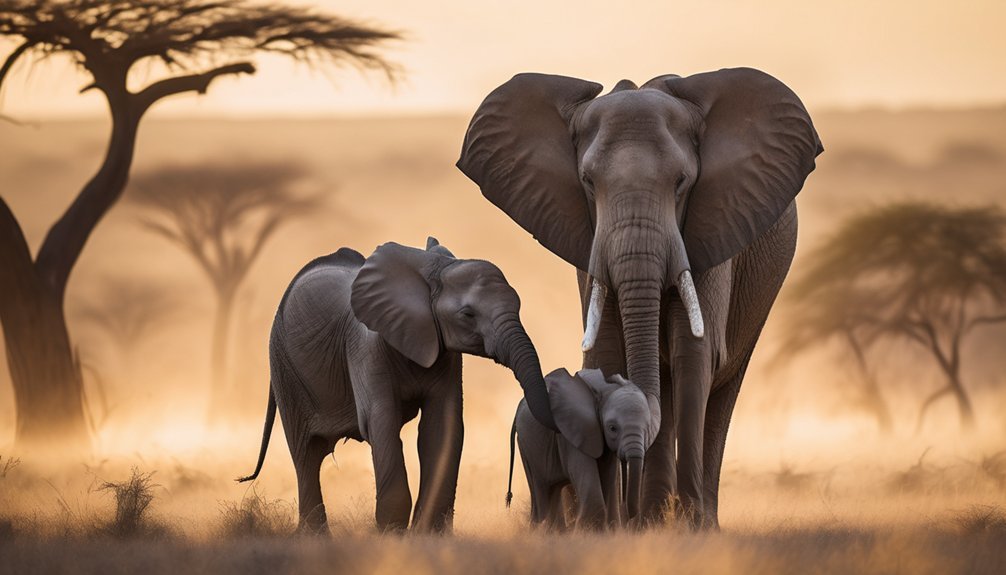
Elephants rely on strong family bonds built around matriarch-led herds, where related females and their offspring remain together for many years.
You can see this social structure in coordinated movement, shared care, and steady herd protection.
Elephant communication uses rumbles, touch, and scent, helping individuals stay connected across distance.

Matriarch leadership guides travel, water access, and danger response with practical accuracy.
Their emotional intelligence supports recognition, memory, and mutual support during stress.
Nurturing behavior appears when adults shelter calves, assist weakened members, and maintain group cohesion.
- You observe trust shaping daily movement.
- You notice adults guarding young calves.
- You hear low-frequency calls linking members.
- You see leadership improve survival choices.
- You recognize loyalty through long-term cooperation.
Gibbons And Close Family Ties
Gibbons live in small family groups centered on a bonded adult pair and their dependent offspring, and you can see their loyalty in daily coordination and territorial defense. You hear this in gibbon communication, where duets, calls, and gestures help keep family cohesion tight.
| Behavior | Function | Result |
|---|---|---|
| Duetting | Signals pair bonds | Reinforces spacing |
| Grooming | Social maintenance | Lowers tension |
| Shared routes | Movement coordination | Improves safety |
You notice that parents and juveniles travel closely, share feeding areas, and respond quickly to each other’s calls. This stable structure reduces conflict and supports offspring survival. Unlike many primates, gibbons rely on long-term partnership rather than large group alliances, so their loyalty stays focused, intimate, and efficient.
Dolphins That Protect Their Pod
Dolphins often protect their pod through coordinated vigilance, rapid communication, and collective movement when threats appear. You can observe how Dolphin communication uses whistles, clicks, and body signals to warn nearby members and organize Pod defense. Their tight spacing makes it harder for predators to isolate calves or vulnerable adults.
- You’ll notice one dolphin scanning while others stay close.
- They can circle threats and present a united front.
- Fast acoustic signals help the pod react quickly.
- Mothers and helpers keep young dolphins centered.
- Group motion can confuse predators and reduce risk.
This behavior’s adaptive value is clear: you get a social mammal that survives better by staying connected, alert, and responsive.
Beavers And Cooperative Family Life
Like dolphins, beavers rely on group coordination, but their loyalty shows up in a different setting: the family lodge and dam. You can see how beaver habitats shape close-knit social structures, where parents and older offspring share family roles.
You’ll notice cooperative foraging as they gather branches and bark, then haul materials together. Their communication methods include tail slaps, scent marking, and body contact, which help maintain territory defense and keep the group aligned.
You can also observe nurturing behavior in the way adults guide kits, groom them, and shelter them in the lodge. This steady parental care supports survival through cold seasons and strengthens the pair bond that anchors the colony.
Cats That Form Deep Attachments
Although cats are often described as independent, many domestic cats form strong attachments to specific people and other animals. You may notice this through consistent proximity-seeking, vocal greeting, and relaxed body posture.
Research shows that feline companionship can support emotional attachment when you provide predictable routines, gentle handling, and responsive care.
- Your cat may follow you from room to room.
- Slow blinking often signals trust.
- Kneading can reflect comfort and security.
- Head rubbing helps mark you as familiar.
- Sleeping near you suggests closeness.
These behaviors don’t indicate dependence alone; they show selective social bonding. When you respect your cat’s preferences, you strengthen a stable, affectionate relationship.
What Animal Loyalty Teaches Us
Animal loyalty shows that social bonds can form across species when trust, consistency, and mutual care are present. You can observe this in animals that return, protect, and respond predictably to familiar partners.
These patterns teach you that loyalty isn’t mystical; it develops through repeated positive interactions and trust building. When an animal remains close, it signals safety, recognition, and learned attachment rather than unconditional love alone.
You can apply this insight to your own relationships by valuing reliability, attentive contact, and calm behavior. Scientific studies show that stable caregiving strengthens affiliation and lowers stress responses in both animals and humans.
If you want closeness, you don’t need grand gestures; you need consistency, respect, and patience, each day, over time, with gentle, reciprocal care.
Frequently Asked Questions
Which Animal Species Is the Most Loyal Overall?
Dogs are generally the most loyal overall. You’ll find dog breeds showing strong loyalty behavior through loyalty examples and animal bonds, especially toward you. Scientific studies consistently support canines’ exceptional social attachment and responsiveness.
Can Loyalty in Animals Extend Beyond Mating Pairs?
Yes, you can see loyalty beyond mating pairs through pack dynamics, social bonds, interspecies loyalty, and long term friendships. You’ll find it in wolves, elephants, and birds, where cooperation and attachment support survival.
Do Loyal Animals Recognize Individual Humans?
Yes, many loyal animals can recognize individual humans, like a lighthouse finding one ship in fog. You’ll see human animal bonds strengthened by emotional intelligence, as memory, scent, voice, and routine guide their responses.
How Does Animal Loyalty Help Survival in the Wild?
Loyalty helps you survive by strengthening pack dynamics and predator protection, improving cooperation, alarm calling, and shared care. You benefit from safer foraging, coordinated defense, and higher offspring survival when group members stay together.
Are Loyalty Traits Inherited or Learned in Animals?
Loyalty traits aren’t purely inherited or learned; you’ll see a map shaped by genetic predisposition and environmental influence. Like a river carving stone, social bonding, behavioral examples, evolutionary advantages, and training effects all interact.
Conclusion
You can see that loyalty in animals isn’t sentimental; it’s social survival. Dogs, wolves, penguins, swans, elephants, dolphins, beavers, and even cats show that steadfast bonds, shared care, and coordinated cooperation improve protection and reproduction. When you study these species, you recognize that loyalty takes many forms, from lifelong pairings to pod support and family cohesion. In every case, dependable relationships drive adaptation, survival, and success.