

Did you know that over 60% of pet owners don’t fully understand what’s in their pet’s food? This lack of knowledge can lead to poor dietary choices, affecting your pet’s health. By examining ingredients, nutritional information, and feeding guidelines, you can make informed decisions. But how do you distinguish between quality ingredients and misleading marketing claims? Understanding these aspects is crucial for your pet’s well-being. Let’s explore how to navigate pet food labels effectively.
Key Takeaways
- Start by reviewing the ingredient list, prioritizing named protein sources over vague terms like “meat by-products.”
- Check the guaranteed analysis for percentages of protein, fat, fiber, and moisture to assess nutritional value.
- Be mindful of common allergens and avoid ingredients like wheat or soy if your pet is sensitive.
- Evaluate feeding guidelines based on your pet’s age, weight, and activity level for tailored nutrition.
- Watch for marketing red flags, ensuring claims are backed by transparency and quality sourcing.
Why Understanding Pet Food Labels Matters

Understanding pet food labels matters because the right nutrition can significantly impact your pet’s health and well-being.
Label literacy helps you navigate the myriad of options available, ensuring you select foods that meet your pet’s specific needs. By focusing on ingredient sourcing, you can make informed choices that prioritize quality and safety.

Understanding ingredient sourcing is essential for making informed choices that prioritize your pet’s health and safety.
This awareness fosters consumer awareness, enabling you to distinguish between brands that prioritize transparency and those that don’t. A keen understanding of nutritional balance is crucial; it ensures your pet receives a complete diet for optimal health.
Ultimately, reading labels empowers you to support your pet’s longevity and vitality, making informed decisions that reflect your values and commitment to their well-being.
Understanding Pet Food Ingredients
Navigating pet food labels requires a closer look at the ingredients listed. Start by examining ingredient sourcing; high-quality sources often indicate better nutrient absorption.
Check the ingredient ratios, as they reflect the primary protein sources and other vital nutrients your pet needs. Be aware of common allergens like wheat or soy, especially if your pet has sensitivities.
Understanding ingredient definitions helps you know what you’re really feeding your pet. Look into processing methods, too, as they can affect nutrient integrity and overall quality assurance.
Decoding Nutritional Information on Pet Food Labels

How can you ensure your pet gets the right nutrients from their food? Start by examining the nutritional breakdown on the label. Look for guaranteed analysis percentages, which indicate the levels of protein, fat, fiber, and moisture. These figures help you assess if the food meets your pet’s specific needs.
Next, pay attention to ingredient sourcing. High-quality ingredients often correlate with better nutrition. Ideally, you’ll want to see named meat sources, whole grains, and fresh vegetables as primary ingredients.
Avoid foods with vague terms like “meat by-products” or artificial additives, as they can compromise your pet’s health. By understanding these elements, you can make informed choices that support your pet’s overall well-being.
Interpreting Feeding Guidelines for Your Pet
When considering the right feeding guidelines for your pet, it’s crucial to evaluate the recommendations based on their age, weight, and activity level.

Start by determining the appropriate feeding amounts, as each pet’s needs vary significantly. Portion control helps maintain a healthy weight and ensures a nutrient balance tailored to your pet’s specific requirements.
Age considerations play a vital role, as puppies and seniors have different nutritional demands. Additionally, be mindful of your pet’s activity level; active pets require more calories.
Ingredient sourcing is also important for overall health, especially if your pet has food allergies.
Finally, consider breed specifics, as certain breeds may have unique dietary needs that affect their well-being.
How to Spot Real vs. Fake Marketing Claims?
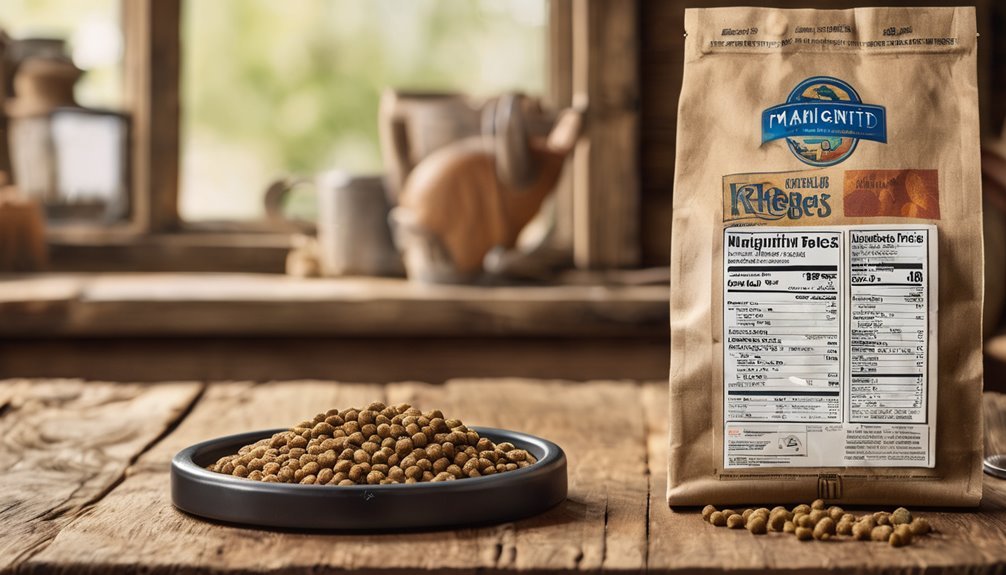
Have you ever wondered whether those enticing claims on pet food labels are genuine or just clever marketing? To spot real versus fake marketing claims, look for marketing red flags like vague terms such as “natural” or “premium.”
These phrases often lack specific definitions and can be misleading. Investigate the ingredient sourcing too; reputable brands will transparently share where their ingredients come from.
Check for certifications from recognized organizations, as these can indicate quality. Additionally, scrutinize the ingredient list—if the first few items are fillers, the product may not live up to its claims.
Choosing Pet Food for Special Dietary Needs
Navigating pet food options becomes even more important when your furry friend has special dietary needs. Start by consulting your vet for recommendations tailored to your pet’s specific health condition diets.
Consider allergy considerations, as some pets may react poorly to common ingredients. Grain-free options are often beneficial for those with sensitivities.
Consider potential allergies in your pet, as some ingredients can trigger sensitivities; grain-free options may provide relief for affected pets.
Look for age-specific formulations that match your pet’s life stage, ensuring they receive appropriate nutrition. Pay attention to protein sources, as quality varies widely; choose options with recognizable, high-quality ingredients.
Finally, manage calorie intake with precision, especially if your pet is overweight or has other health concerns. By focusing on these factors, you can provide your pet with the best possible nutrition tailored to their unique needs.
Conclusion
In the vast forest of pet nutrition, reading labels is your compass. It guides you through the tangled vines of marketing fluff and misleading claims, helping you find the nourishing fruits your pet truly needs. By understanding ingredients and nutritional values, you’re not just feeding your pet; you’re planting the seeds for their health and happiness. Equip yourself with this knowledge, and you’ll ensure your furry friend thrives in their own little corner of the world.