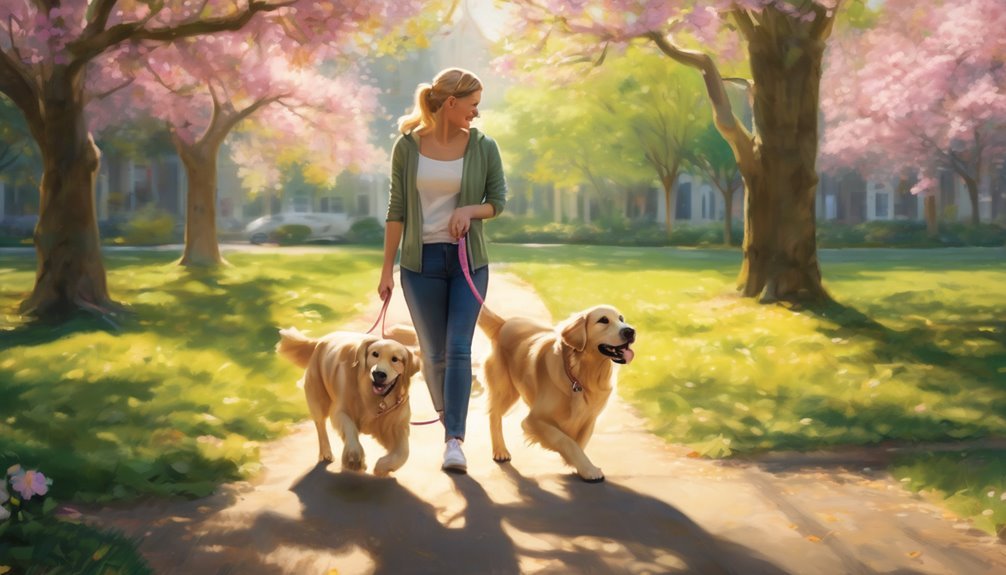
If your dog pulls on the leash, you know how frustrating it can be. It often feels like you’re being dragged rather than enjoying a walk together. Understanding why your dog pulls is the first step to finding effective solutions. With the right tools and techniques, you can transform your walks into a more pleasant experience. Let’s explore essential strategies that can help you regain control and make leash training more enjoyable for both of you.
Key Takeaways
- Use a front-clip harness to discourage pulling and enhance control during walks.
- Start training in low-distraction environments to help your dog focus.
- Reward calm behavior with treats and praise to reinforce good habits.
- Establish a consistent training schedule to foster progress and routine.
- Avoid rushing the process; each dog learns at their own pace.
Why Does Your Dog Pull on the Leash?
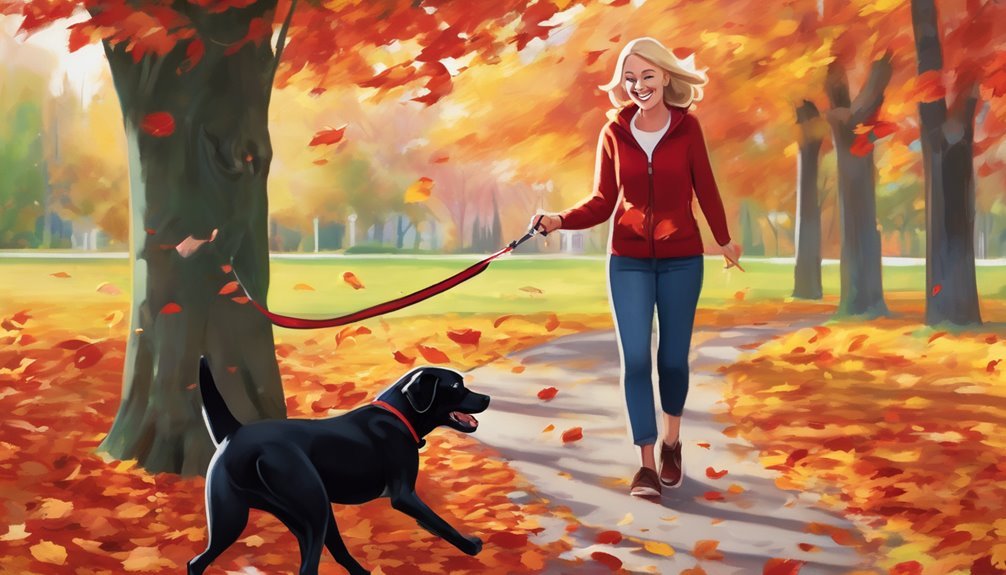
When you take your dog for a walk, it can feel like a tug-of-war match if they pull on the leash. Understanding why this happens is key to improving your walks.
Often, it stems from natural dog behavior; they’re excited to explore their surroundings. Pulling can also indicate a lack of proper leash training. If your dog hasn’t learned to walk beside you, they may see the leash as a way to get ahead.

Additionally, they might be reacting to sights, sounds, or smells that pique their interest.
To tackle this issue effectively, focus on consistent training methods. Reward them for walking calmly by your side, and you’ll gradually foster better leash manners, transforming your walks into enjoyable experiences for both of you.
Essential Tools to Combat Leash Pulling
To tackle leash pulling effectively, having the right tools can make a significant difference. Start by choosing the right harness types. Front-clip harnesses are great for discouraging pulling, as they redirect your dog when they strain against the leash.
Consider a padded harness for comfort, especially on longer walks. Next, select appropriate leash lengths. A standard six-foot leash gives you enough control while allowing your dog some freedom to explore. If you’re in crowded areas, a shorter leash keeps your dog close.
Finally, avoid retractable leashes; they can encourage pulling. With the right harness and leash, you’ll set yourself up for more enjoyable walks, and your dog will learn to walk nicely by your side.
Use These Step-By-Step Techniques to Stop Pulling
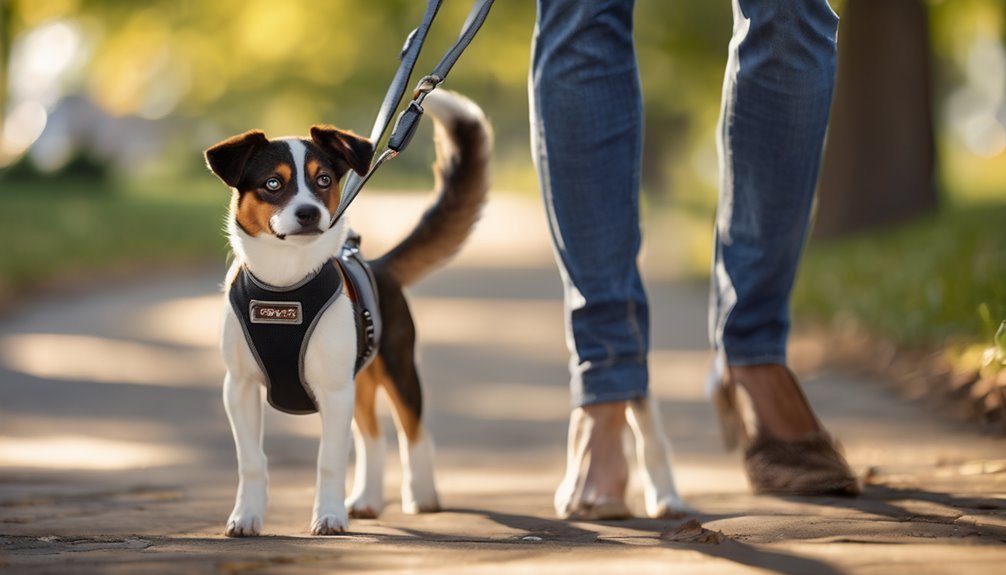
Stopping your dog from pulling on the leash doesn’t have to be a daunting task. Start with positive reinforcement; reward your dog with treats or praise when they walk beside you calmly. Use a stop-and-go technique: whenever they pull, stop walking until the leash slackens. This teaches them that pulling won’t get them anywhere.

| Step | Action |
|---|---|
| 1. Start in a Quiet Place | Choose a low-distraction area. |
| 2. Use Positive Reinforcement | Reward them for staying close. |
| 3. Practice Leash Training | Incorporate short training sessions. |
| 4. Gradually Increase Distractions | Move to busier areas slowly. |
Consistency is key. With patience and these techniques, you’ll enjoy peaceful walks together!
Common Mistakes to Avoid During Training
While it’s easy to get caught up in the excitement of training your dog, avoiding common mistakes can make all the difference in achieving success.
One major pitfall is forgetting to use positive reinforcement consistently. Rewarding your dog for good behavior reinforces leash etiquette and encourages them to stay by your side.
Consistent positive reinforcement is key; rewarding good behavior strengthens leash manners and keeps your dog close.
Another mistake is using the wrong equipment; a poorly fitting collar or harness can lead to discomfort and pulling.
Additionally, don’t rush the process—training takes time, and each dog learns at their own pace.
Lastly, avoid distractions during training sessions. Start in a quiet environment to help your dog focus.
How to Stay Consistent and Patient During Leash Training
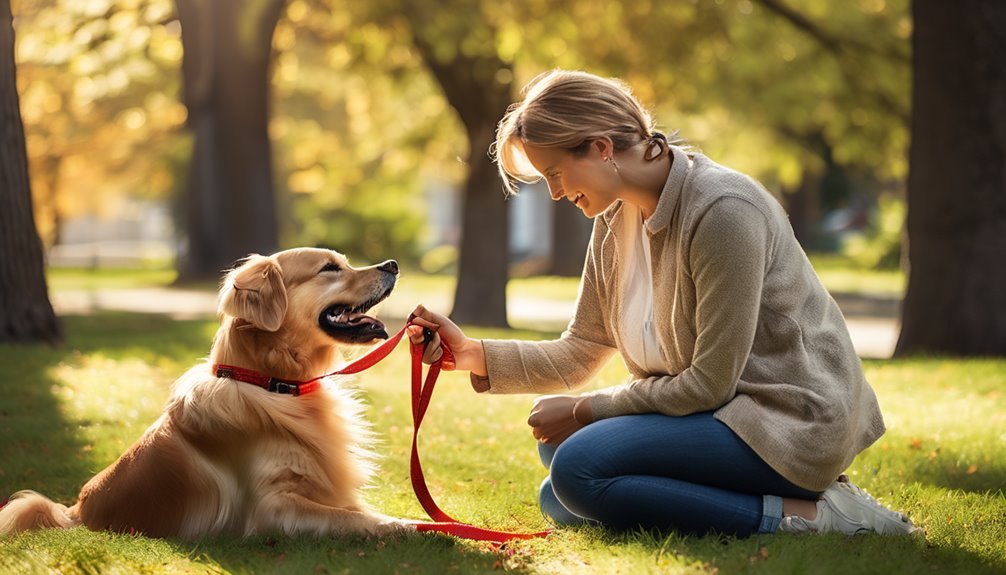
Staying consistent and patient during leash training can significantly impact your dog’s progress. Establish a training schedule that fits your routine, dedicating time each day to practice. Use positive reinforcement—reward your dog with treats or praise when they walk calmly beside you.
Here’s a simple approach to help:
| Tip | Description |
|---|---|
| Set Clear Goals | Define what you want to achieve in each session. |
| Be Patient | Understand that progress may take time. |
| Reward Good Behavior | Use treats or praise to reinforce positive actions. |
| Stick to the Schedule | Consistency is key; practice regularly. |
Conclusion
Just like a gardener patiently nurtures each seed, your journey to stop your dog from pulling requires time and care. Embrace the process, celebrating small victories along the way. With the right tools and consistent training, you’ll cultivate a strong bond built on trust and understanding. Remember, every dog learns at their own pace, so be the steady hand guiding them forward. With patience, your efforts will blossom into enjoyable walks together, free from the tug of the leash.