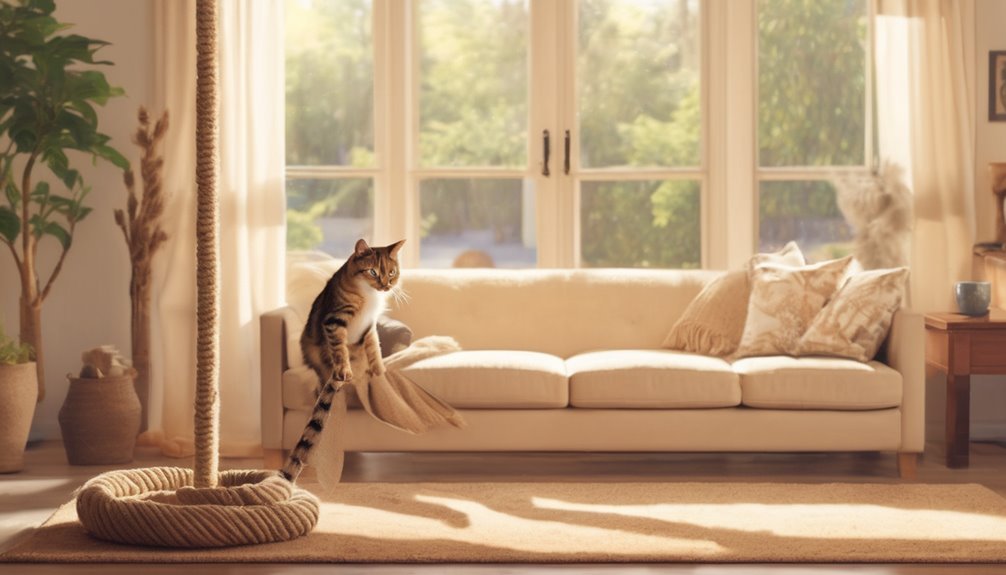
If your cat’s scratching habits are driving you crazy, you’re not alone. Understanding why cats scratch is key to finding effective solutions. With the right approach and a few simple tools, you can redirect their behavior while protecting your furniture. It’s about creating a balance between their instincts and your home’s aesthetics. Let’s explore how to choose the right scratching post and other strategies to keep both you and your cat happy.
Key Takeaways
- Provide a variety of scratching posts with suitable materials and heights to encourage appropriate scratching behavior.
- Use positive reinforcement, like treats and praise, when your cat uses the scratching post.
- Engage your cat with interactive toys to reduce boredom and the urge to scratch furniture.
- Apply deterrents, such as unpleasant scents or texture barriers, to areas where scratching occurs.
- Regularly trim your cat’s nails and consider using nail caps to minimize furniture damage.
Why Do Cats Love to Scratch Furniture?
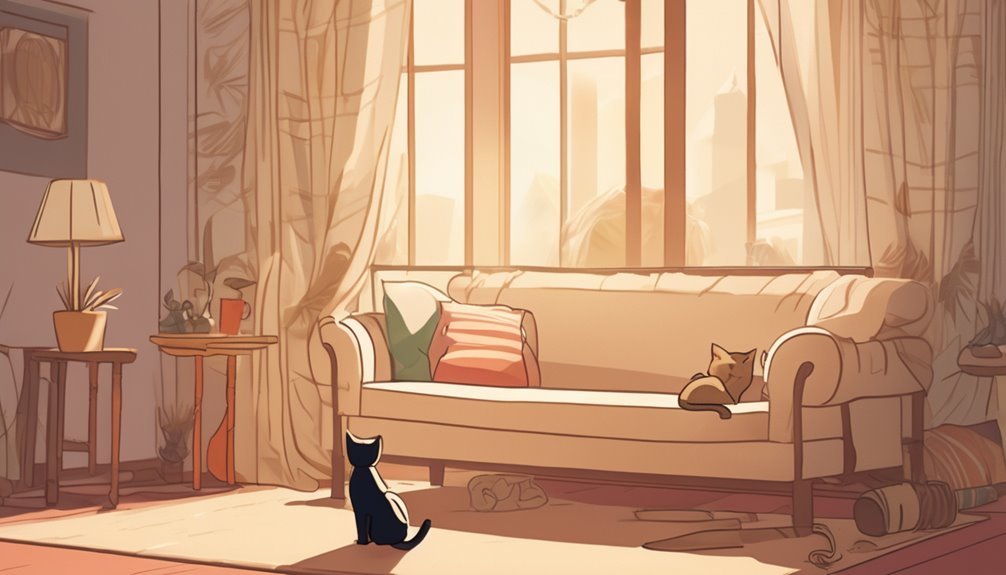
Cats scratch furniture for several reasons, and understanding why can help you manage their behavior.
One key factor is their scratching behavior, which stems from their natural feline instincts. Scratching helps them mark territory, as they’ve scent glands in their paws that release pheromones. This instinctual action also aids in maintaining their claws, keeping them sharp and healthy.
Additionally, your cat may scratch to stretch their muscles or relieve stress. When you recognize these motivations, it becomes easier to redirect their energy.

Providing alternative outlets, like scratching posts, can help satisfy their needs while protecting your furniture. By empathizing with your cat’s instincts, you can create a harmonious living space for both of you.
Choosing the Right Scratching Post for Your Cat
Have you ever wondered how to choose the perfect scratching post for your feline friend? Selecting the right scratching post can make all the difference in saving your furniture.
Pay attention to scratching post materials—cats often prefer sisal or cardboard, as these mimic natural textures. Look for a sturdy base to prevent tipping during use.
Consider materials like sisal or cardboard for scratching posts, as they replicate natural textures and keep your cat engaged.
The ideal post height is crucial, too; it should be tall enough for your cat to stretch fully. Generally, a post that’s at least 24 inches tall works well for most cats.
Don’t forget to consider your cat’s scratching style—some love vertical posts, while others prefer horizontal surfaces. By choosing wisely, you’ll encourage your cat to scratch where it’s appropriate!
How to Train Your Cat to Use Scratching Posts Effectively
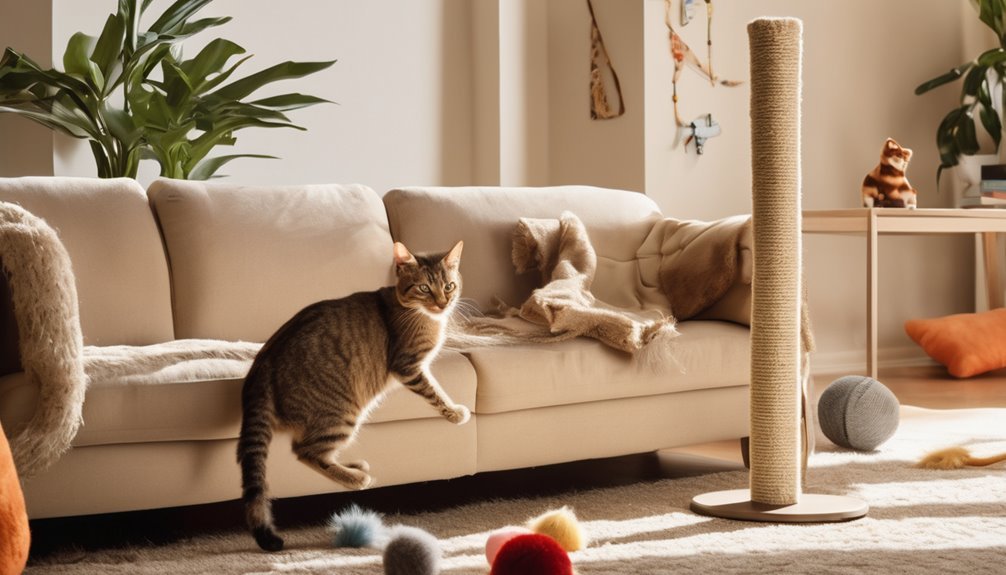
Choosing the right scratching post is just the first step; training your cat to use it effectively is key to protecting your furniture.
Start by placing the post in an area your cat frequents, ideally near their favorite resting spots. Use positive reinforcement when your cat uses the post—offer treats or praise to encourage this scratching behavior.
You can also gently guide their paws to the post when you catch them scratching elsewhere. Consistency is crucial, so keep reinforcing these training techniques daily.
If your cat seems uninterested, try different post styles or materials that might appeal more to them.
With patience and dedication, you’ll help your cat develop healthy scratching habits while keeping your furniture safe.
How Engaging Toys Can Help Reduce Cat Scratching
While your cat’s natural instinct to scratch can be frustrating, engaging toys can serve as an effective distraction.

By incorporating interactive play into your cat’s routine, you not only keep them entertained but also provide essential sensory stimulation.
Toys that move, make sounds, or mimic prey can captivate your cat’s attention and redirect their energy away from your furniture.
Consider feather wands, laser pointers, or electronic mice that encourage active engagement.
The more you stimulate your cat’s instincts through these toys, the less they’ll feel the urge to scratch your couch or chairs.
Using Deterrents to Protect Your Furniture From Scratching
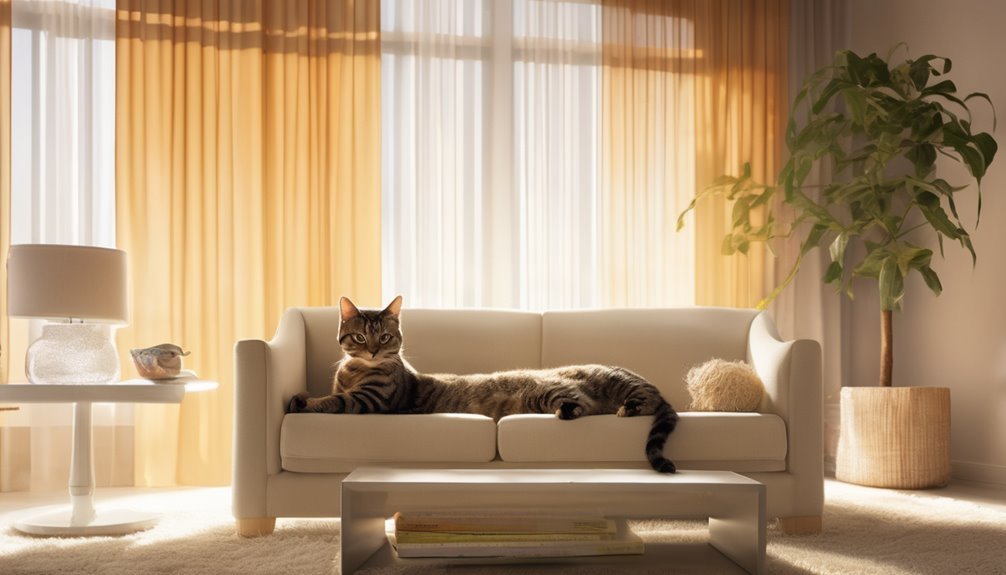
To protect your furniture from scratching, employing deterrents can be an effective strategy.
Consider using spray deterrents designed to discourage your cat from scratching. These sprays have scents that cats typically find unpleasant, helping to keep them away from your beloved couch or chair.
Additionally, texture barriers can be a great option. Cover vulnerable areas with materials that feel unpleasant to your cat’s paws, like double-sided tape or specialized fabric.
By combining these methods, you create an environment that encourages your cat to seek out more appropriate scratching surfaces.
Regular Nail Maintenance: Trimming and Caps
Even with deterrents in place, regular nail maintenance is key to protecting your furniture from scratches. Nail trimming is essential; keeping your cat’s claws short minimizes damage. Aim to trim their nails every few weeks, using a quality cat nail clipper. If you’re unsure, ask your vet for tips or a demonstration.
In addition to trimming, consider using nail caps. These soft, plastic covers fit over your cat’s claws and prevent scratching while allowing them to extend their natural behavior. They’re easy to apply and can last several weeks.
Combining nail trimming with caps not only safeguards your furniture but also keeps your cat comfortable. With these practices, you can create a harmonious home for both you and your feline friend.
Creating a Cat-Friendly Space to Minimize Scratching
Creating a cat-friendly space can significantly reduce your feline’s urge to scratch furniture. Start by designing cat-friendly layouts that include designated scratching zones.
Place scratching posts or pads in areas where your cat likes to hang out, ideally near their favorite resting spots. Consider varying the types of scratching surfaces, like sisal, cardboard, or carpet, to keep them engaged.
You can also use cat trees or shelves to encourage climbing and play, which diverts attention from your furniture. Ensure these zones are easily accessible and visible, making it inviting for your cat.
Conclusion
By providing proper posts, playful toys, and positive reinforcement, you’ll create a comfortable cat haven that curbs clawing. Remember, patience and persistence are key in this playful partnership. With a little love and understanding, you can protect your furniture while keeping your feline friend fulfilled. So, set up those scratching spots, sprinkle in some engaging activities, and soon, your kitty will be happily honing their habits in harmony!