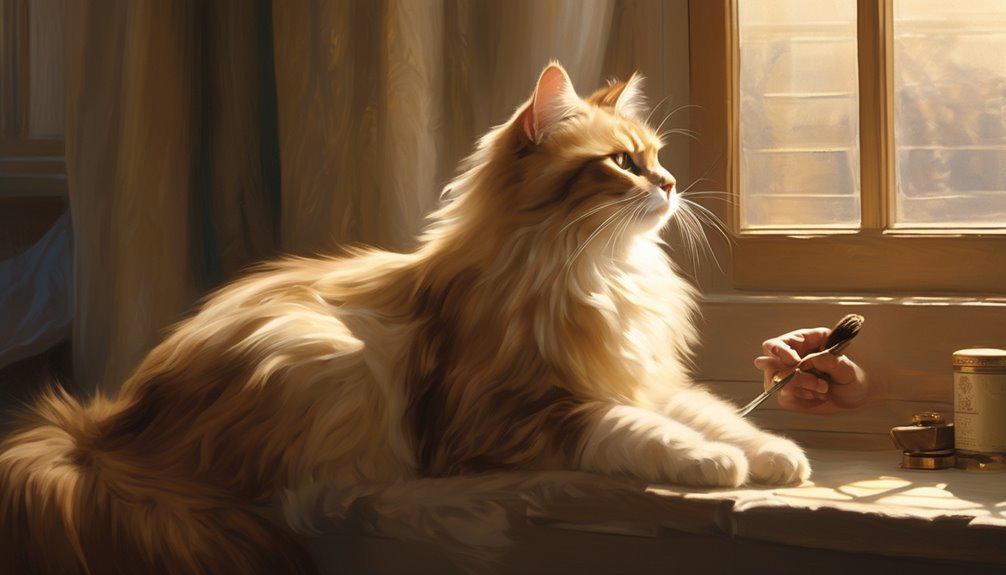
Grooming a long-haired cat can be a rewarding experience, not just for your pet’s coat but also for your bond with them. A well-maintained coat helps prevent mats and reduces shedding, making your home more comfortable. Understanding the right techniques and tools is essential for effective grooming. You might be surprised at how simple adjustments can make a world of difference in your cat’s grooming routine. Let’s explore the best practices to keep your feline looking and feeling great.
Key Takeaways
- Brush your cat 2-3 times a week using a slicker brush and wide-toothed comb to prevent matting and reduce hairballs.
- Bathe your cat with sensitive skin shampoo in lukewarm water, avoiding the face to keep them comfortable.
- Use detangling sprays to loosen mats before gently working through them with your fingers or a comb.
- Regularly trim nails with clippers to maintain your cat’s paw health and prevent scratching.
- Make grooming sessions rewarding with treats and affection to strengthen your bond and keep your cat calm.
Essential Reasons for Grooming Your Long-Haired Cat
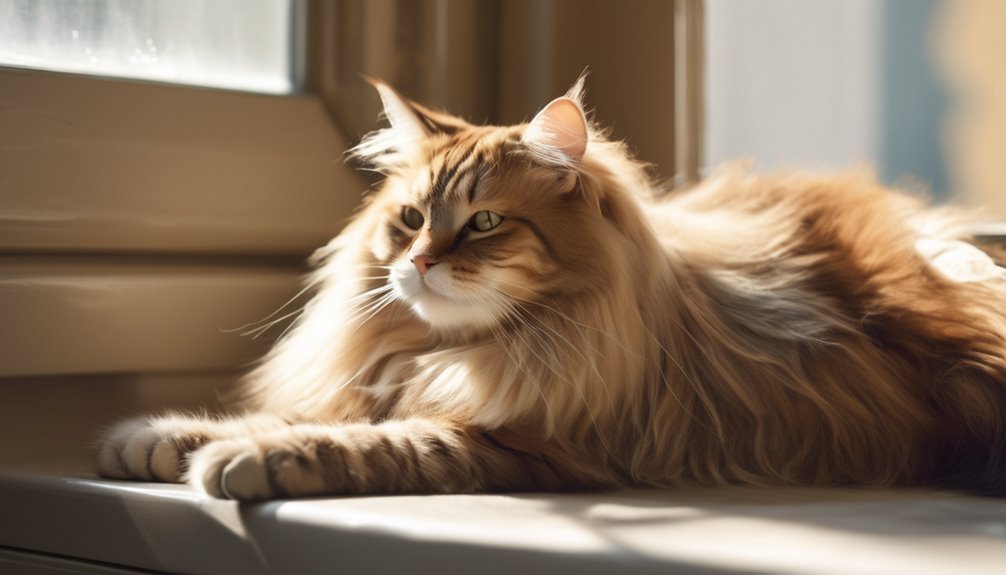
Grooming your long-haired cat isn’t just about keeping their fur looking fabulous; it’s essential for their overall health and well-being. Regular grooming helps prevent matting, which can lead to skin irritations and infections. You’re also reducing the risk of hairballs, a common issue for long-haired breeds.
Beyond the health benefits, grooming provides invaluable bonding time between you and your feline friend. As you brush their fur, you’re not only removing loose hair but also creating a sense of trust and comfort. This intimate interaction can strengthen your relationship, making your cat feel more secure and loved.
Must-Have Tools for Grooming Success
To achieve grooming success with your long-haired cat, you’ll need a few essential tools that make the process easier and more effective. Regular grooming frequency is key, so having the right tools on hand will help you stay consistent. Here’s a quick overview of must-have grooming tools:

| Tool | Purpose | Maintenance |
|---|---|---|
| Slicker Brush | Removes mats and tangles | Clean bristles regularly |
| Wide-Toothed Comb | Detangles and smooths fur | Rinse under warm water |
| Grooming Glove | Collects loose hair effortlessly | Wash as needed |
| Nail Clippers | Keeps claws trimmed and healthy | Sharpen blades regularly |
| Cat Shampoo | Cleans and freshens fur | Store in a cool place |
Invest in these tools, and ensure you maintain them to promote a happy grooming experience for both you and your cat.
Step-by-Step Brushing Techniques for Long-Haired Cats
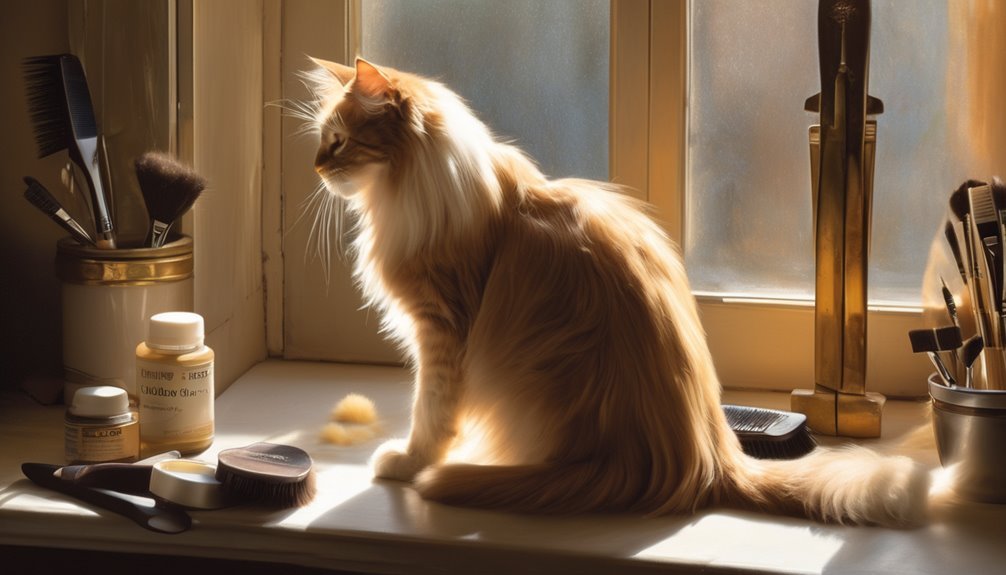
Brushing your long-haired cat can be a rewarding experience for both of you, and following a step-by-step approach helps make it enjoyable.
Brushing your long-haired cat can be a delightful bonding experience, especially with a thoughtful step-by-step approach.
To keep your cat’s coat healthy, consider these techniques based on their coat types and brushing frequency:
- Start with a Wide-Toothed Comb: Gently work through tangles, starting from the ends and moving towards the roots. This minimizes discomfort and prevents breakage.
- Use a Slicker Brush: Once the tangles are out, use a slicker brush to remove loose hair and debris. Focus on areas prone to matting, like behind the ears and under the legs.
- Finish with a Soft Brush: For a smooth finish, use a soft brush to distribute natural oils, enhancing your cat’s coat shine.
Regular brushing, ideally 2-3 times a week, helps maintain their beauty!
Bathing Your Long-Haired Cat: A Safe Approach
After getting your long-haired cat’s coat nice and tangle-free, it’s time to consider bathing, which can be a vital part of their grooming routine. Choose a cat shampoo specifically formulated for their sensitive skin. Fill a tub or sink with lukewarm water, gently wet your cat’s coat, and apply the shampoo, avoiding their face.
Here’s a quick guide for drying methods:
| Drying Method | Description |
|---|---|
| Towel Drying | Wrap your cat in a soft towel, gently patting to absorb water. |
| Air Drying | Let them air dry in a warm, draft-free room. |
| Blow Drying | Use a low-heat setting if your cat tolerates it. |
| Combination Drying | Start with towel drying, then switch to air or blow drying. |
Always ensure your cat feels comfortable throughout the process.
How to Tackle Mats and Tangles Efficiently
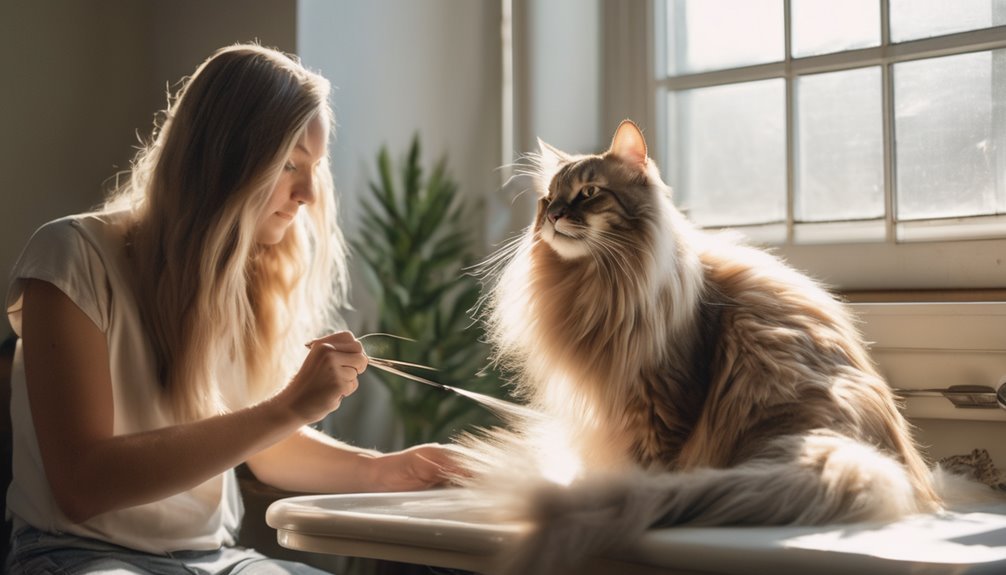
How can you effectively tackle those pesky mats and tangles in your long-haired cat’s fur?
First, you’ll want to gather the right tools and techniques to make the process smoother for both of you. Here are three essential steps:

- Use Detangling Sprays: Apply a cat-safe detangling spray to loosen the mats, making it easier to work through them.
- Gently Work Through Mats: Start at the outer edges of the mat, using your fingers or a wide-toothed comb to carefully tease it apart.
- Employ Mat Removal Techniques: For stubborn knots, use specialized mat rakes or scissors, but be cautious not to cut your cat’s skin.
With patience and compassion, you’ll keep your feline’s coat beautiful and healthy!
Effective Strategies for Minimizing Shedding and Hairballs
Managing shedding and hairballs in long-haired cats can feel like a daunting task, but with the right strategies, you can significantly reduce these issues.
For effective shedding prevention, brush your cat regularly—at least three times a week. This not only removes loose hair but also distributes natural oils, promoting a healthy coat.
Consider adding hairball remedies to their diet, such as specialized cat food or treats containing fiber, which help keep hairballs at bay.
Additionally, encourage hydration by providing fresh water and wet food, which aids digestion.
Regular vet check-ups are essential to rule out any underlying health problems.
Creating a Positive Grooming Experience for Your Cat
Creating a positive grooming experience for your long-haired cat starts with understanding their unique needs and preferences. Use these strategies to ensure a stress-free session:
1. Choose the Right Time: Pick a calm moment when your cat is relaxed. This helps them associate grooming with comfort.
2. Employ Calming Techniques****: Use gentle strokes and speak softly.
You might also consider playing soothing music to create a serene atmosphere.
3. Incorporate Positive Reinforcement****: Reward your cat with treats or praise during and after grooming.
This builds a positive association, making future sessions easier.
Conclusion
In conclusion, consistent care cultivates a cozy connection with your long-haired cat. By employing essential grooming techniques, you not only banish bothersome mats and minimize messy shedding but also foster a feeling of trust and tranquility. Remember, patience and positivity pave the way for a pleasant grooming experience. So, grab those grooming tools, and transform your time together into a soothing, shared ritual that strengthens your bond and keeps your feline friend fabulously fluffy!