
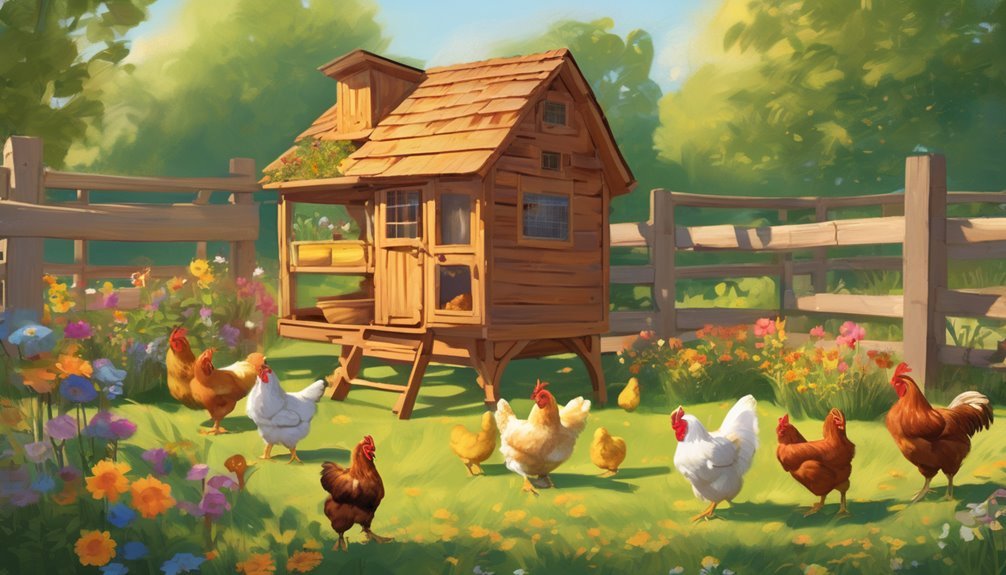
Raising chickens can be a rewarding experience, providing fresh eggs and a lively atmosphere in your backyard. To get started, you’ll need to consider the right breed for your goals, whether you’re aiming for egg production or meat. But that’s just the beginning; there’s much more to ensuring your flock thrives. From coop setup to monitoring health, each step plays a crucial role in your success. Let’s explore these essential tips.
Key Takeaways
- Choose the right chicken breed based on your goals, whether for egg production or meat, and consider climate suitability.
- Set up a secure coop with proper ventilation, nesting boxes, and predator protection to ensure a safe environment.
- Feed chickens a balanced diet with quality layer feed, and provide fresh water daily for optimal health.
- Monitor flock dynamics and pecking order to maintain social harmony and identify any behavioral issues.
- Stay alert for common health problems, implement preventive measures, and consult a vet for vaccinations and care.
Choosing the Right Chicken Breed for Your Chicken Keeping Journey
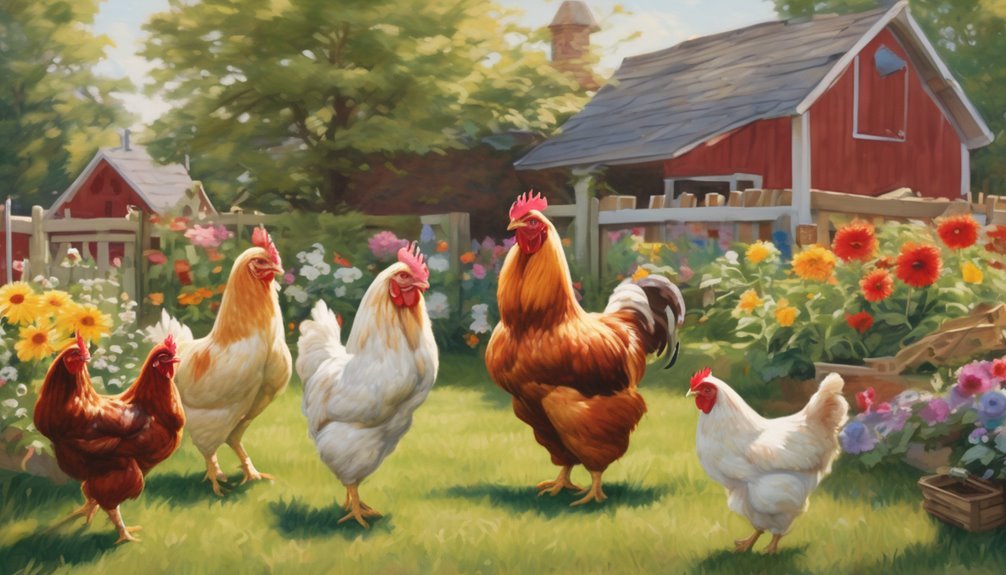
When you’re choosing the right chicken breed for your chicken-keeping journey, what factors should you consider?
When selecting a chicken breed, consider your flock’s purpose, climate, and temperament for a rewarding experience.
First, think about the purpose of your flock. Are you primarily interested in egg production, or do you want a mix of eggs and meat? If it’s eggs you’re after, consider breeds like the Leghorn or Rhode Island Red, known for high egg yields. Heritage breeds, like the Orpington, not only offer great flavor but also lay well.
Next, consider your climate and space. Some breeds thrive in colder weather, while others prefer warmer climates.

Finally, think about temperament. Friendly breeds like the Sussex can make chicken-keeping enjoyable, especially if you have kids.
Choose wisely, and you’ll enjoy your journey!
Essential Coop Setup: Creating a Safe Home for Your Chickens
A well-designed chicken coop is crucial for the health and happiness of your flock. Start by ensuring proper coop ventilation; good airflow keeps your chickens cool and prevents respiratory issues. Install windows or vents to allow fresh air in while keeping predators out.
Next, incorporate nesting boxes to give your hens a safe, comfortable place to lay eggs. Aim for one box for every three hens, placing them at a low height for easy access. Use straw or wood shavings for bedding to keep the boxes clean and cozy.
Finally, ensure your coop is secure from predators with sturdy locks and fencing. By setting up a safe, comfortable environment, you’ll help your chickens thrive and enjoy their time with you.
How to Feed Your Chickens: Nutrition and Treats
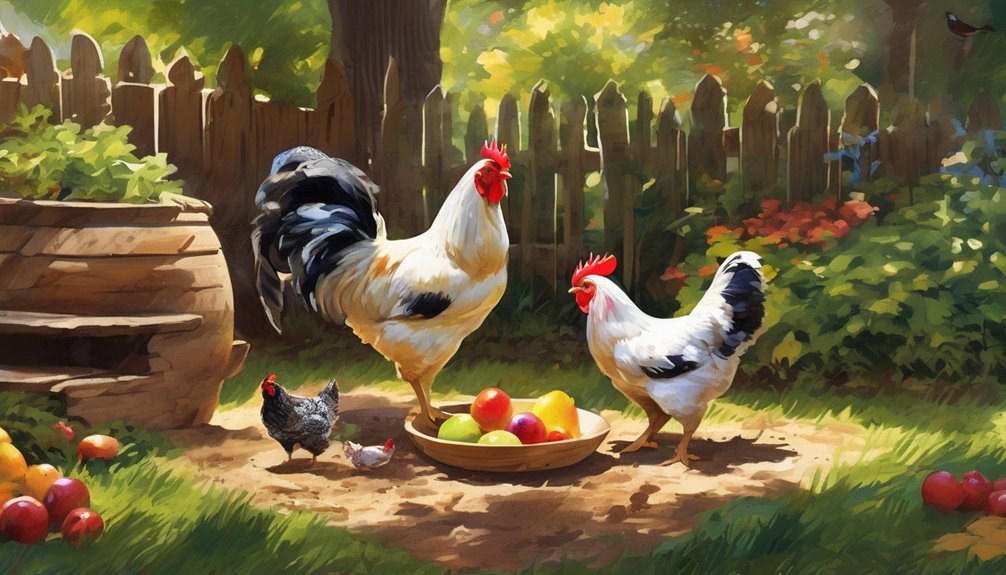
Feeding your chickens properly is essential for their overall health and egg production, so it’s crucial to provide a balanced diet. Establish a consistent feeding schedule, offering a quality layer feed that meets their nutritional needs.
Don’t forget to include nutritional supplements if necessary, especially during molting or peak production. Treat variety is key—offer fruits, vegetables, and grains in moderation to keep them interested.
Ensure water quality is always high; fresh, clean water is vital for hydration and digestion.
Give your chickens foraging opportunities by allowing them to roam safely, as this promotes natural behaviors and enriches their diet.

Use appropriate feeding tools, like feeders and waterers, to minimize waste and make feeding more efficient.
Key Chicken Behaviors and Social Interactions to Monitor
Chickens are social creatures, and their behaviors and interactions can tell you a lot about their health and happiness. One key aspect to monitor is the pecking order, which establishes hierarchy within the flock.
Chickens thrive on social interactions, and understanding their pecking order reveals insights into their health and well-being.
Look for dominant chickens asserting themselves through pecking or posturing. This behavior is normal, but excessive aggression can indicate stress or overcrowding.
Also, observe flock dynamics. Chickens often form bonds, so watch for groups that hang out together.
If you notice a bird isolated from the rest, it might be a sign of illness or bullying. Regularly assessing these interactions helps you maintain a harmonious environment, ensuring your flock thrives and stays content.
Health Issues to Watch For and Keeping Your Chickens Healthy
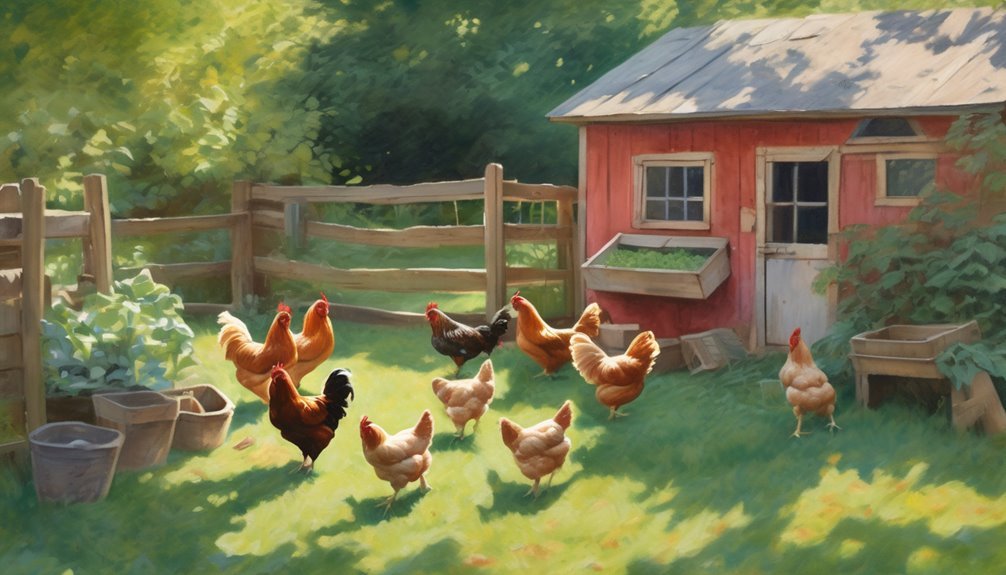
While you may enjoy watching your chickens roam freely, it’s crucial to stay vigilant about their health. Common ailments like respiratory issues or mites can quickly affect your flock.
Implement preventive measures, such as keeping their living space clean and ensuring proper ventilation. Regularly check your chickens for signs of distress, like lethargy or unusual droppings, as these can indicate underlying health problems.
Establish a vaccination schedule to protect against diseases and consult your vet for tailored advice. Don’t forget about parasite control; regularly inspect for worms or external pests.
Lastly, be mindful of environmental factors, like temperature and humidity, which can impact your chickens’ well-being. Keeping these tips in mind will help ensure a healthy, happy flock.
What to Expect When Harvesting Eggs and Management Tips?
When you decide to start harvesting eggs, you’ll quickly realize it’s more than just collecting them from the nest. Proper management ensures your egg collection is efficient and your eggs remain fresh.
Here are three essential tips:
- Regular Collection: Gather eggs at least once daily to prevent them from becoming dirty or damaged. Fresh eggs also discourage hens from developing bad habits, like pecking at eggs.
- Clean Handling: Always handle eggs gently. If they’re dirty, wipe them with a dry cloth rather than washing, to preserve their protective coating.
- Proper Storage: Store eggs in a cool, dry place. Ideally, keep them in the refrigerator, pointed end down, to maintain freshness.
Following these tips will help you enjoy a successful egg-harvesting experience!
Conclusion
In your chicken-keeping journey, think of each hen as a note in a symphony, harmonizing to create a thriving flock. By choosing the right breed, crafting a cozy coop, and feeding them well, you lay the foundation for success. Monitor their behaviors and health like a conductor, ensuring every element plays its part. As you gather fresh eggs, you’ll witness the fruits of your labor, a beautiful cycle of care and reward, enriching your life with each cluck.