If you’ve noticed your dog acting anxious, you’re not alone. Many pet owners face this challenge, and it can be tough to see your furry friend struggle. Understanding their signs and triggers is crucial. You can create a supportive environment that promotes calmness and security. But where do you start? Let’s explore effective strategies to help your anxious dog feel more at ease and regain their confidence.
Key Takeaways
- Create a safe space with familiar items to provide your dog a comforting environment during stressful situations.
- Use desensitization techniques by gradually exposing your dog to anxiety triggers in controlled settings.
- Employ calming products like anxiety jackets or pheromone diffusers to alleviate stress.
- Observe and respond to body language cues to understand your dog’s specific anxiety triggers.
- Incorporate positive reinforcement through treats and praise to encourage calm behavior and safe space usage.
Recognizing Signs of Anxiety in Dogs
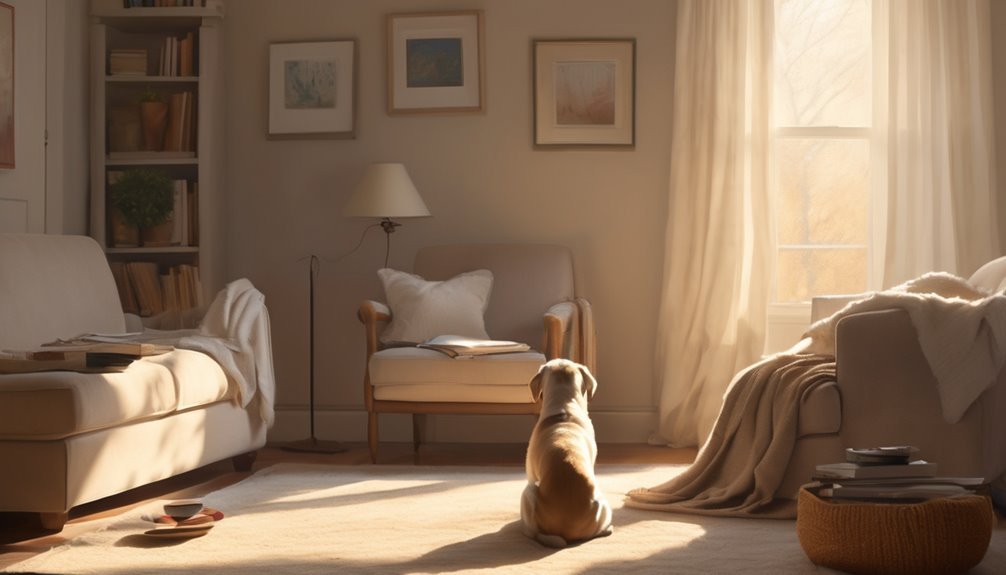
When you notice your dog acting differently, it’s essential to recognize the signs of anxiety early on. Pay attention to body language cues like tucked tails, flattened ears, and excessive panting.
Vocalization signals, such as whining or barking, can also indicate distress. Consider environmental factors that might trigger fearful behaviors, like loud noises or new surroundings.
Vocalizations like whining or barking often reveal your dog’s distress, especially in response to loud noises or unfamiliar environments.
Watch for stress indicators, including pacing or withdrawal during social interactions. Your dog may exhibit situational responses, like hiding when faced with certain stimuli.
Understanding these signs can help you identify coping mechanisms your dog might use, such as chewing or seeking comfort. By being observant, you can better support your anxious dog and create a more peaceful environment for them.

Identifying Common Triggers of Dog Anxiety
Identifying the common triggers of dog anxiety is crucial for helping your furry friend feel more at ease.
Environmental factors, like loud noises or crowded spaces, can heighten anxiety, especially in noise-sensitive breeds. Social interactions, whether with other dogs or people, may also cause distress.
Separation anxiety often arises from health issues, past trauma, or training inconsistencies. You might notice your dog becoming anxious during significant lifestyle changes, like moving or new family members.
Breed predisposition plays a role too; some breeds are more prone to anxiety.
Creating a Safe Space for Your Anxious Dog
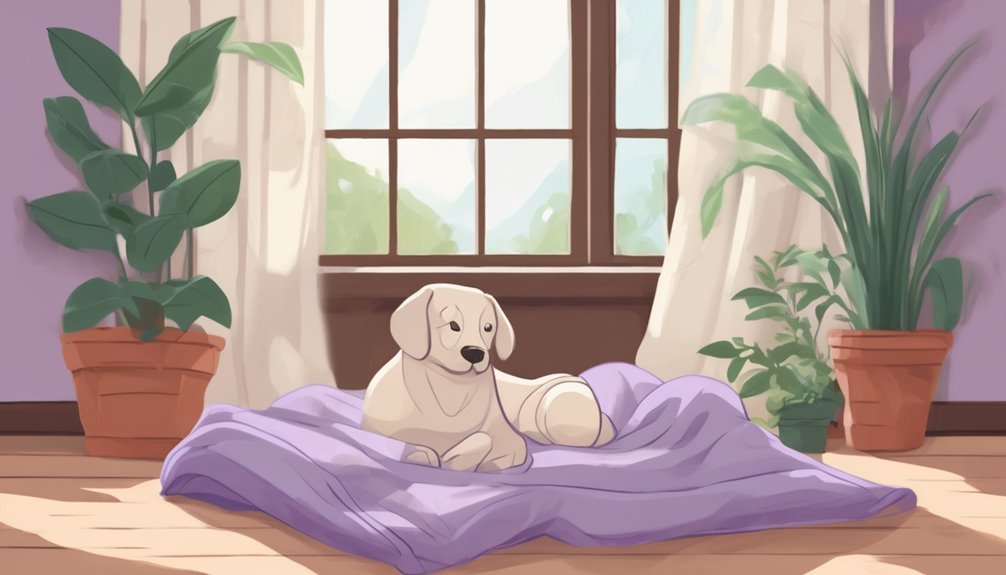
Understanding your dog’s anxiety triggers lays the groundwork for creating a safe space where they can feel secure and relaxed.
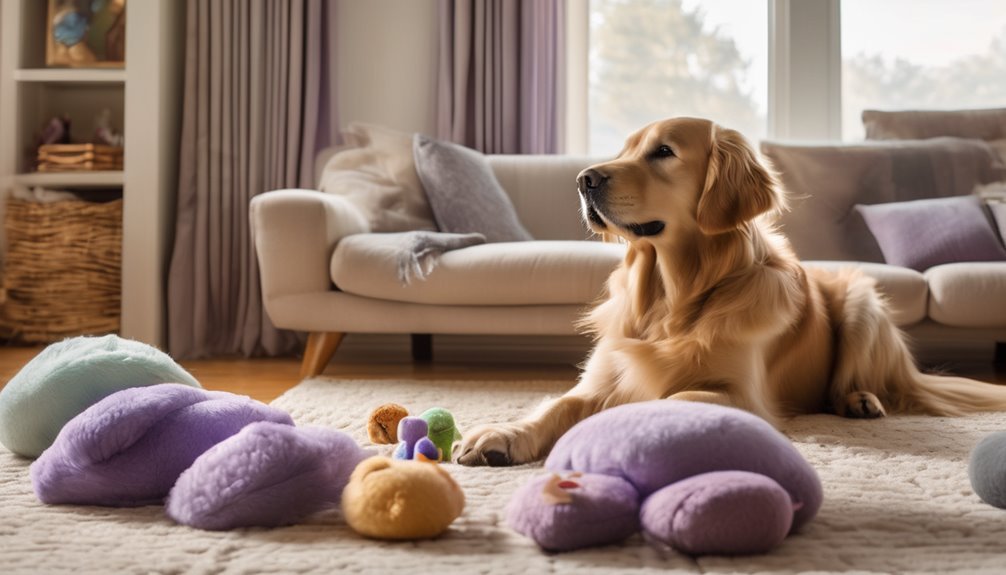
Start by designating areas in your home as safe zones. These quiet spaces should have visual barriers, like curtains or furniture, to minimize distractions. Include comfort items such as your dog’s favorite blanket or toys, and add familiar scents to enhance their feeling of safety.
Designate safe zones in your home with visual barriers, comfort items, and familiar scents to help your dog feel secure.
Play calming music to further create a soothing environment. When your dog uses these spaces, reinforce their behavior with positive reinforcement, encouraging them to seek solace there.
With patience and attention, you’ll provide a sanctuary that helps your anxious dog find peace and confidence in their surroundings.
Use Desensitization Techniques at Home
Desensitization techniques can be a powerful tool for helping your anxious dog feel more comfortable in their environment. By using counter conditioning methods and gradual exposure, you can help your dog associate previously frightening stimuli with positive experiences. Start small and gradually increase the intensity of the exposure.
Here’s a simple table to guide you:
| Exposure Level | Activity |
|---|---|
| Low | Play calming music |
| Medium | Short walks in quiet areas |
| High | Controlled encounters with other dogs |
Always reward your dog with treats and praise during these sessions. This positive reinforcement builds their confidence and helps them feel secure in their surroundings. Remember, patience is key!
Best Calming Products and Tools for Anxious Dogs
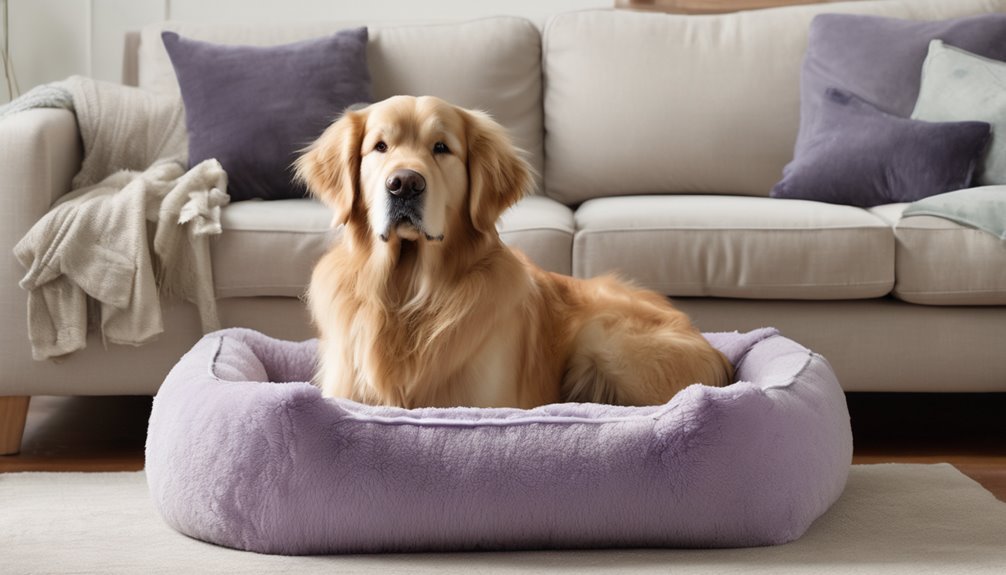
When you’re trying to soothe your anxious dog, the right calming products and tools can make a world of difference.
Consider using calming collars or anxiety jackets, which provide gentle pressure that helps relax your pup. Anxiety wraps are also effective for creating a sense of security.
Calming collars and anxiety jackets offer gentle pressure, providing your pup with the comfort and security they need to relax.
Herbal supplements can support your dog’s overall calmness, while pheromone diffusers mimic calming scents that help ease anxiety.
Incorporating soothing music can further create a tranquil environment.

Interactive toys can keep your dog engaged and distracted, while training treats can reward positive behavior during stressful moments.
Each of these tools can contribute to a more peaceful atmosphere, helping your dog feel more secure and at ease.
Create a Routine to Help Your Dog Feel Calm
Creating a consistent routine can significantly reduce your dog’s anxiety, as it provides a sense of predictability and security. Establishing a daily structure helps your dog anticipate what comes next, making them feel more relaxed.
Incorporate calming activities throughout the day, like gentle training sessions or quiet cuddle time. Morning rituals, such as consistent wake-up times and mealtimes, set a positive tone. Similarly, maintain mealtime consistency to reinforce stability.
Playtime is crucial, allowing your dog to expend energy and engage with you, strengthening your bond.
Finally, an evening wind down, featuring a calming activity like light grooming, signals it’s time to relax. By creating a predictable schedule, you’ll help your anxious dog feel more at ease.
How Exercise Helps Reduce Dog Anxiety
While it might seem simple, regular exercise plays a crucial role in alleviating your dog’s anxiety. Engaging in activities like fetch games not only provides physical stimulation but also helps release pent-up energy that can contribute to stress. When you throw a ball, your dog focuses on the task, which diverts their mind from anxious thoughts.
Incorporating agility training can further enhance this effect. It challenges your dog mentally and physically, building confidence and reducing anxiety through structured tasks.
Plus, the bond you strengthen during these activities fosters a sense of security. So, make exercise a priority in your dog’s routine. Not only will it help calm their nerves, but it will also enhance their overall well-being and happiness.
Seeking Professional Help: When to Consider It?
If your dog’s anxiety seems unmanageable despite your best efforts, it might be time to seek professional help. Behavior specialists can conduct anxiety assessments to pinpoint specific triggers and recommend tailored therapy options.
They often employ various training methods to help your dog build confidence and cope better with stressors.
In some cases, medication considerations may be necessary to support your dog’s emotional well-being. These options should always be discussed with a veterinarian to ensure they’re safe and effective.
Additionally, joining support groups can connect you with other pet owners facing similar challenges, providing encouragement and shared experiences.
Tips for Traveling With an Anxious Dog
Traveling with an anxious dog can be challenging, but with the right preparation, you can make the experience smoother for both of you.
Start by packing essentials like water, food, and familiar items to create a sense of security. Incorporate calming scents, such as lavender, to help soothe your dog during the journey.
Focus on travel safety by ensuring your dog is restrained in the vehicle. Begin with short trips to help with vehicle acclimation and gradually expose your dog to longer journeys.
Don’t forget to schedule regular rest breaks to allow your dog to stretch and relieve anxiety.
With these tips, you can help your anxious dog feel more comfortable while traveling together.
Conclusion
Just like a tender gardener nurtures a delicate flower, you can cultivate calmness in your anxious dog. By creating a sanctuary filled with comfort and familiar scents, using gentle techniques, and establishing a routine, you’ll help your furry friend bloom into a more confident companion. Remember, patience is key; every small step forward is a victory in your shared journey toward tranquility. With love and understanding, you can turn anxiety into a beautiful dance of trust and security.