Did you know that over 70% of cat owners struggle with furniture scratching? It’s a common issue that can be frustrating for both you and your feline friend. Understanding why cats scratch is the first step toward finding effective solutions. By implementing some practical strategies, you can protect your furniture while keeping your cat happy. Let’s explore how to create a more harmonious living space for both you and your beloved companion.
Key Takeaways
- Provide sturdy scratching posts near lounging areas to redirect your cat’s scratching behavior effectively.
- Reward your cat with treats or praise when they use designated scratching surfaces.
- Use protective covers or sprays on furniture to deter scratching.
- Regularly trim your cat’s nails to minimize potential damage to furniture.
- Apply double-sided tape on furniture to create an unappealing texture for scratching.
Why Cats Scratch: Understanding the Behavior
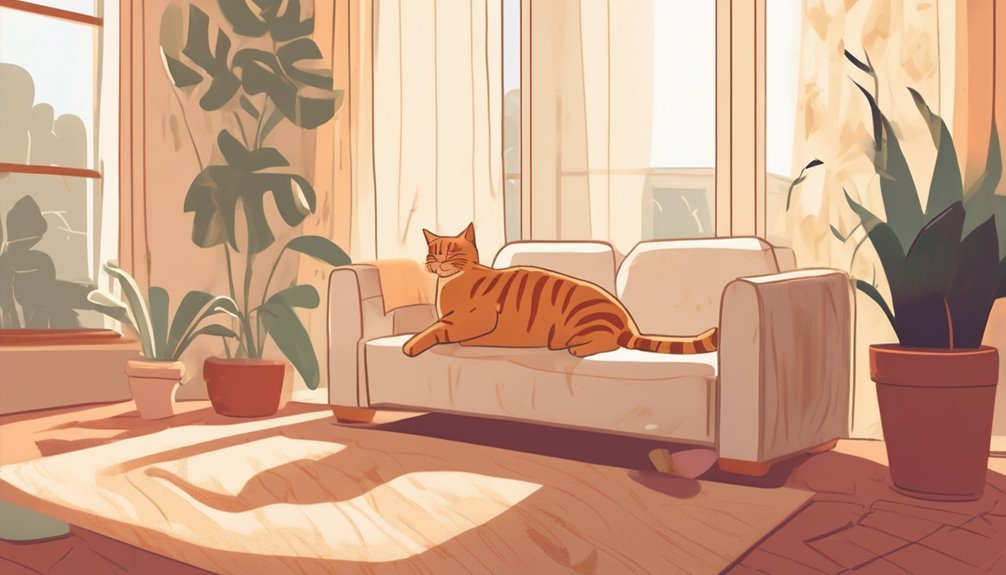
Understanding why cats scratch is crucial for addressing this common behavior. Your feline friend isn’t just being mischievous; scratching is part of their natural instincts. It helps them keep their claws sharp and sheds old layers.
Plus, it’s a form of feline communication. When they scratch, they’re marking their territory with scent glands in their paws, signaling to other cats that this space is theirs.
Recognizing this can help you empathize with their needs. Instead of seeing scratching as a nuisance, view it as a way for your cat to express themselves.

Choosing Scratching Posts to Stop Cats From Scratching Furniture
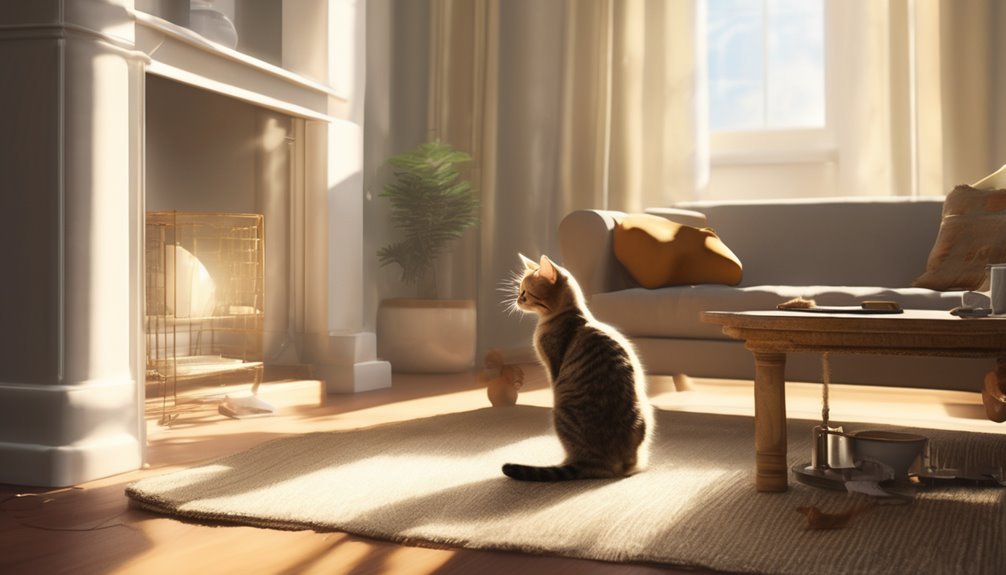
Recognizing your cat’s scratching as a natural behavior opens the door to effective solutions, like choosing the right scratching posts.
Start by considering scratching post materials; sisal, cardboard, and carpet offer different textures that can appeal to your cat. Each cat has preferences, so experimenting is key.
Next, think about the ideal post height. Your cat should be able to stretch fully while scratching, so look for posts that are at least your cat’s shoulder height.
A sturdy base is essential to prevent tipping. Position the post near your cat’s favorite scratching spots to encourage use.
Training Your Cat to Use Scratching Alternatives
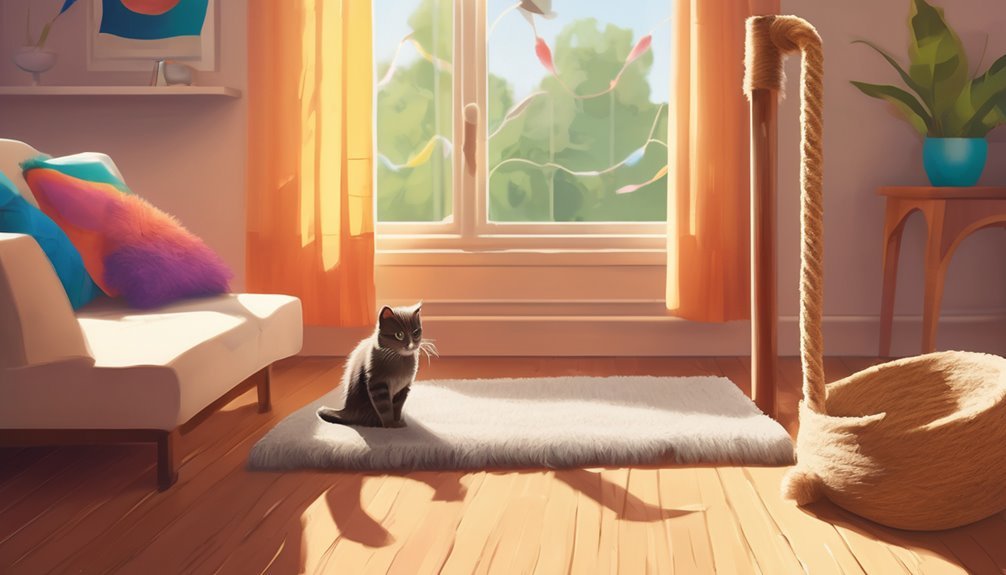
While it might seem challenging, training your cat to use scratching alternatives can lead to a harmonious home.
Start by placing those alternatives, like scratching posts or pads, near their favorite lounging spots. When you see your cat using them, shower them with praise or a treat—this creates a positive association.
Implement a simple reward system: every time they scratch the alternative instead of the furniture, reward them immediately. Consistency is key, so make it a habit to guide them back to the alternatives if they stray.
Reinforcing Positive Scratching Habits
To effectively reinforce positive scratching habits, it’s important to create an environment that encourages your cat to choose appropriate surfaces over furniture.
Start by placing scratching posts near their favorite lounging spots. When you see your cat using these posts, immediately offer scratching rewards like treats or praise. This positive reinforcement will help them associate the posts with good feelings.
You might also consider using catnip to make the scratching posts more enticing. Consistency is key; reward them every time they scratch the desired surfaces.
Over time, your cat will learn that scratching the right places brings joy and treats, reducing the urge to scratch your furniture.
With patience and love, you’ll nurture their natural instincts positively.
How to Keep Your Furniture Safe From Claws
If you want to keep your furniture safe from claws, it’s essential to take proactive steps that cater to your cat’s natural instincts.

Start by investing in scratching posts and pads, placing them strategically near your furniture. This not only provides an outlet for claw management but also encourages your cat to scratch in appropriate areas.
Invest in scratching posts and pads near your furniture to redirect your cat’s natural clawing instincts effectively.
You can also use protective covers or sprays on your furniture to deter scratching. Regular nail trimming is another critical aspect of furniture protection, helping minimize damage.
Additionally, consider using double-sided tape on surfaces your cat targets; they usually dislike the sticky texture.
Tips for Creating a Cat-Friendly Home
Creating a cat-friendly home involves understanding your feline’s needs and providing a comfortable environment that encourages their natural behaviors.
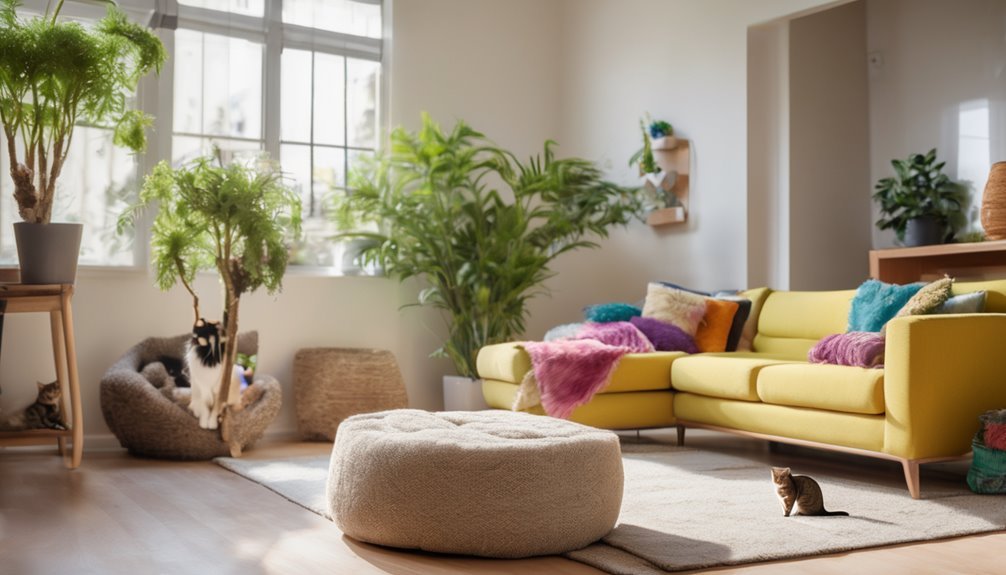
Start with space planning—designate areas for your cat to play, scratch, and relax. Incorporate cat-friendly decor, like scratching posts that blend with your style or cozy napping spots near windows.
Use vertical space by adding shelves or cat trees; this gives your cat a sense of security and exploration. Ensure that your home is safe by removing toxic plants and securing cords.
Lastly, involve your cat in the decorating process—observe their preferences for textures and heights. By creating an inviting space, you’ll foster a happy, healthy environment for your furry friend.
Recognizing When to Consult a Professional
While most scratching behavior can be managed with the right techniques, there are times when it’s wise to consult a professional.
If you notice behavioral signs like excessive scratching, hiding, or aggression, your cat might be experiencing feline anxiety. These behaviors can indicate that something deeper is troubling them, possibly influenced by environmental factors.
If your efforts to create a cat-friendly home aren’t working, don’t hesitate to seek professional advice. A veterinarian or animal behaviorist can help you understand your cat’s needs better and offer tailored strategies.
Frequently Asked Questions
Can Declawing Prevent Scratching Behavior in Cats?
Declawing might seem like a solution, but it often leads to more issues. Instead, consider declawing alternatives like scratching posts or soft paws to manage your cat’s scratching behavior while keeping them happy and healthy.
What Materials Are Best for Scratching Posts?
Isn’t it essential to choose the right materials for scratching posts? Sisal, cardboard, and carpet offer ideal textures. Your cat will love them, and you’ll save your furniture from those pesky claws!
How Often Should I Replace Scratching Posts?
You should replace scratching posts every six months to a year, depending on their durability. Make sure they’re tall enough for your cat to stretch, ensuring they stay engaged and satisfied with their scratching routine.
Are There Sprays That Deter Cats From Scratching?
Yes, there are scratching deterrent sprays available. You can try natural repellents like citrus or vinegar-based solutions. These methods can help redirect your cat’s behavior while keeping your furniture safe and your home harmonious.
Do Certain Cat Breeds Scratch More Than Others?
Yes, certain cat breeds, like Bengals or Siamese, tend to scratch more due to their active cat behavior and breed characteristics. Understanding these traits can help you create a harmonious environment for your feline friend.
Conclusion
By understanding your cat’s scratching instincts and providing the right alternatives, you can protect your furniture while keeping your feline friend happy. Imagine the day when you walk into your living room, and instead of a shredded couch, you find your cat blissfully engaged with their scratching post. With patience and consistency, you can turn this challenge into a harmonious coexistence. But what happens if the scratching persists? Don’t hesitate to seek help—your furniture and your cat’s well-being depend on it.