When you look at animal mating rituals, you see behavior shaped by competition, signal quality, and reproductive risk. You may watch birds trading songs or gifts, insects flashing coded light, and fish using color, movement, or chemical cues to attract partners. Some species even rely on teamwork or extreme displays that can end in injury. These patterns raise a basic question: why does natural selection produce such unusual courtship strategies?
Key Takeaways
- Many animal mating rituals are elaborate displays shaped by sexual selection, combining movement, sound, color, and sometimes gifts.
- Birds often court through dances, songs, and nest-building gifts that signal health, coordination, and parental ability.
- Insects use striking signals like firefly flashes, moth pheromones, cricket chirps, and dance-fly gifts to attract mates.
- Some species court in coordinated groups, where synchronized calls or dances strengthen attention and improve mate choice.
- Unique rituals help animals assess genetic quality and fertility, increasing reproductive success despite energy costs and risks.
What Makes Animal Mating Rituals So Strange?
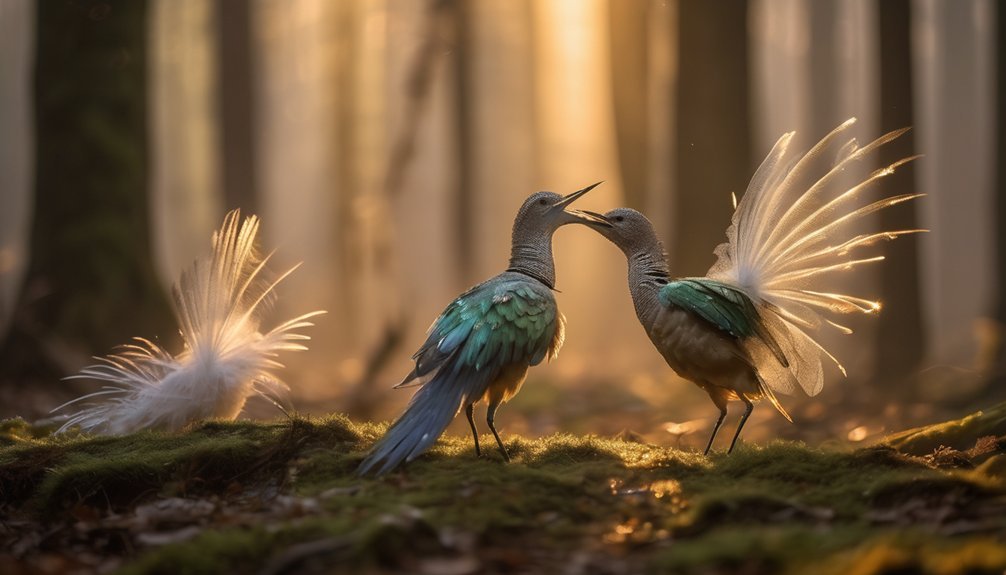
What makes animal mating rituals seem so strange is that they often evolve under intense selective pressures, producing behaviors that can look theatrical, violent, or highly specific to human observers.
When you examine them closely, you see that each display usually serves a clear evolutionary advantage, such as attracting mates, signaling health, or deterring rivals. These rituals can involve risk, energy cost, and precise timing, so you’re watching natural selection in action.
Their cultural significance to you lies in how they challenge human assumptions about courtship and reveal how behavior can become finely tuned to environment.
Because mating success shapes reproductive output, even odd-looking acts can persist if they improve fitness. In that sense, strangeness isn’t random; it’s adaptive, measurable, and biologically meaningful.

Bird Courtship Dances, Songs, And Gifts
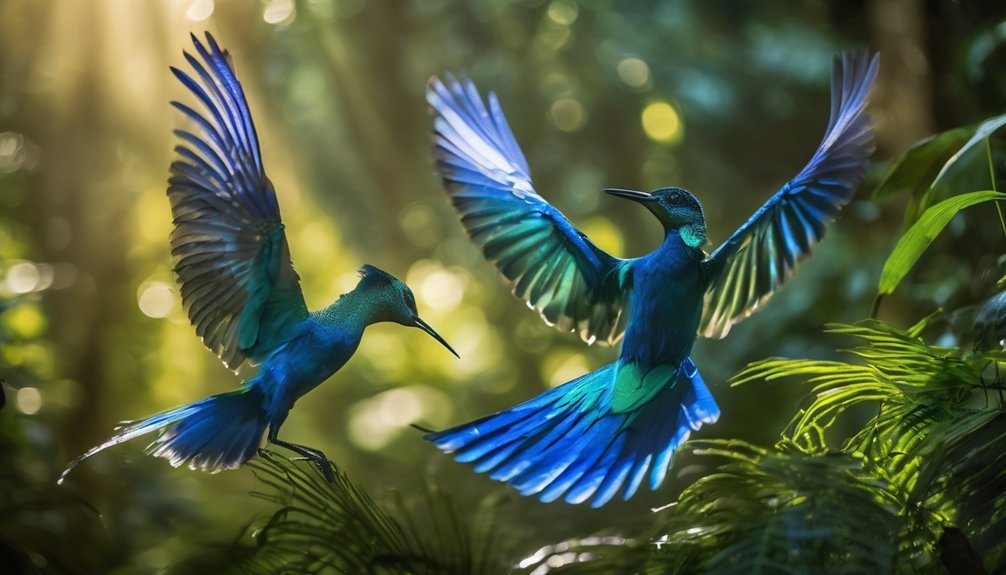
Bird courtship is often a multimodal performance, combining dance, song, and food gifts to advertise fitness to potential mates.
You can see how vocalization techniques refine each species’ message, while feather displays and color patterns reveal condition and plumage quality.
During courtship, you may notice dance synchronization between partners, with each movement testing timing, coordination, and responsiveness.
Some birds add gift offerings, such as insects or seeds, which signal foraging skill and parental potential.
Others use scent signaling and territory marking to show health and site control.
In many species, these behaviors connect directly to nest building, because a mate that invests in display often also invests in cooperation.
You’re observing selection in real time, expressed through precise signals, not chance.
Extreme Courtship Displays In The Wild
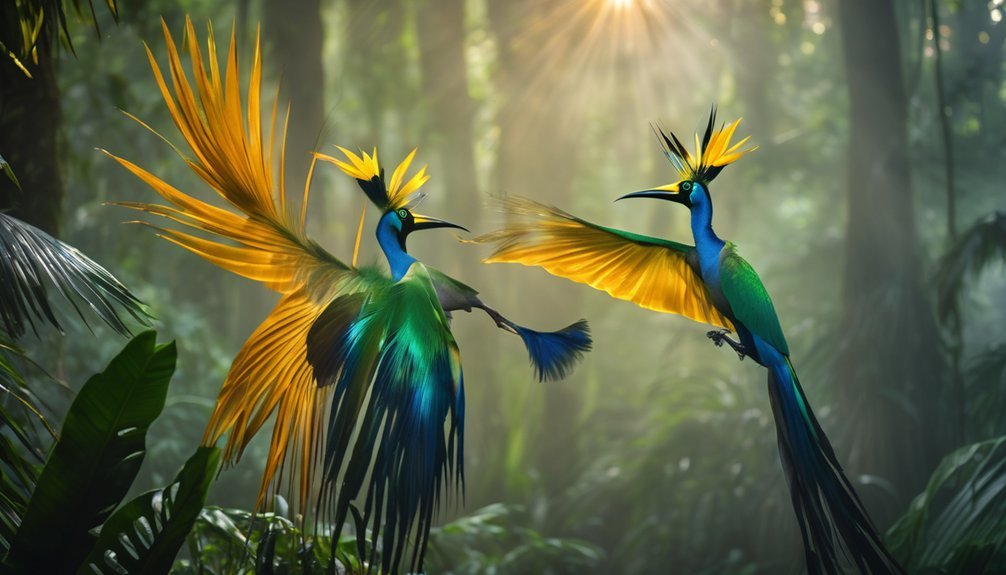
Extreme courtship displays often push beyond ordinary signaling into highly conspicuous behaviors that test endurance, coordination, and physical condition.
You can observe how individuals use mating signals to advertise quality when competition is intense. In many species, reproductive strategies depend on rapid displays, prolonged postures, or risky movements that reveal stamina and control.
Environmental influences, such as light, temperature, and predator pressure, shape how boldly you see these acts unfold. Sensory cues matter too, because visual, acoustic, and chemical information can guide mate choice with precision.
These behavioral adaptations often provide evolutionary benefits by helping partners assess health, vigor, and compatibility. When you watch closely, you notice that each display isn’t random; it’s a measurable performance tuned to intimacy, selection, and survival.
Elaborate Insect Mating Displays
Among insects, elaborate mating displays often combine movement, scent, sound, and color into tightly timed courtship sequences that help individuals locate and evaluate potential mates. You can see elaborate insect dances in fireflies, moths, and dance flies, where rhythm and posture signal stamina.
| Insect | Signal | Function |
|---|---|---|
| Firefly | Light flashes | Species recognition |
| Moth | Pheromones | Mate attraction |
| Dance fly | Gift display | Female choice |
| Cricket | Chirps | Territory and courtship |
| Beetle | Wing motion | Visual assessment |
You’ll also notice intricate pheromone signaling, which can guide partners over distance and fine-tune receptivity. These displays reduce wasted effort, increase mating success, and let you observe how selection shapes precise, intimate communication.
Weird Fish Courtship Behaviors
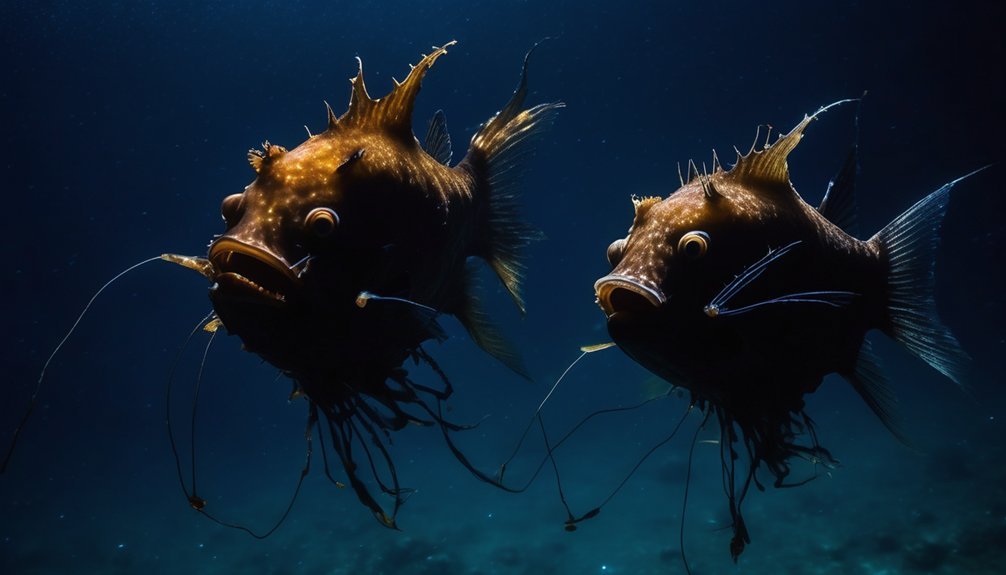
Fish courtship can be just as elaborate as insect signaling, but it often takes place in a dim, water-filled world where sound, movement, color, and even electric fields shape mate choice.
You may see:
- Bioluminescent displays in deep-sea species, which create precise flashes that identify sex and species.
- Courtship colors in reef fish, where males intensify pigments and posture close to females to signal health.
- Sonic signals and bubble nests, as in gouramis and bettas, where males produce calls, build structures, and guard eggs.
These behaviors let you observe how sensory cues reduce conflict and improve reproductive success.
In close range, the interaction can seem almost intimate, yet each movement serves a measurable biological function for courtship.

Unusual Mammal Courtship Behaviors
In mammals, courtship often depends on chemical cues, tactile contact, vocalizations, and highly specific movements that help individuals assess health, dominance, and reproductive readiness.
You’ll notice that many species add uncommon mammal signals, such as scent marking, whisker touching, or soft rhythmic calls, to create a precise exchange of information. These cues can reveal genetic quality and hormonal state without direct conflict.
In some rodents and primates, playful courtship games let you observe chases, gentle nipping, and repeated approach-retreat patterns that test attention and tolerance. You can interpret these behaviors as controlled demonstrations of coordination and arousal.
When a male or female responds with calm persistence, the interaction often strengthens pair compatibility. Such rituals remain intimate, but they’re also efficient biological screenings.
Animal Mating Rituals That Use Teamwork
Some species take courtship beyond one-on-one signaling and turn mating into a coordinated group effort. You can observe how teamwork strategies improve visibility, synchronize movement, and increase attraction in crowded habitats.
In many birds and fish, cooperative displays let multiple individuals amplify color, sound, or motion, helping you notice a potential mate more quickly.
- Synchronized dancing: Partners or groups align timing to signal fitness.
- Shared calls: Repeated vocal patterns create a stronger acoustic presence.
- Collective movement: Coordinated swimming or marching guides attention toward receptive individuals.
You’ll see that these rituals rely on precision, not aggression. Each participant reinforces the display, creating a stable social context that supports mate choice and can deepen pair bonding.
Fatal Courtship Rituals In Nature
While many courtship rituals promote bonding without conflict, others end in injury or death when sexual selection becomes extreme. You can observe this in species where males compete so intensely that courtship turns dangerous, with deadly displays that expose them to predators, exhaustion, or combat wounds.
In some spiders, mantises, and insects, mating itself can trigger cannibalism or fatal injury, and the cost may fall on one partner through reproductive sacrifice. You’re seeing a biological trade-off: traits that improve mating success can also reduce survival.
These rituals remain rare, but they reveal how far evolution can push sex-specific behavior. In such systems, intimacy isn’t gentle; it’s a measurable risk shaped by competition, physiology, and the harsh mathematics of passing genes onward.
How Animals Choose A Mate
Mate choice is the mechanism that decides which individuals get to reproduce, and it can be shaped by signals of health, genetic quality, territory value, or direct competition.
In mate selection, you usually evaluate subtle traits that reveal fitness: color intensity, song complexity, scent, or courtship timing. Your reproductive strategies often balance attraction with safety, energy use, and sperm competition.
- You may prefer partners with strong displays.
- You may choose mates that guard resources.
- You may favor individuals that outcompete rivals.
These choices don’t rely on chance; they reflect sensory assessment and adaptive decision-making.
Why Evolution Made These Rituals So Wild
Evolution shaped these rituals because reproduction rewards any trait that improves mate acquisition, fertilization success, and offspring survival, even when the behavior looks extravagant or risky. You can see survival strategies in courtship dances, gifts, and displays that signal health, strength, or parental investment. These signals reduce uncertainty and raise reproductive success by helping you choose partners whose genes, protection, or resources increase offspring viability.
| Trait | Function | Benefit |
|---|---|---|
| Bright plumage | Attraction | Honest quality cue |
| Elaborate song | Territory defense | Improved access |
| Nuptial gift | Nutrient transfer | Higher fertility |
You should view these rituals as adaptive solutions, not excess. Sexual selection amplifies them when competition is intense and intimate mate assessment matters.
Frequently Asked Questions
Which Animals Mate in the Most Unexpected Places?
You’ll find octopuses, frogs, and seahorses mating in unexpected locations, from seafloors to ponds and floating seagrass. You may also see surprising partners like hermit crabs, where pairing occurs amid unusual shelters and tight ecological constraints.
How Long Do the Strangest Courtship Rituals Usually Last?
You’ll find courtship rituals usually last from minutes to weeks, depending on species. Courtship duration reflects mating behaviors, competition, and mate choice; some birds and insects finish quickly, while others sustain intimate displays for days.
Do Environmental Changes Alter Animal Mating Rituals?
Yes—studies show climate impact can shift breeding timing in over 60% of monitored species. You’ll see habitat loss alter signals, courtship sites, and mate choice, and species often adapt or abandon rituals under pressure.
Can Captivity Change Natural Mating Behaviors in Animals?
Yes, you can see captivity effects alter natural mating behaviors in animals, causing behavioral changes in courtship, timing, and partner choice. You’ll often observe reduced stimuli, stress, and altered reproductive success under artificial conditions.
Which Species Have the Most Unusual Mating Seasons?
You’ll find the strangest mating seasons in polar bears, lampreys, corals, and marsupials; their mating patterns hinge on seasonal triggers so extreme they seem cosmic, yet each species times reproduction with ruthless precision.
Conclusion
In the end, you can see that animal mating rituals aren’t random spectacles; they’re precise evolutionary solutions shaped by selection, competition, and survival. From birdsong to bioluminescent flashes, each behavior signals fitness in a different way. Like a natural laboratory, these rituals reveal how strongly reproduction drives diversity. When you study them, you’re really watching evolution at work, crafting strategies as strange as they’re effective.