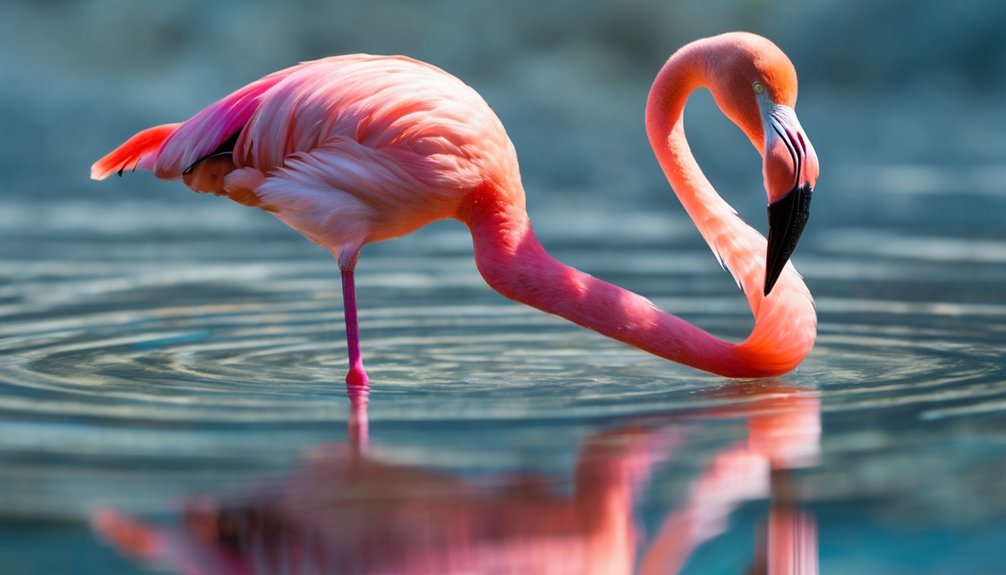
About 95% of a flamingo’s pink color comes from pigments in its diet, not its genes. You might expect feathers to start that way, but chicks hatch gray and gain color only after feeding on algae, plankton, and small crustaceans rich in carotenoids. As the pigments build up, their plumage shifts from pale to vivid, and the exact shade can reveal more than you’d think.
Key Takeaways
- Flamingos are pink because carotenoid pigments from their food stain their feathers, skin, and beaks.
- Their diet includes algae, plankton, and small crustaceans like shrimp, which contain these pigments.
- More carotenoids usually produce deeper pink or coral coloration, while poor diets make flamingos look paler.
- Baby flamingos hatch gray or white and gradually turn pink as they eat carotenoid-rich foods and grow.
- Flamingo color reflects health, diet quality, and breeding condition, not just genetics.
What Makes Flamingos Pink?
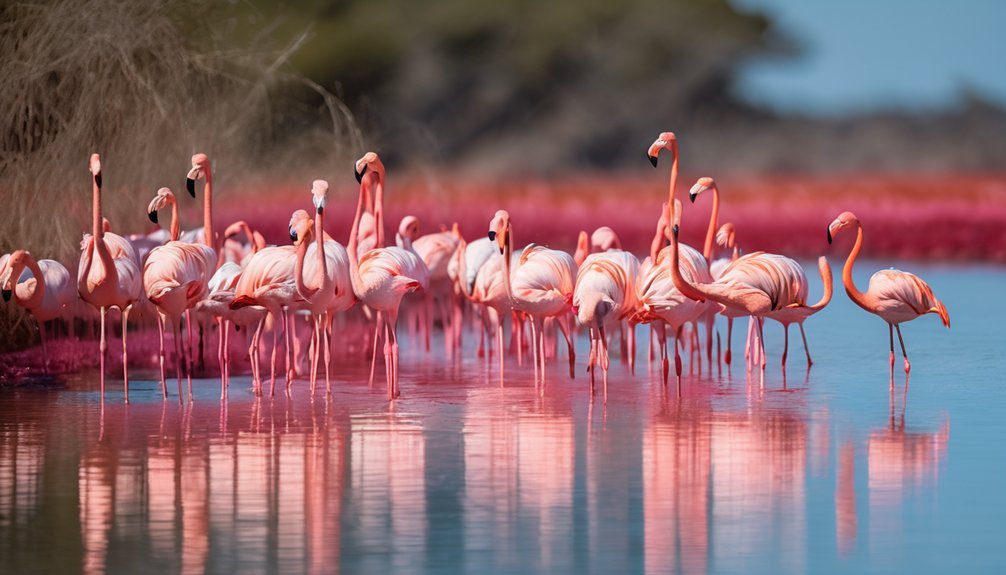
Flamingos are pink because of the carotenoid pigments in the food they eat, especially algae, plankton, and small crustaceans like shrimp. You see this pigment reflected in feathers, skin, and bill tissue, where it creates shades from pale rose to deep coral.
Your eyes may notice that color perception changes with light, age, and diet, so individuals don’t always look identical. In wild flocks, the strongest color often signals health and breeding condition, which can give an evolutionary advantage.
You can treat the hue as a biological indicator rather than decoration. Scientists study it because it links nutrition, physiology, and mate choice in a clear, measurable way.
How Flamingos Turn Food Into Color
After flamingos eat carotenoid-rich food, their digestive system breaks those pigments down and absorbs them into the bloodstream.

You then see the result as the body transports these diet pigments to growing feathers, skin, and legs. Specialized enzymes modify some compounds, and fat molecules help carry them efficiently.
During feather growth, keratin traps the pigments, so color absorption becomes visible as pink, orange, or reddish tones. The exact shade depends on the mix of pigments in the diet and how much the bird can process.
During feather growth, keratin traps pigments, revealing pink, orange, or reddish hues shaped by diet and metabolism.
When food is limited, the color can fade because fewer pigments reach the tissues. This process lets you track a flamingo’s feeding success through its appearance, making plumage a direct, measurable signal of nutrition.
Why Baby Flamingos Aren’t Pink
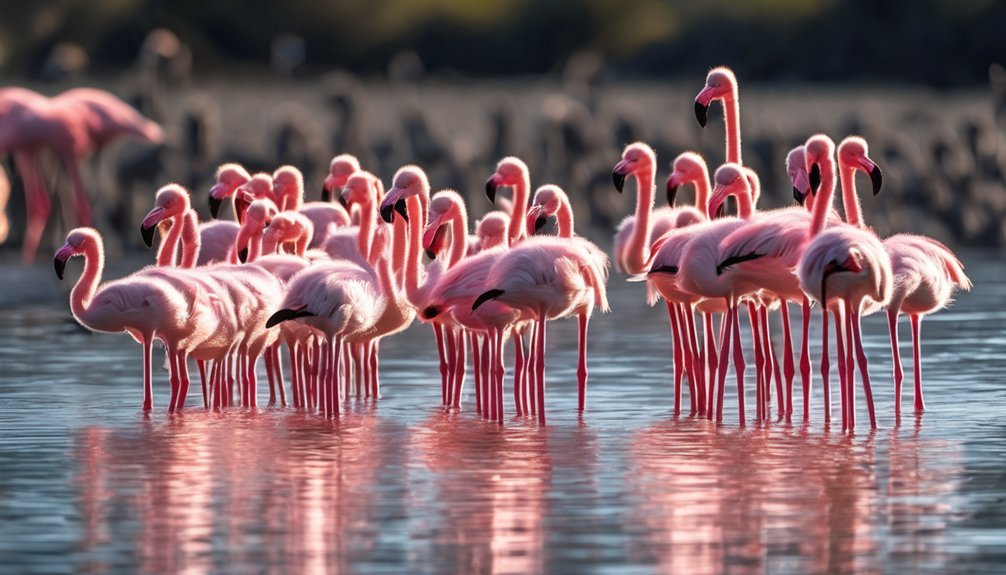
Baby flamingos aren’t pink at hatching because they haven’t yet eaten enough carotenoid-rich food to build up those pigments in their tissues. You can see this as a normal stage in baby flamingo development, not a defect. Their down starts pale gray or white, and feather pigmentation develops gradually as their bodies mature.
- Young chicks absorb fewer pigments early on.
- Their growing feathers reflect little color at first.
- Their pink tone deepens as physiology changes.
You’ll notice that this shift happens over time, and it gives you a clear marker of growth. In scientific terms, the color change shows how metabolism, tissue deposition, and feather pigmentation work together.
What Flamingo Species Eat
A flamingo’s pink color comes from pigments in its diet, so the species’ feeding habits directly shape how much color develops. You can see this across species:
| Species | Main foods |
|---|---|
| Greater flamingo | algae, crustaceans |
| Lesser flamingo | cyanobacteria, diatoms |
| Chilean flamingo | small invertebrates |
| Andean flamingo | algae, brine shrimp |
| James’s flamingo | algae, tiny mollusks |
Your flamingo feeding view should center on filter feeding in shallow water, where bill structure helps you separate mud from food. Habitat preferences matter because saline lakes, lagoons, and mudflats support different prey communities. When food is rich in carotenoid pigments, you’ll usually observe stronger coloration in adults. Different species adapt to local conditions, so diet varies with season, salinity, and water depth.
How Flamingos Get Their Pink Feathers
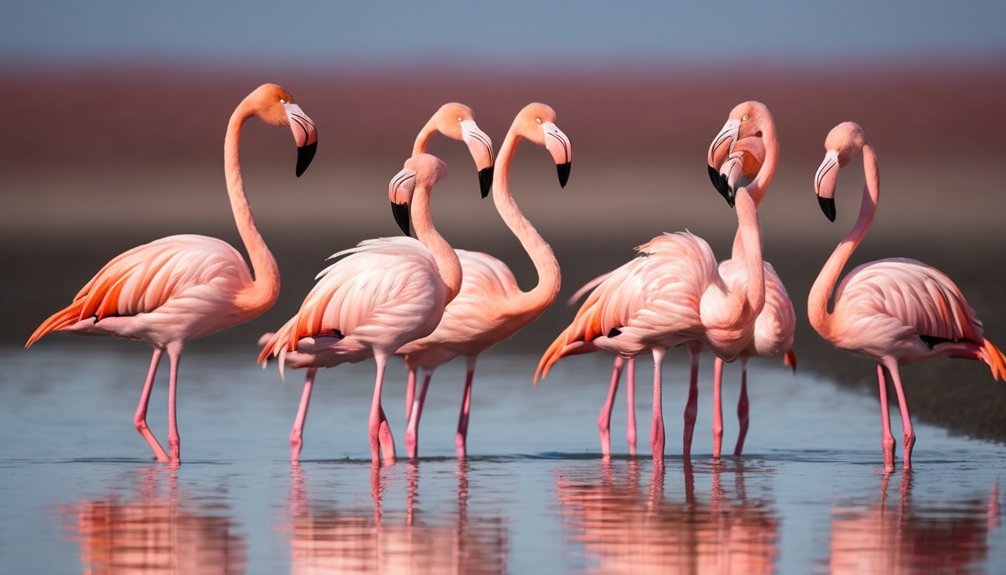
Pink feathers develop when flamingos absorb carotenoid pigments from the foods they eat and deposit those pigments into growing feathers during molting. You can see feather pigmentation as a direct result of diet, metabolism, and feather growth, which together shape each bird’s soft blush.
- You ingest pigments through algae, crustaceans, and other prey.
- Your body processes those pigments and carries them in blood.
- New feathers trap the pigments as they form, creating color variation among individuals.
Because you don’t make these pigments yourself, your plumage reflects what you eat and how efficiently your body uses those compounds. This mechanism gives flamingos their characteristic pink tones while keeping the process measurable, biological, and closely tied to feeding ecology.
Why Flamingos Lose Their Color
Flamingos can lose their pink color when their diet changes or their bodies stop depositing enough pigments into new feathers. You’ll see color fading as carotenoid intake drops, so fresh plumage forms with less tint. Pigment loss doesn’t happen in one moment; it builds as molting replaces colored feathers with paler ones.
| Cause | Effect |
|---|---|
| Low carotenoid intake | Less pink in new feathers |
| Molting | Replaces bright feathers |
| Poor pigment deposition | Noticeable fading |
When you track these shifts, you can explain why a flock may look softer in tone over time. The process is physiological, not sudden, and it reflects changes in available pigments rather than any instant color switch.
How Flamingo Color Signals Health
When you look at a flamingo’s color, you’re often seeing a rough signal of its health and condition. You can treat that hue as one of several color indicators, because it reflects how well the bird processes pigments from food and maintains its body.
In scientific health assessments, researchers often note these three factors:

- Diet quality and pigment intake
- Immune function and physical stress
- Feather condition and overall vitality
A brighter pink tone usually suggests steady feeding and efficient metabolism, while paler plumage can point to nutritional limits or illness.
You shouldn’t read color alone as a full diagnosis, though; it works best alongside behavior, posture, and breeding success. By watching these cues, you gain a clearer, more intimate view of the bird’s condition.
Do Flamingos Stay Pink in Captivity?
Yes—flamingos can stay pink in captivity, but only if their diet supplies the pigments they need. You’ll see flamingo coloration persist when caretakers provide natural sources of carotenoids, the compounds that support their pink and orange tones.
Captivity effects can still matter: stress, poor nutrition, and reduced access to varied foods may dull plumage over time. When you observe healthy birds, their feathers often reflect steady pigment intake and normal metabolism.
In controlled settings, veterinarians monitor body condition and color changes to track welfare. You shouldn’t expect identical shades in every enclosure, because lighting, age, and feather wear also influence appearance.
Still, with proper management, captive flamingos can remain vividly colored and biologically similar to their wild counterparts.
How Diet Affects Different Flamingo Species
Different flamingo species get their pink coloration from similar pigment pathways, but their diets vary depending on habitat, food availability, and feeding strategy.
You’ll notice clear species differences in how much carotenoid they absorb from algae, diatoms, crustaceans, and other small prey. These diet variations influence feather color intensity, bill shape, and foraging behavior.
- Greater flamingos often eat more crustaceans, which can deepen pink tones.
- Lesser flamingos filter-feed on algae-rich water, so their color depends on microscopic pigment intake.
- American and Andean flamingos adjust diet to local lakes, causing measurable shifts in hue.
When you compare species, you see that color reflects not only genetics but also nutrient access.
Other Birds Colored By Their Diet
Flamingos aren’t the only birds whose colors come from diet; in several species, pigments in food directly shape feather, bill, or skin coloration. You can see this in cedar waxwings and orioles, which use carotenoids from berries and insects to intensify reds, oranges, and yellows.
In house finches, your observation of male plumage reveals a clear dietary impact: birds eating richer carotenoid sources usually grow brighter feathers. Some parrots also rely on pigments from food for normal bird coloration, though genetics can modify the result.
When diets change, colors may fade or shift at the next molt. This pattern helps you understand that plumage isn’t fixed alone by inheritance; it often reflects nutrient intake, habitat quality, and access to pigmented prey or plants.
Frequently Asked Questions
How Long Does It Take Flamingos to Turn Pink?
It usually takes you several months to years for flamingos to turn pink, depending on diet and age. Their color transformation comes from pigment sources in algae and crustaceans, especially carotenoids.
Do Flamingos Change Color During Breeding Season?
Yes, you can notice subtle color intensity changes during breeding behavior: some flamingos brighten as hormones shift. Roughly 1 in 5 species show this most clearly, though diet still drives their overall pink coloration.
Can Flamingos Be Dyed Pink by Hand?
Yes, you can dye a flamingo pink by hand, but it’s not healthy or natural. Your flamingo’s diet and pigment absorption determine color, so artificial dyes can stress tissues and distort plumage appearance.
Are All Flamingos the Same Shade of Pink?
No, you won’t see one perfect shade; flamingo genetics and pigment variations make you imagine a pink paint chart at a bird spa. You’ll notice hues shift with diet, age, and health.
Do Flamingos Lose Color When They Migrate?
Yes, you can see some color fading during migration, because diet changes and migration patterns alter carotenoid intake. You’ll often notice paler feathers temporarily, but flamingos usually regain vibrancy once they resume feeding richly.
Conclusion
So, why are flamingos pink? You can trace their color to carotenoid pigments in their diet, which their bodies absorb and deposit in feathers and skin. As they eat algae, plankton, and small crustaceans, their plumage shifts from pale to vivid pink, signaling diet quality and health. Baby flamingos aren’t born pink, and captivity can dull their color if food lacks pigments. In short, their color tells you what they’ve been eating.