
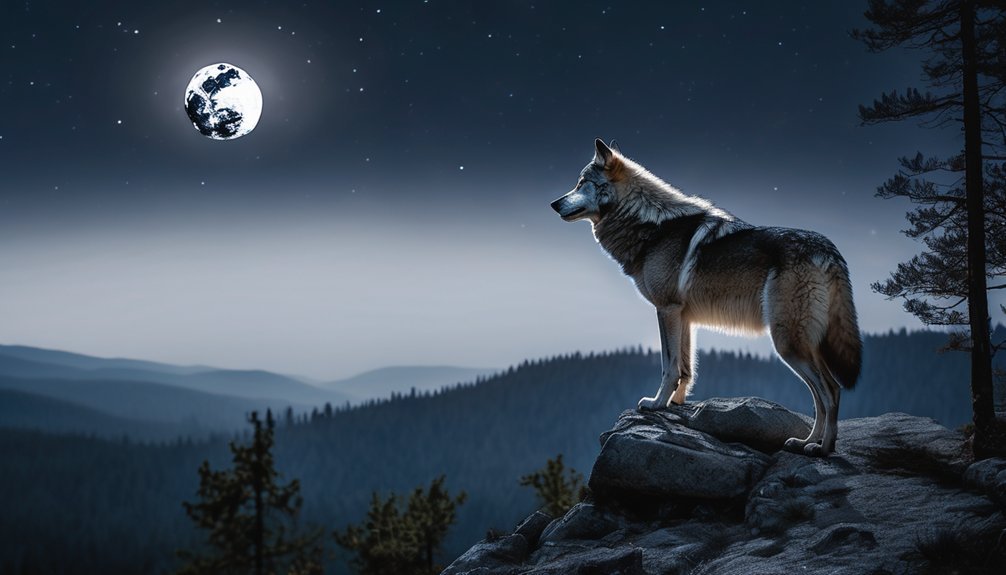
When you hear wolves howl at night, you’re listening to a long-distance signal shaped by darkness and distance. The cooler air and quieter background help the sound travel farther, so packs can keep track of one another and coordinate movement. Those calls also warn rival wolves to stay away, marking territory without a fight. But howling can reveal even more about pack structure than you might expect.
Key Takeaways
- Wolves howl at night because cooler, quieter conditions let their calls travel farther and clearer.
- Night howls help pack members stay in contact and regroup over long distances.
- Wolves use howls to coordinate movement and synchronize activity in low visibility.
- Howling marks territory and warns rival packs without physical conflict.
- Different howl patterns reveal pack location, size, identity, and social bonds.
Why Wolves Howl at Night
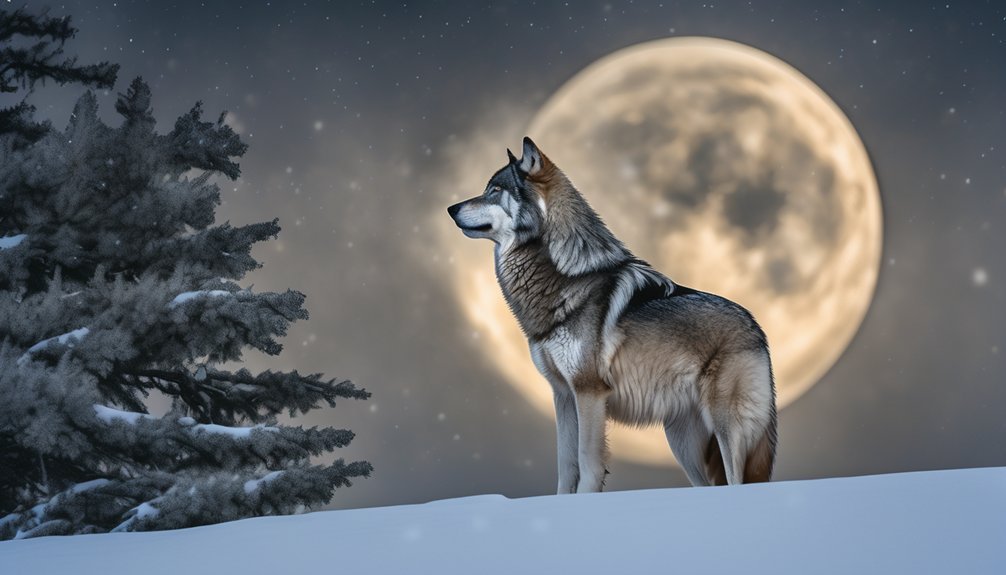
Wolves howl at night because darkness makes long-distance communication more effective, and their vocalizations can travel farther with less background noise. You can think of this as a practical adaptation shaped by wolf communication and nocturnal behavior.
At night, cooler air and quieter surroundings often help sound move with less distortion, so a howl can carry more clearly across open terrain. You also see that wolves are naturally active during these hours, when low light reduces visual cues and makes acoustic signals more useful.

Their howls can reflect instinct, territorial awareness, and social behavior, but the nighttime setting increases their efficiency. In this sense, wolf howling isn’t random; it’s a focused response to environmental conditions that favor sound-based signaling.
How Wolf Howls Help Packs Stay Connected
When a pack members howl, it helps maintain contact over long distances and coordinate movement in low-visibility conditions. You can think of each howl as a signal that carries information about location, movement, and group presence.
In dense forest, snow, or darkness, pack communication becomes more efficient because vocalizations travel farther than sight. You also benefit from the way howls reduce separation between individuals, letting the pack regroup quickly after hunting or travel.
These calls support social bonding by reinforcing each animal’s place within the group and by keeping responses synchronized. When several wolves join in, you hear a shared pattern that reflects coordination, not chaos.
Their howls let the pack remain cohesive, even when members are out of view, far apart, or moving across difficult terrain.
How Wolves Use Howls to Mark Territory
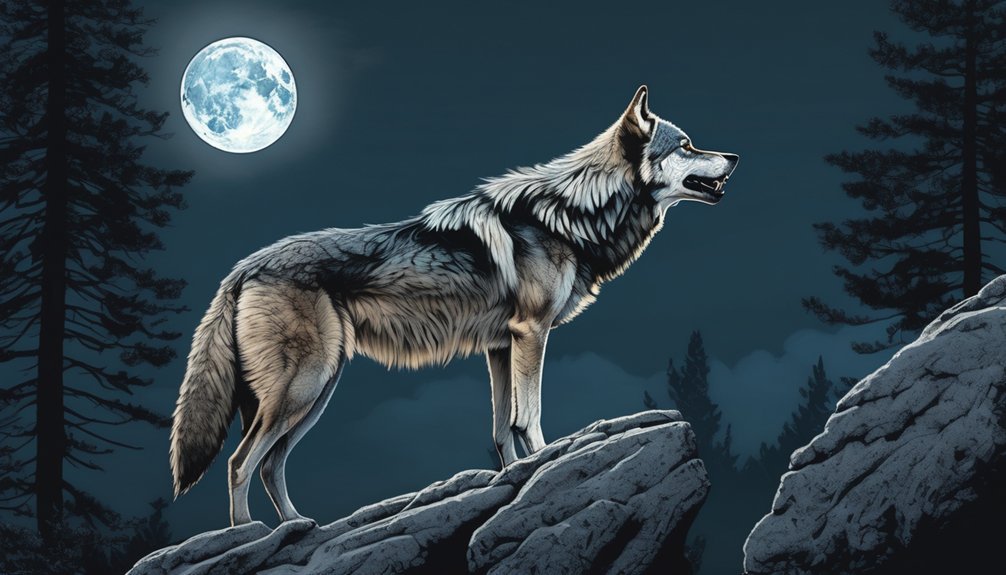
By broadcasting long, carrying howls, wolves can signal that a territory is occupied and deter rival packs from approaching. You can think of these calls as a form of territorial communication that works without direct conflict.
When you hear a pack howl, the wolves are using vocal signaling to announce presence, reinforce boundaries, and reduce the need for physical confrontation. Each pack may answer from different parts of its range, helping members confirm where neighbors are and how close they’re getting.
You’ll notice that this strategy can save energy and limit injury, because wolves don’t have to patrol every edge constantly. Instead, the howl itself becomes a clear, efficient message: this area is claimed, defended, and actively monitored by a coordinated group.
Why Wolf Howls Travel Farther at Night
At night, wolf howls often carry farther because cooler air and calmer winds reduce the way sound scatters and fades. You can think of this as a shift in acoustic properties that lets low-frequency calls remain clearer over distance.

Your ears benefit from fewer competing sounds, since nocturnal behavior lowers background noise from insects, birds, and human activity. That quieter setting helps a howl stay intact as it moves through the landscape.
- Cooler air bends sound less
- Winds weaken sound disruption
- Lower noise improves detection
- Dense ground cover changes little
- Long wavelengths travel efficiently
You’ll notice that these conditions don’t create louder howls; they simply let the signal persist. This makes nighttime communication more effective across open terrain.
What Wolf Howls Reveal About the Pack
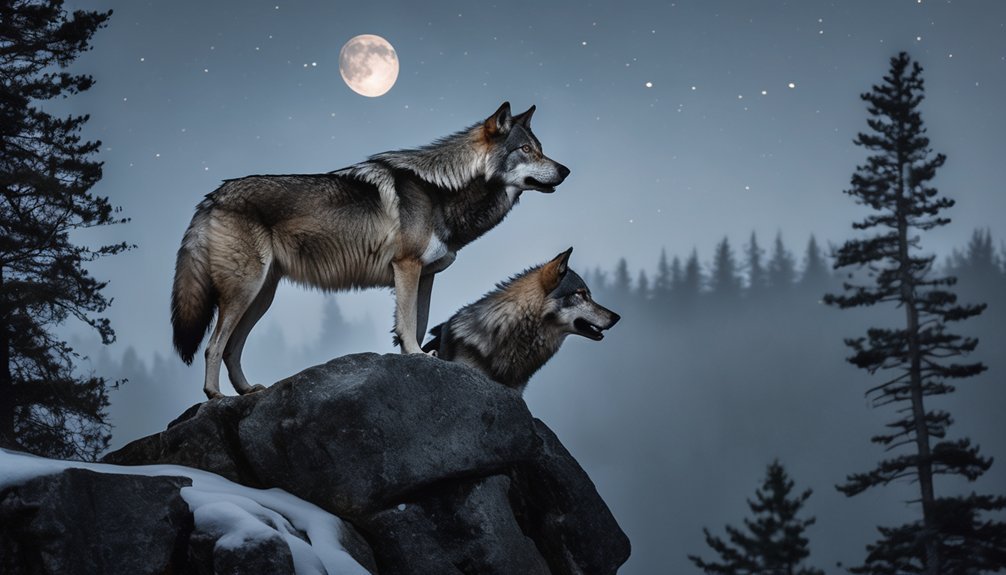
Wolf howls can reveal a pack’s location, size, and social structure, giving nearby wolves and researchers useful information about who is present. You can hear wolf communication that signals identity, coordination, and social bonding. Each voice carries clues about age, sex, and rank.
| Signal | Likely meaning | Pack insight |
|---|---|---|
| Solo howl | Contact call | One wolf is checking in |
| Chorus | Group response | Multiple wolves are together |
| Pitch changes | Individual traits | You can distinguish voices |
| Repeated calling | Social bonding | The pack reinforces cohesion |
Why Wolves Don’t Really Howl at the Moon
Although wolves often appear to howl toward the moon, they aren’t responding to it directly. You can see that moon myths come from the timing of their calls, not from lunar influence. Wolves use howls to communicate across distance, defend territory, and coordinate nocturnal behaviors.
- Their heads tilt for sound projection.
- Night air carries calls farther.
- Open landscapes amplify vocal signals.
- Pack members answer from different locations.
- Human observers link howls with full moons.
You’re more likely to hear wolves after dark because they’re active, and quiet conditions improve transmission. The moon may illuminate the scene, but it doesn’t trigger the howl.
Instead, ecology, social structure, and sound physics explain this behavior.
Frequently Asked Questions
How Many Different Howl Types Do Wolves Have?
You’ll usually find wolves use about three to five howl types, including lone howls, chorus howls, and pup howls. They use these communication signals for social bonding, territory defense, and coordinating pack activity.
Do Wolf Pups Howl Differently From Adults?
Yes—wolf pups often sound thinner, higher, and less stable than adults; you’ll hear a flute among drums. During pup development, their calls support wolf communication, gradually strengthening as they mature and gain control.
Can Wolves Howl During the Day Too?
Yes, you can hear wolves howl during the day too. Their howling behavior supports communication methods for coordinating the pack, warning rivals, and locating members, regardless of light; nighttime simply makes these calls travel farther.
What Sounds Can Trigger a Wolf to Howl?
You’ll find howling triggers include sirens, other wolves, and environmental sounds; one study showed nearly 80% of captive wolves howl after loud noises. You can expect these cues to prompt vocal responses, especially at night.
Do All Wolf Species Howl the Same Way?
No, you won’t hear all wolf species howl the same way; you’ll notice differences in pitch, duration, and harmony. Wolf communication varies by species and pack, and howl significance can signal location, bonding, or warning.
Conclusion
When you hear a wolf howl at night, you’re hearing more than a haunting sound—you’re hearing a message. Wolves use these calls to stay connected, defend territory, and send signals farther in the quiet, cool darkness. Their howls are not for the moon, but for communication that keeps the pack organized and safe. In the night, one call can carry across miles, reminding you that nature’s signals often speak louder when the world grows still.