If you watch a chimp use a stick to pull termites from a mound, you see intelligence in motion. You can rank animal minds by problem-solving, memory, social learning, and tool use, but no single measure captures them all. Dolphins, corvids, apes, and elephants each reveal different strengths, and the real question is how those abilities shape survival in the wild.
Key Takeaways
- Chimpanzees rank highly for tool use, problem-solving, and learning from experience.
- Dolphins are extremely intelligent, with strong social cognition, communication, and cooperative behavior.
- Crows and ravens show impressive memory, planning, and flexible problem-solving skills.
- Elephants display long-term memory, social intelligence, and adaptive responses to challenges.
- Parrots and octopuses are smart for communication, pattern learning, object manipulation, and environmental adaptation.
What Makes an Animal Smart?
An animal is considered smart when it can solve problems, learn from experience, adapt to new situations, and use information effectively. You can measure this through cognitive abilities that support flexible behavior, memory retention, and efficient learning processes.
Smart animals solve problems, learn from experience, adapt quickly, and use information effectively.
In social species, social structures often demand communication skills, cooperation, and recognition of individual roles. You also see intelligence in environmental adaptation, where an animal adjusts actions to changing conditions with minimal delay.
Problem solving strategies reveal how it handles novel tasks, while emotional intelligence can influence responses to stress, allies, and competition. Taken together, these traits give you a practical framework for evaluating intelligence without relying on appearance or size.

Each trait reflects a real capacity that helps an animal survive, interact, and succeed.
Smartest Animals, Ranked
Using those measures, you can rank animals by how consistently they solve problems, learn quickly, adapt to change, and manage complex social interactions.
In the top tier, you’ll find chimpanzees, elephants, corvids, and parrots, each showing advanced learning abilities and memory skills. You can see chimpanzees use tools flexibly, while elephants rely on strong social structures and long-term recall. Corvids often show precise problem solving, and parrots demonstrate strong animal communication and pattern learning.
Dolphins also rank highly, though their social cognition deserves separate discussion.
Below them, you’ll still find dogs, pigs, octopuses, and rats, which combine instinctual behaviors with measurable learning and emotional intelligence.
Across species, intelligence reflects different ecological demands, not a single scale.
Dolphins and Social Intelligence
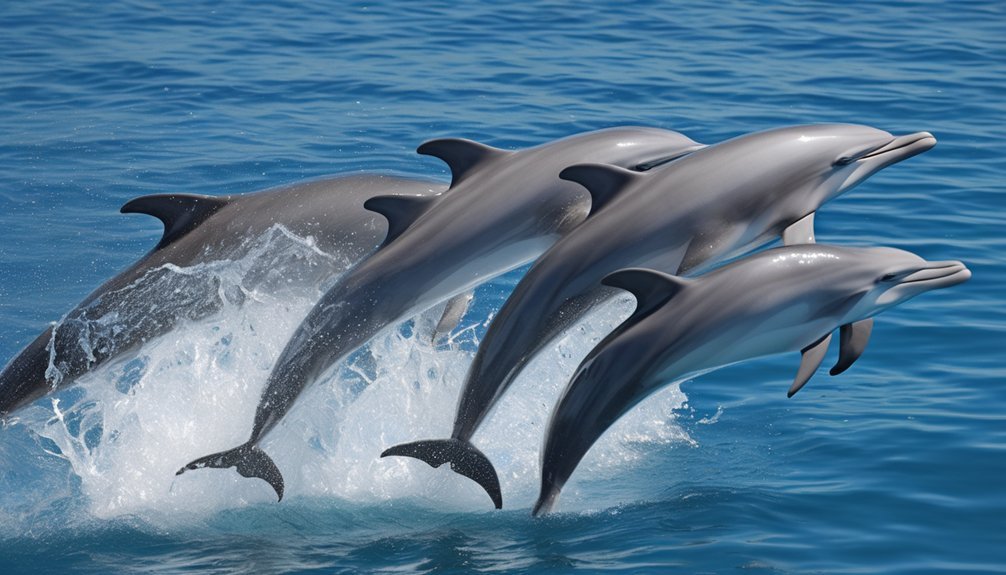
Dolphins stand out for social intelligence because they live in fluid, cooperative groups that require constant recognition, coordination, and response to others.
You can observe their strong communication skills in signature whistles, body postures, and synchronized movements that help maintain group cohesion.
You’ll also see social learning at work when calves copy hunting techniques, travel routes, and interactions from adults. These behaviors let dolphins adapt quickly to changing environments and shared tasks.
Researchers note that they can identify individuals, remember relationships, and adjust behavior based on past encounters.
Their intelligence is social, not solitary: it depends on reading partners, exchanging information, and responding with precision.
In this way, dolphins show how advanced cognition supports trust, cooperation, and stable community life.
Crows and Ravens: Problem-Solving Birds
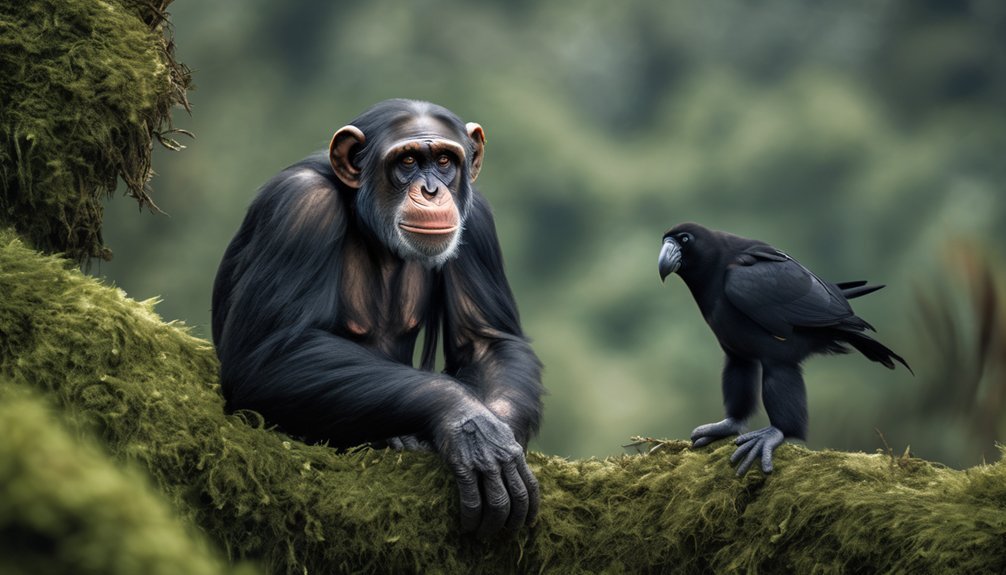
Crows and ravens rank among the most cognitively flexible birds, especially when you examine how they solve problems in the wild. You can observe their cognitive abilities in experiments that test memory, planning, and pattern recognition.

They adapt quickly to changing conditions, and they often learn from watching others. Their social behavior is equally important, because they track allies, rivals, and food opportunities with precision.
You may notice that ravens use complex vocal signals and cooperate selectively, which suggests strong social awareness. Crows also remember individual human faces and adjust their responses accordingly.
These birds don’t just react; they assess, learn, and refine behavior over time. That combination makes them stand out as exceptionally intelligent members of the avian world.
Apes and Octopuses: Tool Users
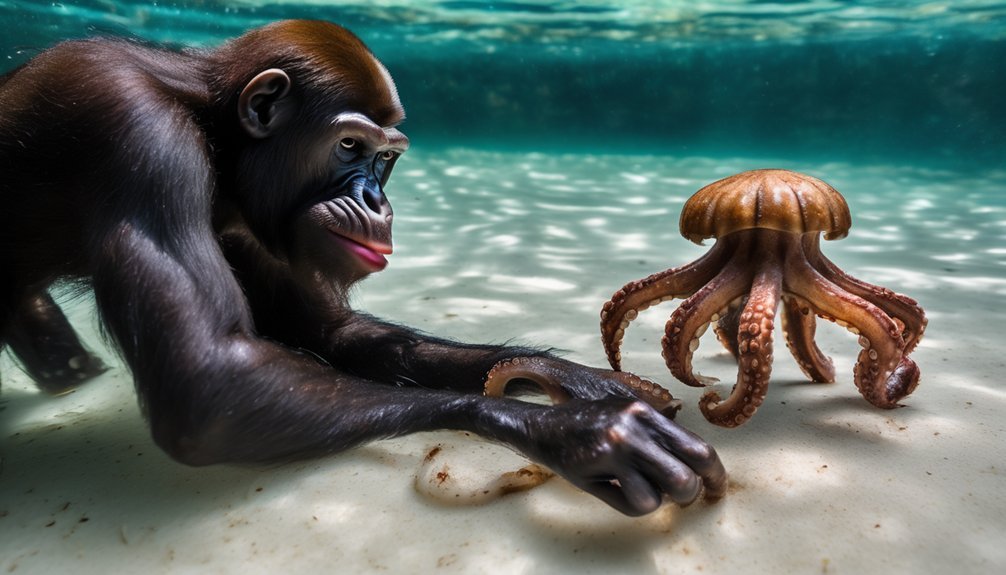
Apes and octopuses stand out because they don’t just solve problems; they also use tools in ways that show planning and flexibility.
You can observe apes shaping sticks, breaking nuts, and using stones with clear tool making abilities. Their behavior reflects cognitive flexibility, because they adjust methods when conditions change. You’ll also see social learning, as younger apes copy skilled adults and refine actions through practice.
Octopuses show a different pattern: they carry shells, use rocks, and manipulate objects with precise control. Their tool use highlights environmental adaptation, especially when they select materials that fit a specific task.
In both groups, tool use isn’t random. It reveals advanced perception, memory, and action coordination, giving you a measurable sign of intelligence across distant animal lineages.
How Animal Intelligence Helps Survival
Intelligence improves survival by helping animals solve immediate problems and adapt to changing conditions. You can see this in foraging, predator avoidance, and social coordination.
An animal with strong memory remembers food sites, migration routes, and dangerous locations, which improves survival rates. Flexible problem solving lets you adjust survival strategies when habitat, climate, or competition changes.
Strong memory helps animals recall food, routes, and dangers, while flexible problem solving improves survival as conditions change.
For example, clever birds cache food, primates use alliances, and dolphins coordinate hunts. These behaviors reduce energy loss and increase access to resources.
Cognitive adaptability also helps you learn from experience, so you respond faster to threats and opportunities. In environments that shift quickly, intelligence gives you a measurable advantage because it supports efficient decisions, safer movement, and better use of limited resources.
Frequently Asked Questions
Which Animal Has the Largest Brain Relative to Body Size?
The shrew has the largest brain size relative to body size among mammals, showing a strong body correlation. You’ll notice this doesn’t always predict cognitive abilities, but it can reflect evolutionary advantages in tiny animals.
Can Animal Intelligence Change Over a Lifetime?
Yes, animal intelligence can change over a lifetime: you’ll see cognitive development, you’ll see adaptation, you’ll see lifelong learning. Experience, environment, and aging can all alter problem-solving, memory, and behavior in measurable ways.
How Do Scientists Measure Emotional Intelligence in Animals?
You measure animal emotional intelligence by observing emotional responses, social behaviors, and problem solving in cognitive tests. You’d compare choices, stress cues, and empathy-like actions, then score patterns objectively across controlled situations.
Do Intelligent Animals Recognize Themselves in Mirrors?
Yes, some intelligent animals do recognize themselves in mirrors. You’ll see mirror self recognition in great apes, dolphins, elephants, and magpies, which suggests advanced animal cognition, though many species still don’t show this ability.
Are Domesticated Animals Smarter Than Wild Animals?
Not generally; you’ll see different strengths. You can’t rank domesticated animals above wild animals overall because domesticated instincts favor human settings, while wild survival selects problem-solving for harsh environments, risk, and resource competition.
Conclusion
When you compare the smartest animals on Earth, you see intelligence as a mosaic rather than a single measure. You notice dolphins navigating social currents, corvids solving puzzles with precision, and apes using tools with deliberate skill. Elephants and octopuses add further layers to this picture, each adapting in its own way. In nature’s vast laboratory, these minds prove that survival often depends on flexible thought, not just instinct.