Choosing between wet and dry cat food can feel like navigating a maze of options. Each type offers unique benefits that cater to your cat’s health and preferences. While wet food provides essential hydration, dry food boasts convenience and cost-effectiveness. Understanding these differences is key to making an informed choice. So, what factors should you consider to ensure your feline friend gets the best nutrition?
Key Takeaways
- Wet food contains 70-80% moisture, promoting hydration and urinary tract health, while dry food has about 10% moisture.
- Dry food is more convenient for storage and feeding schedules, making it ideal for free-feeding.
- Flavor variety and texture differences can entice picky eaters; wet food is soft and moist, while dry food is crunchy.
- Wet food generally offers better protein quality, but dry food supports dental health and has a longer shelf life.
- Consider budget constraints, as dry food usually provides more servings for the cost and requires less frequent purchases.
Wet Vs. Dry Cat Food: Which Should You Choose?
When choosing between wet and dry cat food, what factors matter most to you? Ingredient quality plays a crucial role in supporting feline nutrition.
Consider your cat’s dietary restrictions; some may require specific formulations due to health issues. Flavor variety can entice picky eaters, while texture preferences might influence their enjoyment.
Feeding schedules also come into play; dry food allows for easy portion control, making it suitable for free-feeding. However, wet food can be beneficial for younger cats or those with dental concerns.

Age considerations are essential, as kittens may thrive on a mix of both, while senior cats might prefer softer textures.
Ultimately, balancing these factors helps you choose the best diet for your feline friend.
Hydration: Why Moisture Content Matters
Hydration plays a vital role in your cat’s overall health, as many felines don’t drink enough water to meet their needs.
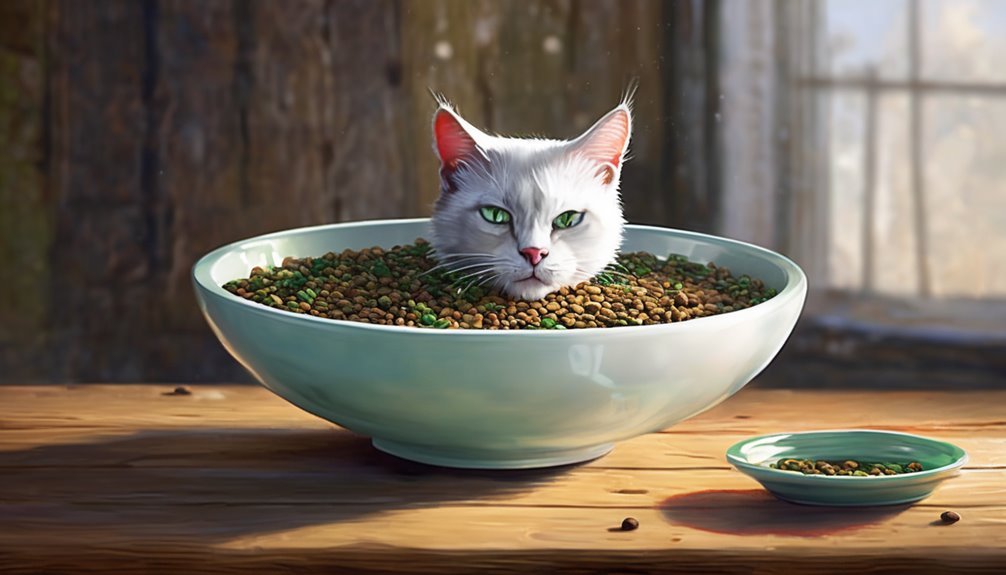
Wet cat food serves as an excellent hydration source, containing about 70-80% moisture, while dry food typically has only 10%. This higher moisture content can significantly enhance your cat’s water intake, reducing the risk of urinary tract issues and promoting kidney function.
Additionally, moisture benefits include aiding digestion and helping maintain a healthy weight. By incorporating wet food into their diet, you’re not just providing nutrition but also ensuring your cat stays hydrated.
Balancing both wet and dry options might be the key to meeting your cat’s hydration needs effectively.
Convenience and Cost of Wet and Dry Cat Food
While both wet and dry cat food offer distinct advantages, their convenience and cost can significantly influence your choice.
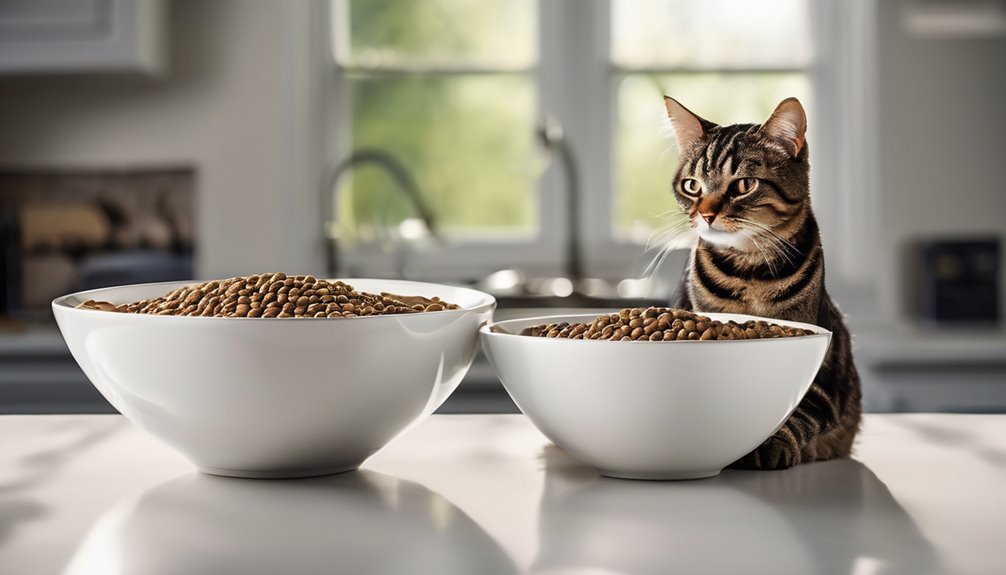
Dry cat food typically comes in larger packaging options, making it easier to store and measure out for daily servings. You can pour the desired serving size directly into your cat’s bowl without much fuss.
On the other hand, wet cat food often comes in smaller, individual servings, which can be more convenient for portion control but may lead to higher costs per meal. If you’re on a budget, dry food usually provides more servings for your dollar.
Ultimately, considering your lifestyle and your cat’s preferences will help you decide which option best fits your needs.
What Do Cats Really Like? Taste Preferences
What factors influence a cat’s taste preferences? Cats are unique creatures, and their taste preferences can vary widely due to several elements. Flavor variety plays a significant role, as many cats enjoy a mix of fish, poultry, and beef. Texture differences also matter; some cats prefer crunchy kibble while others favor soft, moist food. Scent appeal is another critical factor, as aroma often drives their interest in food.
| Flavor Variety | Texture Differences | Scent Appeal |
|---|---|---|
| Fish | Crunchy Kibble | Strong Aroma |
| Poultry | Soft Pâté | Mild Aroma |
| Beef | Mixed Texture | Savory Aroma |
Understanding these aspects can help you choose the best food for your feline friend.
Health Benefits of Wet Vs. Dry Cat Food
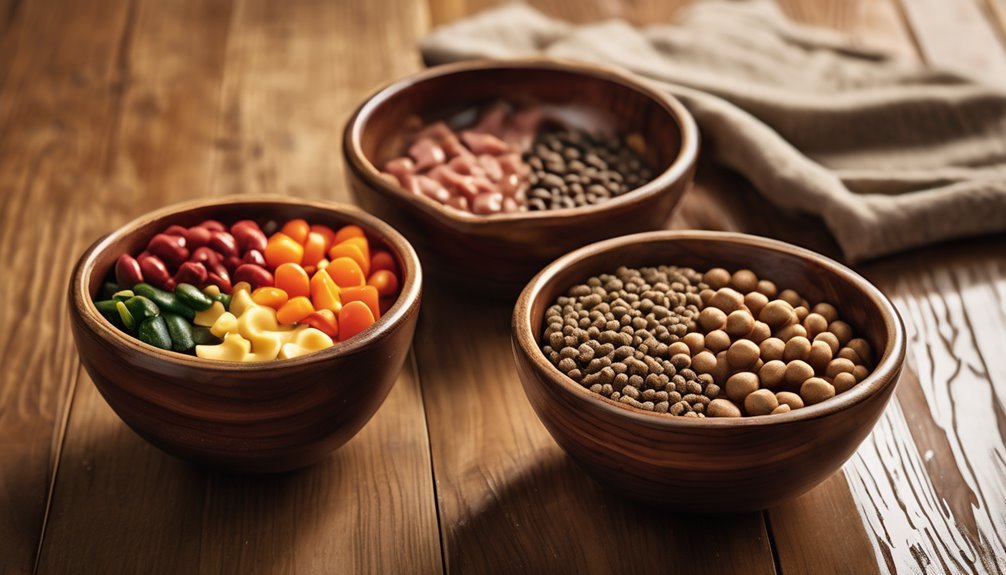
When considering your cat’s diet, understanding the health benefits of wet versus dry food is essential.

Wet food typically boasts higher moisture content, which can help keep your cat hydrated, especially if they don’t drink enough water. This is particularly beneficial for urinary tract health.
Wet food offers higher moisture content, aiding hydration and supporting urinary tract health, especially for cats that drink insufficient water.
On the other hand, dry food often has a longer shelf life and is more convenient.
In a nutritional comparison, wet food generally contains better ingredient quality, providing more protein and fewer fillers.
Cats may also find wet food more palatable, which can be crucial for picky eaters or those with dental issues.
Balancing both types can offer your cat a varied diet, supporting overall health while catering to their specific needs.
Potential Drawbacks of Each Type of Cat Food
Although both wet and dry cat food offer unique benefits, they also come with potential drawbacks that every cat owner should consider.
Wet food can be more expensive and spoil quickly once opened, which might affect ingredient quality if not consumed promptly. Additionally, some brands may lack a complete nutritional balance, leading to deficiencies if relied upon exclusively.
On the other hand, dry food is convenient and often promotes dental health, but it can be higher in carbohydrates, which isn’t ideal for some cats. You also need to ensure the ingredient quality is high, as lower-quality options may contain fillers that don’t provide essential nutrients.
Balancing both types can help mitigate these drawbacks and support your cat’s overall health.
The Benefits of Mixing Wet and Dry Cat Food
Mixing wet and dry cat food can offer a harmonious balance that addresses some of the drawbacks associated with each type. By combining these foods, you can enhance your cat’s nutritional balance, ensuring they receive the benefits of both moisture-rich wet food and fiber-packed dry food.
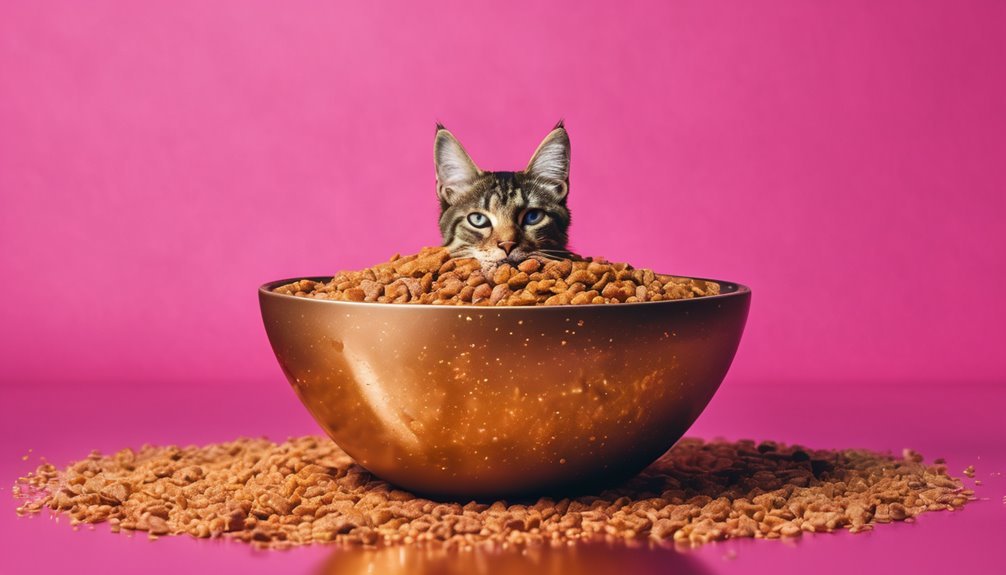
This strategy not only encourages hydration but also promotes dental health due to the crunchiness of dry kibble. Additionally, it can make mealtime more exciting for your cat, as the varied textures and flavors keep them engaged.
Adopting this feeding strategy can also help manage weight, as you can control portions more effectively. Overall, mixing wet and dry food is a practical approach to providing a well-rounded diet for your feline friend.
How to Choose the Best Food for Your Cat
How can you determine the best food for your cat amidst the myriad of options available? Start by reviewing the nutritional analysis on food labels, focusing on protein content, essential fatty acids, and vitamins.
Cats are obligate carnivores, so prioritize high-quality animal protein. Consider your cat’s age, health status, and activity level when selecting food.
Next, establish feeding schedules that work for both you and your cat. Whether you choose wet or dry food, consistency in mealtime can help regulate their digestion and weight.
Don’t hesitate to consult your veterinarian for tailored recommendations based on your cat’s specific needs. Balancing quality nutrition with proper feeding habits is key to ensuring your feline stays happy and healthy.
Conclusion
In the great debate of wet versus dry cat food, there’s no one-size-fits-all answer. Each type offers unique benefits that can support your cat’s health and happiness. While wet food hydrates like a refreshing summer rain, dry food provides convenience and dental advantages. Mixing both can create a culinary paradise for your feline friend, ensuring they get the best of both worlds. Ultimately, your cat’s preferences and health needs should guide your choice for a balanced diet.