
Did you know that cats, on average, should be fed twice a day to maintain optimal health? This routine helps ensure they get the energy they need throughout the day. However, feeding schedules can vary significantly based on age, activity level, and dietary preferences. Understanding the nuances of your cat’s needs is crucial for their well-being. What factors should you consider when determining how often to feed your feline friend?
Key Takeaways
- Kittens require three to four meals daily to support their rapid growth and energy needs.
- Adult cats typically thrive on two meals a day, spaced about 12 hours apart.
- Senior cats benefit from consistent feeding frequencies to maintain health and prevent weight loss.
- Free feeding can lead to obesity; portion control is crucial for maintaining a healthy weight.
- Monitor your cat’s weight and energy levels to adjust feeding schedules as needed.
What Your Cat Really Needs to Eat
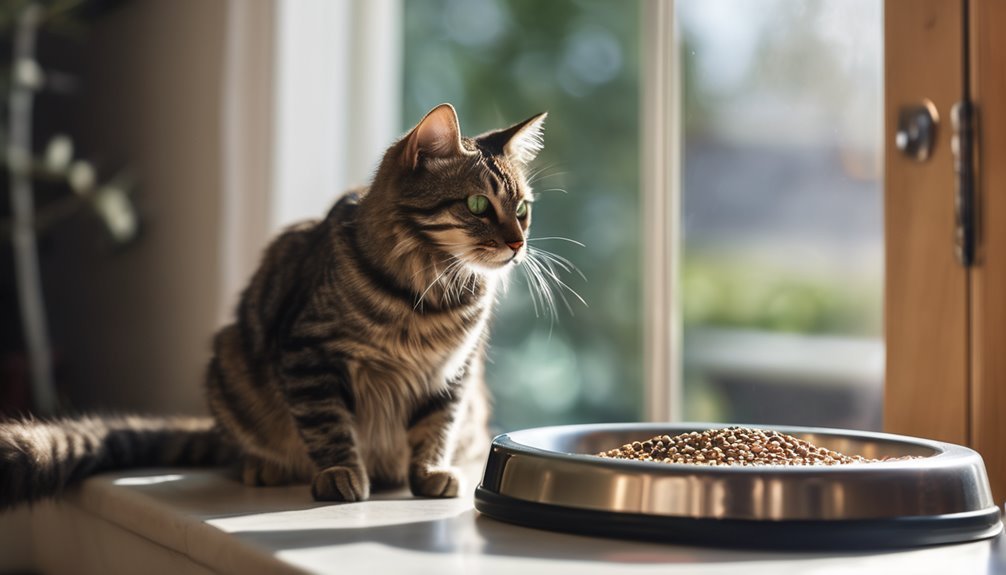
When you think about what your cat really needs to eat, consider that their dietary requirements are quite specific. Cats are obligate carnivores, meaning they need animal-based proteins for optimal health.
A balanced diet includes essential nutrients like taurine, arachidonic acid, and vitamins A and D. To ensure nutritional balance, choose high-quality cat food that meets these needs.
Portion control is equally important; overfeeding can lead to obesity, while underfeeding may result in malnutrition. Typically, adult cats require around 20 calories per pound of body weight daily.

Adjust portions based on your cat’s activity level and health status. Regularly consult your veterinarian to tailor their diet for the best results. Your cat’s well-being hinges on what’s in their bowl.
How Often Should You Feed Your Cat?
How often should you feed your cat to ensure they thrive? The ideal feeding frequency varies by age and lifestyle.
For kittens, three to four meals a day support their rapid growth.
Adult cats typically do well with two meals daily, spaced about 12 hours apart. This meal timing helps regulate their metabolism and prevents obesity.
If you have a senior cat, consider keeping their feeding frequency consistent to manage any health issues.
Remember, free feeding can lead to overeating and should be approached cautiously.
Ultimately, monitor your cat’s weight and energy levels, adjusting as necessary to find the right balance that keeps them healthy and happy.
Always consult your vet for tailored advice.
How Much Food Should Cats Eat Per Meal?
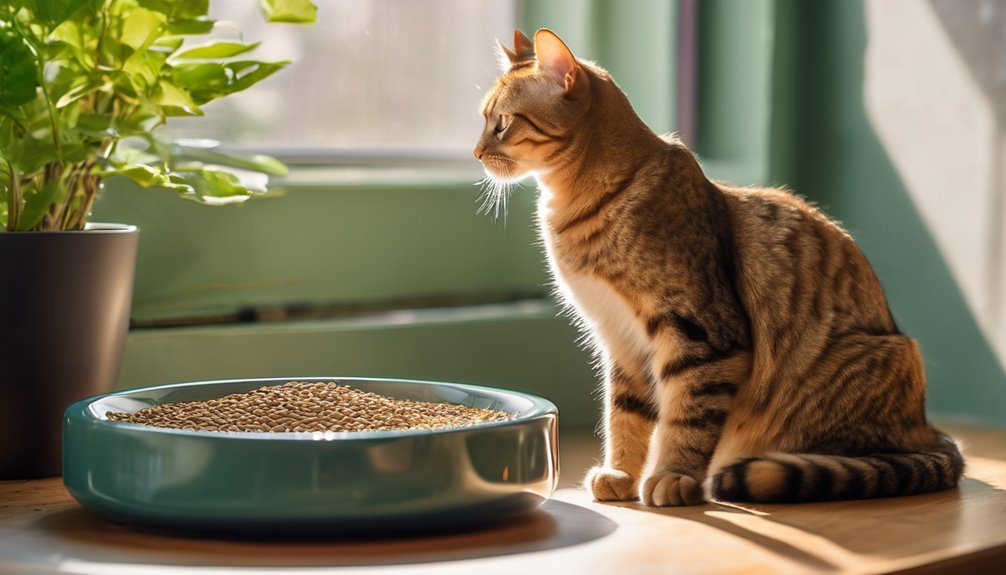
Determining the right portion size for your cat’s meals is crucial for their health and well-being.
Adult cats typically need about 20 calories per pound of body weight daily, which can be divided into appropriate portion sizes based on their meal frequency. If you’re feeding them twice a day, for instance, divide their total daily calorie requirement by two to find the amount for each meal.
Always check the feeding guidelines on your cat food label, as different brands and formulations vary. Monitor your cat’s weight and adjust portion sizes as necessary to prevent obesity.
Key Factors That Affect Feeding Schedules
Several key factors influence your cat’s feeding schedule, ensuring their nutritional needs are met effectively. Understanding these can help you establish a routine that aligns with your cat’s feeding habits:

- Age: Kittens require more frequent meals than adult cats.
- Activity Level: Active cats may need more calories and frequent feeding.
- Health Conditions: Certain ailments can necessitate specific feeding schedules or diets.
- Weight Management: Overweight cats might benefit from controlled feeding to regulate their intake.
- Personal Preference: Some cats prefer multiple small meals while others thrive on fewer, larger portions.
Wet Food vs. Dry Food: What’s Best for Your Cat?

Choosing between wet and dry food for your cat can significantly impact their health and well-being.
Wet food benefits include higher moisture content, which helps keep your cat hydrated and supports urinary health. It often appeals to cats’ flavor preferences, making mealtime more enjoyable.
On the other hand, dry food drawbacks can include lower moisture levels and potential dental health issues, as it may not effectively clean teeth. However, high-quality dry food can offer nutritional balance and convenience.
Mixing both types can provide feeding variety, ensuring your cat receives diverse nutrients.
Always prioritize ingredient quality, so check labels to ensure your cat gets the best diet for optimal health.
Adjusting Feeding Times for Age and Activity
As your cat ages and their activity levels change, adjusting their feeding times can be crucial for maintaining their health. Consider the following factors to ensure optimal meal frequency and dietary needs:
- Age considerations: Kittens need more frequent meals than older cats.
- Activity level: Active cats may require additional calories and feeding times.
- Weight management: Monitor portion sizes to prevent obesity.
- Health conditions: Adjust feeding habits for any specific dietary restrictions.
- Lifestyle changes: If your schedule shifts, adapt feeding times to maintain consistency.
How to Tell if Your Cat Is Hungry or Overfed?
How can you tell if your cat is truly hungry or simply overfed? First, observe their hunger cues. A cat that’s genuinely hungry may vocalize, follow you to the food bowl, or show interest in your meals.
In contrast, overfed cats often exhibit lethargy, a lack of interest in play, or weight gain.
Consider implementing portion control; measure their food to prevent overfeeding. If your cat consistently finishes their meals quickly, it might signal hunger, but if they leave food behind, you may be overdoing it.
Regularly assess their body condition and adjust feeding amounts as needed. Understanding these signs helps ensure your cat stays healthy and happy without overindulgence.
Common Mistakes Cat Owners Make in Feeding
While many cat owners aim to provide the best for their furry friends, they often make common mistakes in feeding that can affect their cat’s health.
Here are some common misconceptions and feeding myths to watch out for:
- Free-feeding all day can lead to obesity.
- Ignoring portion sizes may overfeed or underfeed your cat.
- Only offering dry food lacks essential moisture for hydration.
- Switching diets abruptly can upset your cat’s digestive system.
- Assuming cats don’t need variety misses out on essential nutrients.
Tips for a Consistent Feeding Routine
Establishing a consistent feeding routine is crucial for your cat’s overall health and well-being. Start by setting consistent timing for meals, as cats thrive on predictability. Aim to feed your cat at the same times each day, whether you’re using free feeding or scheduled meals. This helps regulate their metabolism and can prevent obesity.
Create a calm feeding environment by minimizing distractions. Designate a quiet area for meals, away from noise and other pets, so your cat feels secure.
Use clean bowls and fresh food to encourage positive eating habits. Monitor your cat’s appetite and adjust portions as needed, ensuring they maintain a healthy weight.
Conclusion
In conclusion, feeding your cat the right amount and at the right times is crucial for their health. While some might argue that free-feeding is more convenient, it often leads to overeating and obesity. By sticking to a structured feeding schedule, you can better monitor your cat’s weight and energy levels, ensuring they thrive. Remember, a balanced diet and consistent routine will keep your feline friend happy and healthy for years to come.