Caring for your senior dog at home involves understanding their specific needs as they age. You’ll want to adjust their diet, exercise routine, and grooming habits to ensure they stay comfortable and healthy. It’s essential to keep an eye on their mobility and find ways to create a cozy living space. With the right approach, you can enhance their quality of life during these golden years. Let’s explore these important aspects further.
Key Takeaways
- Create a calm and supportive environment, maintaining a consistent routine to reduce anxiety in senior dogs.
- Adjust their diet to include fewer calories and consider dietary supplements for joint health.
- Schedule regular vet check-ups for early detection of health issues and monitor weight changes.
- Introduce mobility aids and modify exercise routines to include short, low-impact activities.
- Regular grooming not only maintains health but also strengthens your bond with your senior dog.
Understanding Your Senior Dog’s Needs
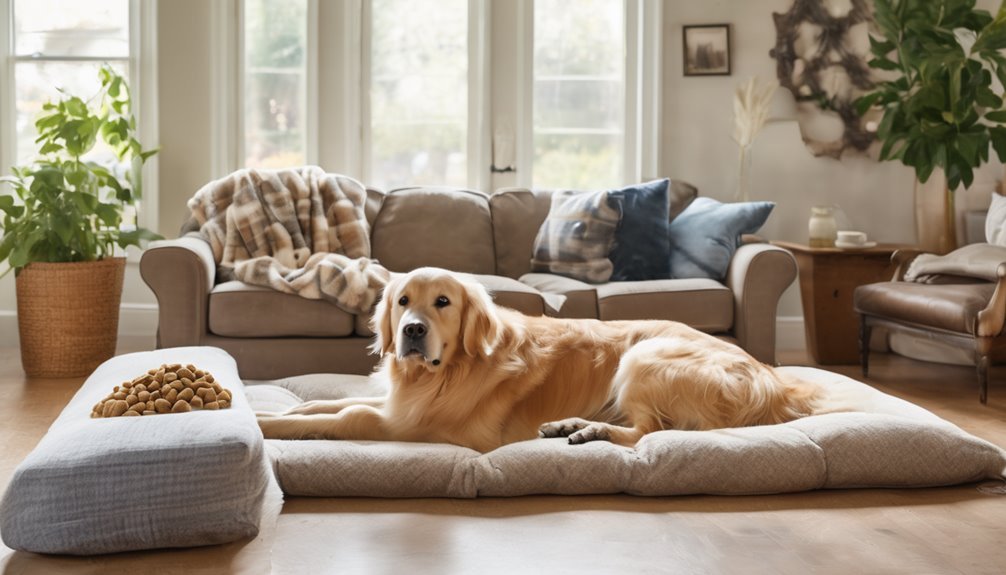
As your dog ages, understanding their unique needs becomes crucial to ensuring their well-being.
Senior behavior can shift significantly; you might notice changes in energy levels, mobility, and even temperament. These cognitive changes can affect how they interact with you and their environment. For instance, your once playful pup may become more withdrawn or anxious.
As dogs age, changes in energy, mobility, and temperament can lead to a more withdrawn or anxious demeanor.
It’s essential to provide a calm, supportive space where they feel secure. Regular mental stimulation, like puzzle toys or gentle training, can help keep their minds sharp. Additionally, maintain a consistent routine to reduce anxiety.

Observing these shifts allows you to adapt your care, ensuring your senior dog remains comfortable and happy in their golden years.
Adjusting Your Senior Dog’s Diet for Optimal Health
To ensure your senior dog stays healthy and vibrant, adjusting their diet is essential.
Start by focusing on weight management; senior dogs often need fewer calories. Implement portion control to help maintain a healthy weight.
Gradually make food transitions to prevent digestive upset—mix new food with the old over several days.
Consider incorporating dietary supplements like omega-3 fatty acids for joint health and antioxidants for immune support.
Don’t forget their hydration needs; fresh water should always be available.
Customized recipes can be a fun way to ensure your dog gets the nutrients they require.
Tailoring their diet can enhance their well-being, making their golden years more enjoyable and fulfilling.
What to Expect During Senior Dog Check-Ups?
Regular check-ups become increasingly important as your dog ages, helping you catch potential health issues early.
Regular check-ups are vital as your dog ages, allowing for early detection of potential health issues.
During these veterinary assessments, your vet will look for signs of aging and any behavioral changes that could indicate underlying problems.
Here’s what to expect:
- Physical Exam: A thorough examination of your dog’s body condition and mobility.
- Blood Tests: Routine blood work to check organ function and detect diseases.
- Dental Check: Evaluation of oral health, which can impact overall well-being.
- Weight Monitoring: Keeping track of weight changes to adjust diet accordingly.
- Behavior Assessment: Discussing any changes in behavior that might signal health issues.
Managing Mobility Issues With Care
When your senior dog starts showing signs of mobility issues, it can be both heartbreaking and challenging. You’ll want to assess their needs and consider using mobility aids like harnesses or ramps to help them navigate around your home.
These tools can make a world of difference, easing their movement and boosting their confidence.

Also, think about exercise modifications. Instead of long walks, opt for shorter, more frequent strolls or gentle play sessions.
Low-impact activities, like swimming or even just stretching, can keep them active without overexerting themselves. Always observe your dog for signs of discomfort, and adjust their routine as needed.
Your care and understanding can significantly enhance their quality of life during this time.
How to Create a Cozy Living Space for Your Senior Dog
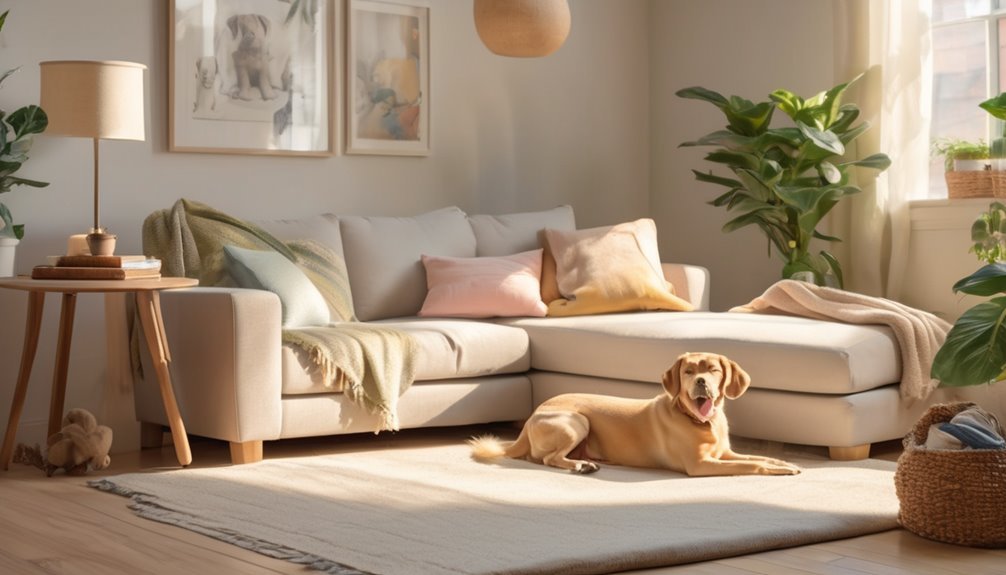
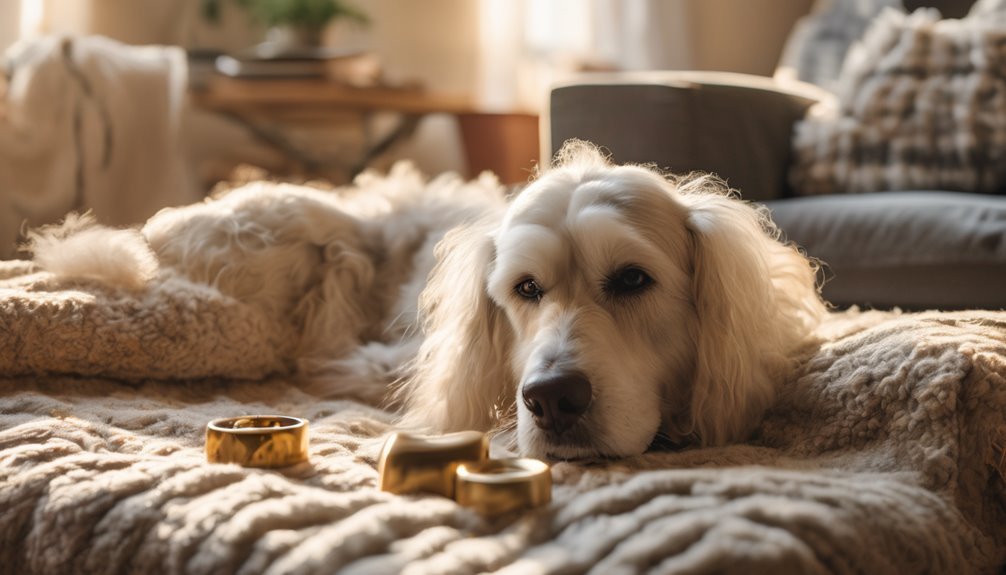
Creating a cozy living space for your senior dog can make a significant difference in their comfort and happiness. Here are some practical tips to help you set up the perfect spot:
- Choose a comfortable dog bed that provides support for their joints.
- Add warm blankets for extra coziness during chilly nights.
- Designate a quiet corner where they can retreat and relax without disturbances.
- Incorporate soft lighting to create a calming atmosphere, especially in the evenings.
- Use non-slip mats to ensure easy access and prevent slipping on hard floors.
Remember to maintain a comfortable temperature and consider using comforting scents like lavender to enhance their relaxation.
Your senior dog will appreciate the thoughtful touches!
Health-Boosting Activities for Senior Dogs
Engaging your senior dog in health-boosting activities is essential for their physical and mental well-being. Incorporate gentle exercises like short walks or light play sessions to keep them active.
Combine these with mental stimulation through puzzle toys or simple training commands; it’s a great way to engage their minds. Sensory enrichment can also enhance their experience—try introducing new scents or textures during walks.
Encourage social interaction by arranging playdates with other dogs, which fosters companionship and joy. Tailor routines based on your dog’s abilities, ensuring they’re not overwhelmed.
Prioritize stress reduction by observing their reactions and adjusting activities accordingly. Use positive reinforcement to celebrate achievements, turning every experience into playful engagement that strengthens your bond.
Essential Grooming Techniques for Senior Dogs
Many pet owners overlook the importance of grooming for senior dogs, but it’s a crucial part of their care routine. Proper grooming helps keep your dog comfortable and healthy.
Grooming is vital for senior dogs, ensuring their comfort and health as they age.
Here are some essential techniques to consider:
- Fur maintenance: Use the right grooming tools for your dog’s coat types and brush regularly to prevent matting.
- Nail trimming: Keep nails short to avoid discomfort; aim for every 4-6 weeks.
- Ear cleaning: Check and clean ears weekly to prevent infections.
- Dental hygiene: Brush your dog’s teeth regularly and consider dental chews.
- Skin care: Monitor for dryness or irritation, adjusting bath frequency to keep skin healthy.
Incorporating these practices will enhance your senior dog’s well-being and comfort.
Building a Strong Bond in Their Golden Years
Grooming not only helps maintain your senior dog’s physical health but also provides an excellent opportunity to strengthen your bond. Engage in bonding activities like gentle brushing or bathing, turning these moments into affectionate routines.
Prioritize quality time with senior playtime that suits their energy levels, fostering an emotional connection. Simple games can offer shared experiences that build trust and joy.
Incorporate gentle training sessions, focusing on commands they already know to boost their confidence and reinforce your bond. Each interaction is a chance for trust building and connection.
Conclusion
In your senior dog’s golden years, nurturing their needs is crucial. By providing proper nutrition, gentle exercise, and a cozy environment, you’ll promote both physical health and happiness. Engaging activities and regular grooming not only enhance their well-being but also deepen your delightful bond. Remember, a little love goes a long way in making their twilight time truly treasured. Embrace this journey together, ensuring each day is filled with comfort, care, and companionship.