When you look at living fossils such as horseshoe crabs, coelacanths, nautiluses, crocodilians, and tuataras, you’re seeing lineages that have persisted for millions of years with limited anatomical change. You can trace their survival to stable body plans, specialized habitats, and effective feeding or defense strategies. Yet their persistence raises a deeper question: why did these animals endure when so many others vanished after the dinosaurs?
Key Takeaways
- Horseshoe crabs have survived for about 450 million years with a highly conserved body plan.
- Coelacanths are ancient lobe-finned fish that persisted for roughly 400 million years with little change.
- Nautiluses retain chambered shells and other primitive features that date back millions of years.
- Crocodilians have kept an effective semi-aquatic body plan since the age of dinosaurs.
- Tuataras are the last living members of an ancient reptile group that survived major climate shifts.
What Is a Living Fossil?
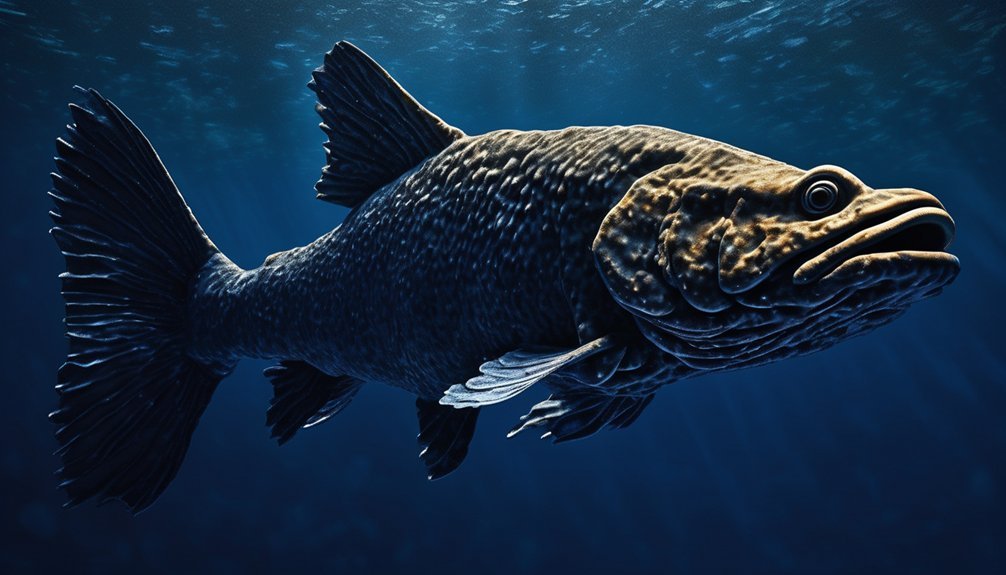
A living fossil is a species that has changed very little over millions of years and still resembles its ancient ancestors. You can identify it by its conserved body plan, slow morphological change, and persistence through major environmental shifts.
Scientists value these organisms because they reveal evolutionary significance: they preserve traits that help you compare modern lineages with extinct relatives. Their adaptive traits often suit stable habitats, allowing them to remain effective without dramatic redesign.
When you study a living fossil, you’re examining a lineage that has endured while many others vanished. It doesn’t mean the species stopped evolving; it means natural selection has favored a successful structure and physiology over long periods, giving you a living reference for deep-time biology.

Horseshoe Crabs: Ancient Survivors of the Sea
One of the clearest examples of a living fossil is the horseshoe crab, a marine arthropod that has remained remarkably similar for roughly 450 million years.
You can recognize its horseshoe-shaped carapace, compound eyes, spined tail, and book gills, all key parts of horseshoe crab anatomy. These structures help it move, sense light, and breathe in low-oxygen water.
In its horseshoe crab habitat, you’ll find shallow coastal bays, estuaries, and sandy seafloors where it feeds on worms, mollusks, and algae. It usually stays near the bottom, using its hard shell for protection.
During spring tides, adults migrate to beaches to spawn, and their eggs support shorebirds and other wildlife. Its survival reflects an ancient body plan shaped by stable marine conditions.
Coelacanths: Ancient Fish Still Around Today
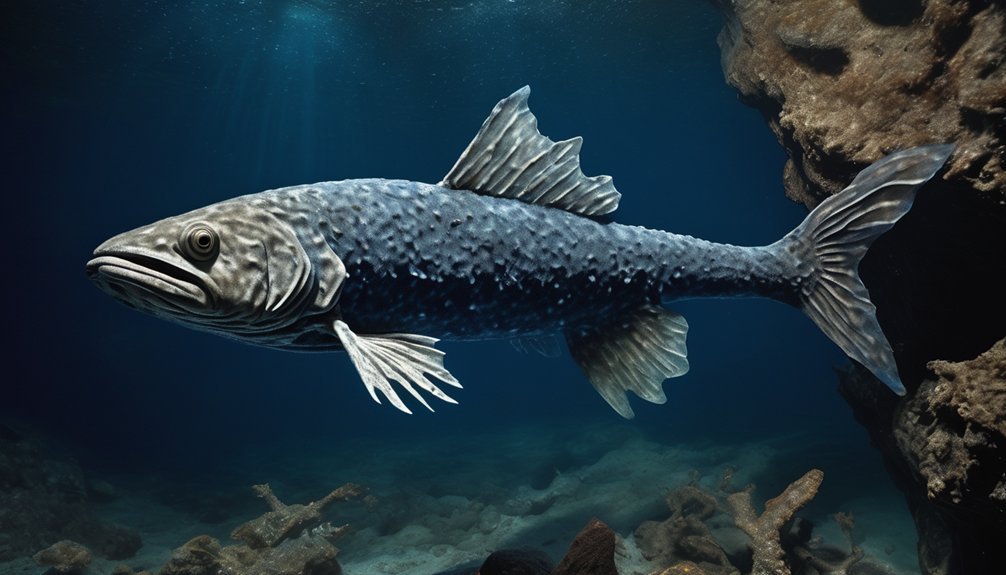
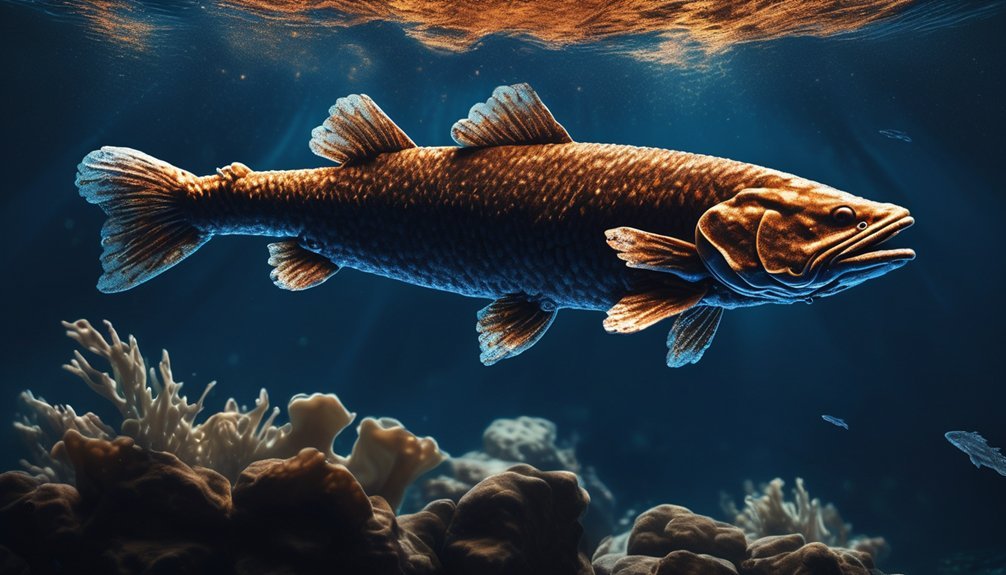
Though long thought extinct, coelacanths are deep-sea lobe-finned fish that have survived for about 400 million years with a body plan that changed little over time.
Thought extinct, coelacanths have survived 400 million years with a remarkably unchanged body plan.
You can recognize their coelacanth anatomy by a three-lobed tail, paired fleshy fins, and a skull joint that lets the head open widely. Their bones are thick, and their electric sensory organs help you understand how they detect prey in darkness.
In coelacanth habitat, you’d find steep volcanic slopes and underwater caves at 150 to 700 meters, where cold water and low light limit competition. They move slowly, conserving energy, and hunt fish and cephalopods at night.
Because they bear live young, you’re seeing a lineage that’s remarkably stable, yet still vulnerable to habitat disturbance and bycatch.
Nautiluses: Spiral Shells From the Ancient Ocean
Nautiluses are living cephalopods whose chambered spiral shells have changed little for hundreds of millions of years, giving you a rare look at an ancient ocean lineage that survived multiple mass extinctions.
You can see how their buoyant shells, simple pinhole eyes, and many sensory tentacles support slow, deliberate movement in dim deep water. Their gas-filled chambers let them control depth with precision, while a tough hood helps shield the soft body when danger nears.
These nautilus adaptations suit low-light habitats along steep reef slopes and continental margins. Because they persist where other lineages vanished, you’re also seeing a living window into ancient marine ecosystems.
Their survival depends on scavenging, avoiding predators, and reproducing slowly, traits that reflect long-term stability rather than rapid change.
Crocodilians: Ancient Reptiles That Outlived the Dinosaurs
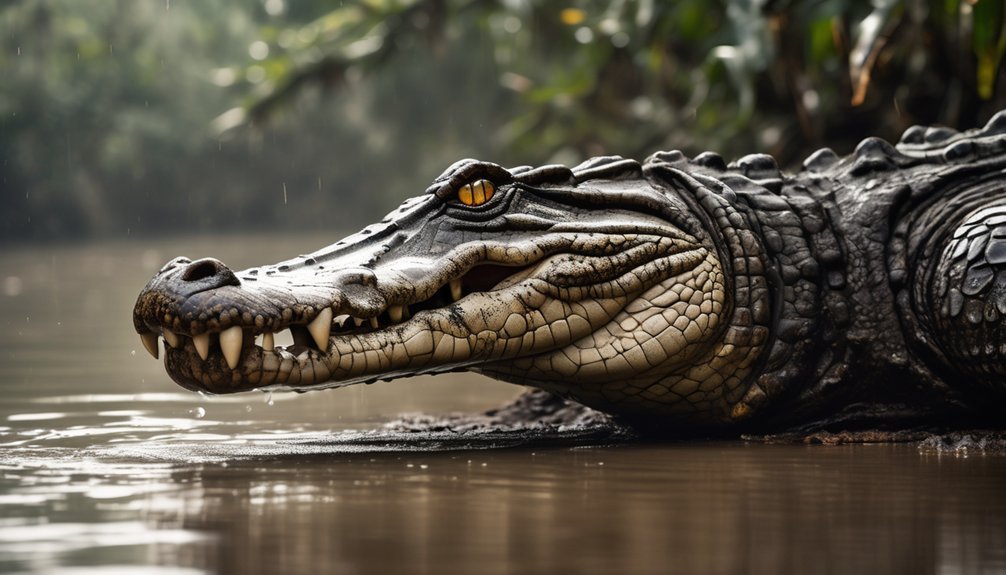
Crocodilians—crocodiles, alligators, caimans, and gharials—are among the oldest surviving reptile lineages, with body plans that have remained remarkably effective since the age of dinosaurs.

You can see their success in their semi-aquatic lifestyles, powerful tails, armored skin, and sensory organs that detect vibrations and pressure changes in water. These crocodilian adaptations let them ambush prey with minimal energy use, while their low metabolic rates help them endure long periods between meals.
Semi-aquatic hunters with powerful tails, armored skin, and keen senses, crocodilians thrive with astonishing energy efficiency.
You’ll find them in warm, often swampy ancient habitats such as rivers, marshes, mangroves, and floodplains, where they regulate ecosystem balance as apex or near-apex predators.
Their reproductive behavior, including nest guarding and temperature-influenced sex determination, also supports survival across changing climates and geologic eras.
Tuataras: The Last Surviving Primitive Reptile
Tuataras are the last living members of the ancient reptile order Rhynchocephalia, a lineage that diverged from other reptiles more than 200 million years ago.
You can observe their unique anatomy: a spiny crest, slow metabolism, and a light-sensitive parietal eye. Their tuatara behavior includes nocturnal hunting of insects, spiders, and small vertebrates, with deliberate movements that conserve energy.
In tuatara habitat, they occupy cool coastal islands and burrows, often sharing space with seabirds.
- Ancient skull structure
- Precise jaw mechanics
- Cold-tolerant activity
- Island-only distribution
You’ll notice they grow slowly and may live for decades, making each encounter feel rare and intimate. Their survival depends on stable temperatures, limited predators, and carefully managed environments.
Why These Animals Endured
These animals endured because their bodies and behaviors fit narrow ecological niches that changed little over time. You’re seeing evolutionary resilience in species that reproduce slowly, conserve energy, and exploit stable resources such as carrion, insects, or sheltered freshwater habitats.
Their environmental adaptability isn’t broad in the dramatic sense; instead, it’s precise, letting them tolerate shifts in temperature, salinity, drought, or low oxygen without losing core function. Natural selection kept traits that reduced competition and predation, while geographic isolation protected lineages from faster-changing ecosystems.
In many cases, you’re looking at animals with efficient metabolism, protective morphology, and flexible feeding or burrowing habits. Those traits didn’t make them dominant. They made them durable, which is why they persisted when many others vanished.
Frequently Asked Questions
How Do Scientists Determine an Animal Is a Living Fossil?
You’d call an animal a living fossil when you see it retains ancient traits, shows little morphological change in fossils, and has strong evolutionary significance, revealing a lineage that’s persisted with remarkable stability over time.
Are Horseshoe Crab Populations Currently Declining Worldwide?
Yes, you can see declining horseshoe crab populations in many regions, though trends vary globally. You should note habitat loss, overharvest, and coastal development as major horseshoe crab threats affecting horseshoe crab habitats and recovery.
Where Do Coelacanths Live in the Ocean Today?
You’ll find coelacanths in deep volcanic caves and rocky slopes off East Africa and Indonesia, usually 150–700 meters down; about 2 species survive, occupying specialized coelacanth habitats in cold ocean depths.
How Long Can a Nautilus Live in the Wild?
You can expect a nautilus lifespan of about 15 to 20 years in the wild, where it lives in the deep sea. Its slow growth and low metabolism help it survive long enough to reproduce.
What Conservation Efforts Protect Tuataras From Extinction?
You protect tuataras by supporting habitat preservation, predator control, and captive breeding programs that maintain genetic diversity. You can also back translocation, nesting-site management, and biosecurity measures to reduce disease and invasive species.
Conclusion
You can see that these living fossils are not just old—they’re astonishing survivors that have endured for hundreds of millions of years. Horseshoe crabs, coelacanths, nautiluses, crocodilians, and tuataras each preserve ancient traits that still work today, proving evolution doesn’t always erase the past. Their persistence is a biological miracle on a planetary scale, a dramatic reminder that life can survive catastrophe, adapt slowly, and carry Earth’s deepest history into the present.