
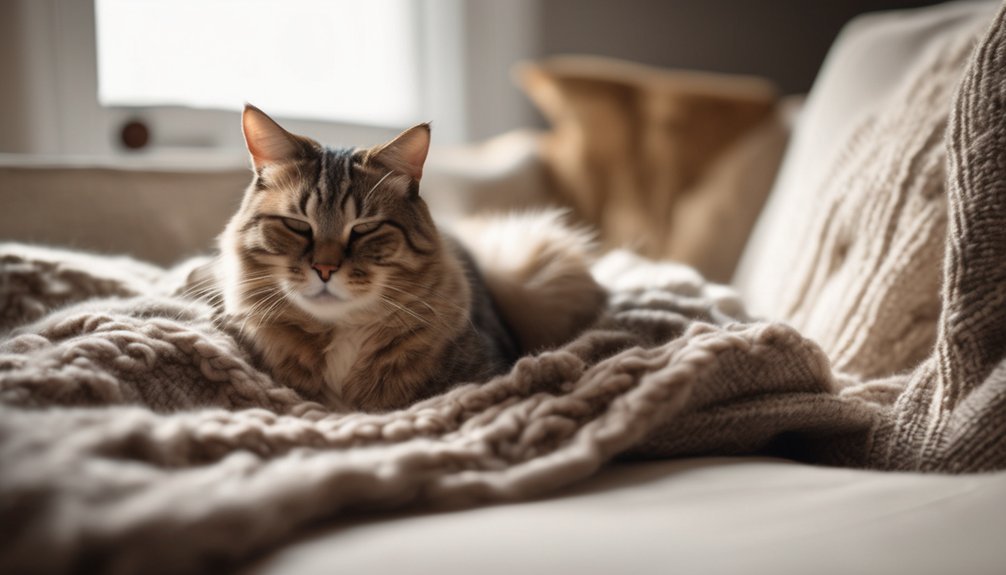
A cat’s paws on a blanket can look like a small, steady drumbeat of comfort. You’re seeing a behavior that starts in kittenhood, when kneading helped trigger milk flow and calm the body. Adult cats often repeat it when they feel safe, relaxed, or attached to you, and they may also use it to mark familiar surfaces. What it means can shift in subtle ways, and the details matter.
Key Takeaways
- Cats knead as a comforting, rhythmic motion that helps them feel relaxed and safe.
- The behavior begins in kittenhood and is linked to nursing and bonding with their mother.
- Kneading blankets or people can show trust, affection, and a desire for closeness.
- Cats may also knead to mark familiar places with scent from their paw glands.
- Increased kneading can be a self-soothing response to stress, anxiety, or changes in routine.
What Kneading Means in Cats
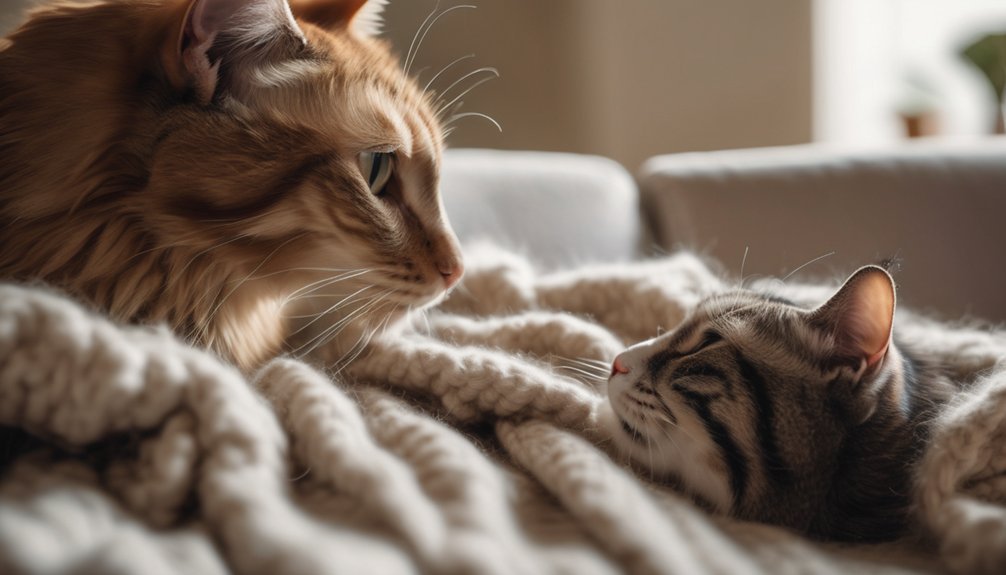
Kneading is a rhythmic, alternating pushing motion cats make with their front paws, usually against a soft surface such as a blanket, a lap, or another cat.
You can read this kneading behavior as one of several feline instincts that reveal comfort signals and emotional expression. In cat psychology, it often reflects stress relief, contentment, and a desire for closeness.
You may also see links to maternal bonds and scent marking, since cats press with their paws and leave scent from glands. At times, playful actions or sleep preparation can appear alongside it.
When your cat kneads you, it’s usually communicating trust and ease. You don’t need to stop it unless claws cause discomfort; instead, you can respond gently and set boundaries.

The Kitten Instinct Behind Kneading
Even adult cats often knead because the motion traces back to kittenhood, when nursing kittens press their paws against the mother’s belly to stimulate milk flow.
You’re seeing a conserved piece of kitten behavior that can persist long after weaning. Your cat’s forepaws alternate in a rhythm that mirrors early feeding, and the pattern can resurface whenever familiar surfaces invite repetitive contact.
These instinctual actions aren’t learned tricks; they emerge from a deep developmental template shaped in early life. In clinical terms, kneading reflects motor memory linked to neonatal feeding cycles.
These instinctual actions aren’t learned tricks; they arise from early developmental patterns and neonatal feeding memory.
When you watch your cat knead, you’re observing an ancient response expressed through the body, not a deliberate message. This explains why blankets, laps, and soft fabric can trigger the same precise movements.
How Kneading Shows Comfort and Contentment
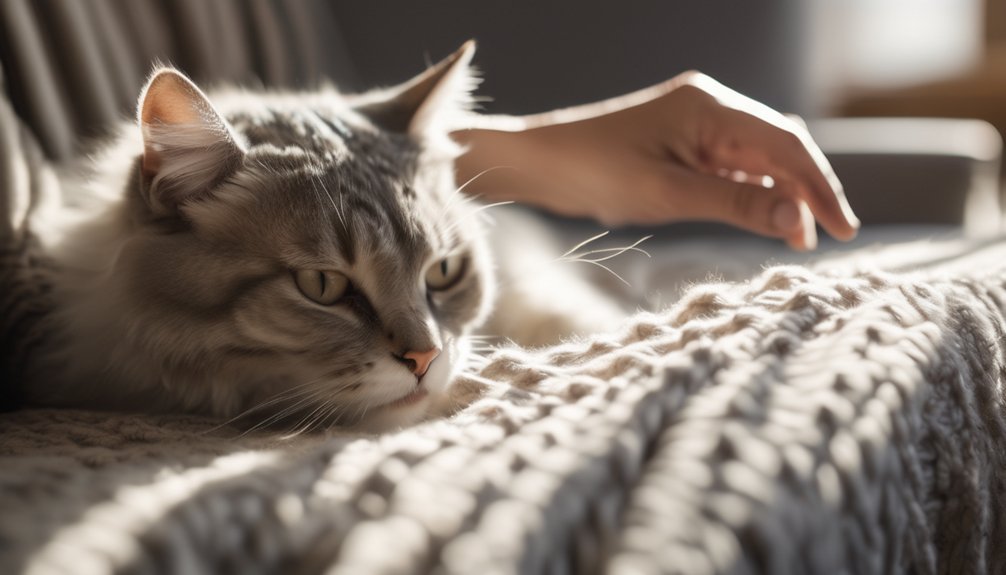
When your cat kneads while settling onto a soft surface, the behavior often signals relaxation and a sense of safety. You can read this rhythm as one of the clearest comfort signals cats use around trusted people and familiar fabrics.
The alternating pressure, loose posture, and slow breathing usually accompany contentment expressions rather than agitation. If your cat kneads your lap, it’s likely treating you as a secure, soothing presence.
You may also notice purring, half-closed eyes, or a relaxed tail, which reinforce the message. In clinical terms, kneading reflects emotional ease and social trust.
For you, it’s a direct invitation to stay still, remain calm, and recognize that your cat feels deeply comfortable in your company.
Why Cats Knead Blankets Before Napping
Before a nap, cats often knead blankets to create a familiar, reassuring sleep surface. You can view this behavior as a self-soothing routine that helps your cat settle.
The repeated pressure may check texture, redistribute fibers, and shape a nest-like hollow. That’s why blanket preferences matter: some fabrics hold warmth better, while others offer more give under the paws.
Your cat’s kneading rituals can also mark the blanket with scent glands in the paws, reinforcing a private, trusted resting place. If your cat kneads before sleep, it usually signals relaxation rather than restlessness.
You don’t need to interrupt it; instead, provide a soft, stable blanket and let the ritual support a calm nap.
Why Cats Knead People With Their Paws
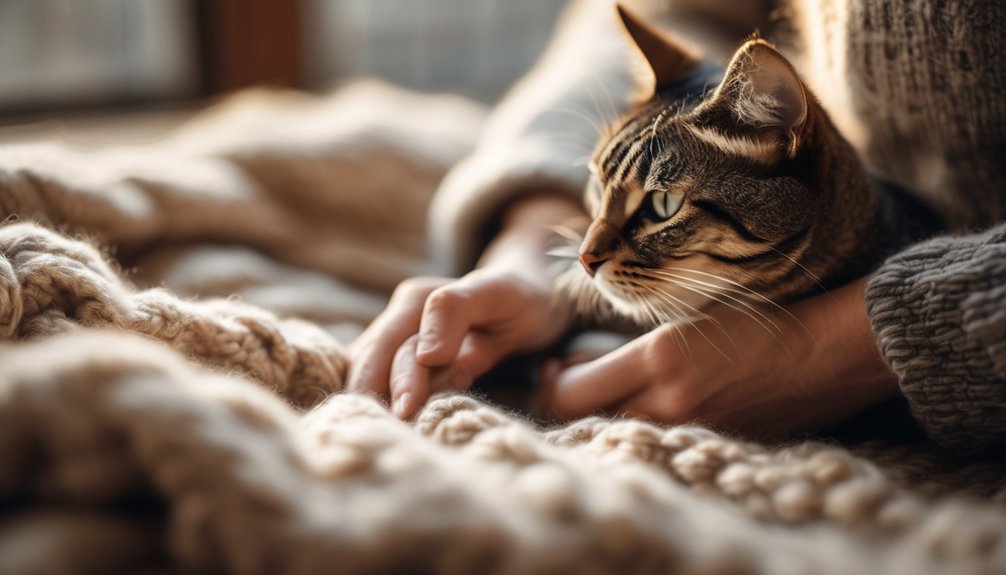
Cats often knead people with their paws because the behavior carries over from kittenhood, when rhythmic pawing helped stimulate nursing and signal comfort.
When your cat presses into you, it’s usually showing relaxation, attachment, and learned security. This cat behavior often appears on soft skin, lap, or clothing because those surfaces feel familiar and inviting.
The kneading significance lies in your cat’s emotional state: it’s using a calming motor pattern that reduces tension and reinforces trust. You may notice purring, slow blinking, or settled posture at the same time.
If the pressure feels sharp, trim the claws or place a blanket between you and your cat. In most cases, this is a normal, affectionate action.
How Kneading Marks Territory
Kneading can also function as a territorial behavior because cats leave scent cues as they press and scratch with their paws. You’re seeing more than a comforting motion; you’re observing scent marking through the tiny glands in your cat’s paw pads.

As your cat kneads a blanket, pillow, or your lap, it deposits pheromones that signal familiarity and ownership. This behavior helps your cat claim a secure, trusted space and reinforce boundaries within its environment.
If your cat kneads you, it isn’t rejecting you; it’s including you in its personal territory. In clinical terms, kneading combines tactile pressure with chemical communication, making it a subtle but effective way to mark what matters most to your cat.
When Kneading Signals Stress or Anxiety
If your cat kneads more than usual, especially in new or unsettling situations, the behavior may reflect stress or anxiety rather than comfort alone. You should treat this as one of several stress signals, particularly if the kneading appears alongside hiding, clinginess, or reduced appetite.
Your cat may repeat the motion to self-soothe, much like a child seeking anxiety relief through familiar habits. A calm environment, predictable routines, and quiet contact can help lower arousal. Avoid forcing interaction, because that can intensify distress.
If the behavior is sudden, persistent, or paired with other changes, your veterinarian should assess pain, illness, or behavioral causes. Careful observation helps you respond early and support your cat’s emotional stability.
How to Tell Kneading From Paddling
One way to distinguish kneading from paddling is to look at context and muscle pattern: kneading usually involves alternating front paws in a slow, rhythmic motion against a soft surface, while paddling tends to be more rapid, less directed, and may occur when a cat is dreaming or in discomfort.
Kneading is slow, rhythmic, and deliberate; paddling is quicker, less directed, and often linked to dreaming or discomfort.
You can also note posture: kneading often includes relaxed shoulders, flexed toes, and a steady cadence. Paddling differences show up as jerky, repetitive movements without clear pressure or sink into the surface.
When you watch kneading techniques closely, you’ll see deliberate compression and release, often with a content facial expression. If the motion happens while your cat sleeps, twitches, or stiffens, you’re likely seeing paddling rather than kneading.
This distinction helps you interpret body language accurately and calmly.
How to Respond When Your Cat Kneads You
When your cat kneads you, respond by reading the context first and then adjusting your handling. A calm, gentle response supports trust and keeps the interaction positive.
In cat behavior, kneading often signals comfort, bonding, or self-soothing, so treat it as a social cue rather than a problem.
- Stay still and let your cat finish if you’re comfortable.
- Offer a soft blanket or lap space to redirect the pressure.
- Speak quietly and keep your movements slow.
- Pet only if your cat leans in and seems relaxed.
You should also watch your cat’s body language: loose ears, soft eyes, and a steady tail suggest contentment.
If you answer with patience, you reinforce safety and intimacy while respecting your cat’s needs.
How to Manage Overzealous Kneading
Overzealous kneading can turn affectionate behavior into a nuisance or source of discomfort, so you should manage it with clear boundaries and redirection. Guide your cat to a soft blanket, trim claws regularly, and reward calm contact. If the overactive paws persist, interrupt gently, then offer a toy or bed nearby.
| Strategy | Why it helps | Your action |
|---|---|---|
| Redirection | Shifts pressure away | Place a cushion under paws |
| Routine | Reduces arousal | Keep comforting routines consistent |
| Rewards | Reinforces calmness | Offer treats for settled behavior |
You can also wear thicker clothing during lap time and end sessions before irritation starts. If kneading becomes frantic or painful, consult your veterinarian to rule out stress or discomfort.
Frequently Asked Questions
Can All Cat Breeds Knead Blankets and People?
Yes, you can expect all cat breeds to show kneading behavior, though intensity varies. Your cat’s cat instincts drive this action, and some individuals knead blankets, people, or both, depending on comfort, age, and temperament.
Do Older Cats Knead as Much as Kittens?
Not usually—older cats often knead less than kittens behavior suggests, though you’ll still see it. Kittens knead for comfort and nursing instincts; older cats may knead when relaxed, affectionate, or marking territory.
Is Kneading Ever a Sign of Pain in Cats?
Yes, sometimes kneading can signal pain in your cat, especially if it’s new, persistent, or paired with pain signals like hiding or limping. Yet you’ll often see it as comfort behaviors, too.
Why Do Some Cats Drool While Kneading?
Some cats drool while kneading because the soothing motion triggers relaxation and salivation; about 1 in 5 do this. You’re seeing Comfort behaviors, not usually concern. Drooling causes include contentment, scent marking, and oral disease.
Can Kneading Damage Furniture or Bedding?
Yes—your cat’s kneading behavior can damage furniture or bedding by snagging fabric, stretching seams, and wearing fibers. Use Furniture protection like covers, keep nails trimmed, and support Blanket maintenance while preserving Cat comfort.
Conclusion
In the end, when your cat kneads blankets or your lap, you’re seeing a built-in behavior that’s part comfort signal, part scent mark, and part kitten memory. It’s not random; it’s a soft map of trust and security. If the kneading stays gentle, let it be. If it becomes painful or obsessive, redirect it. Think of kneading as your cat’s quiet way of saying, “I feel safe here.”