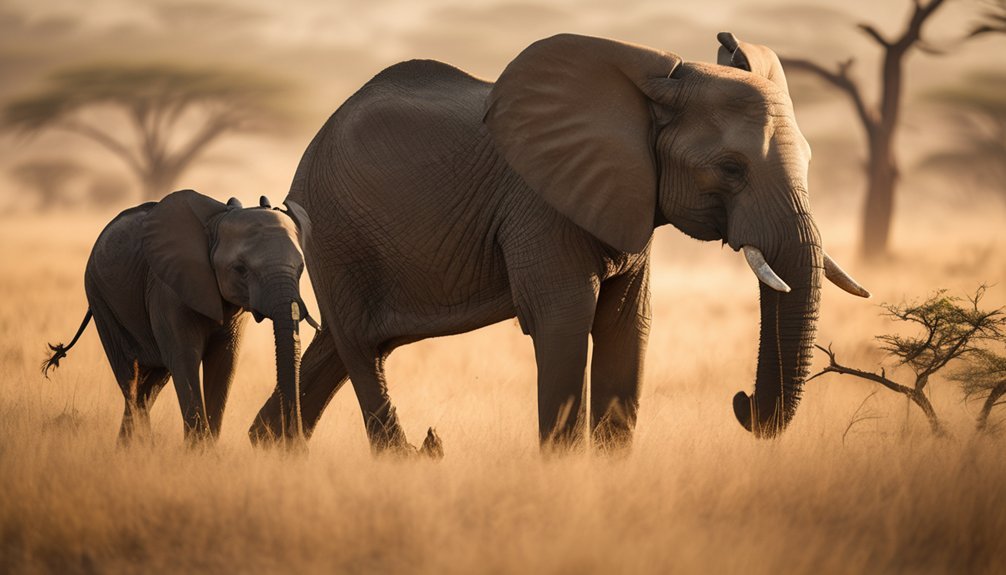
If you study animals with remarkable memory, you’ll see systems built for survival, not just recall. Elephants can retain routes and water sources for years, birds can recover hidden caches with striking accuracy, and dolphins track individuals across long social histories. You can trace how these abilities shape movement, feeding, and group behavior. The real question is how such memory evolved, and what it reveals next.
Key Takeaways
- Animals use specialized brain circuits to remember spatial, social, and associative information with remarkable speed and accuracy.
- Strong memory improves survival by helping animals recognize predators, find food, and make safer decisions.
- Elephants can remember waterholes, migration routes, allies, and dangers for years or even decades.
- Birds like jays and nutcrackers use exceptional spatial memory to recover hidden food from many cache sites.
- Dolphins and primates rely on long-term social memory to पहचान individuals, maintain alliances, and predict behavior.
What Makes Animal Memory So Powerful?
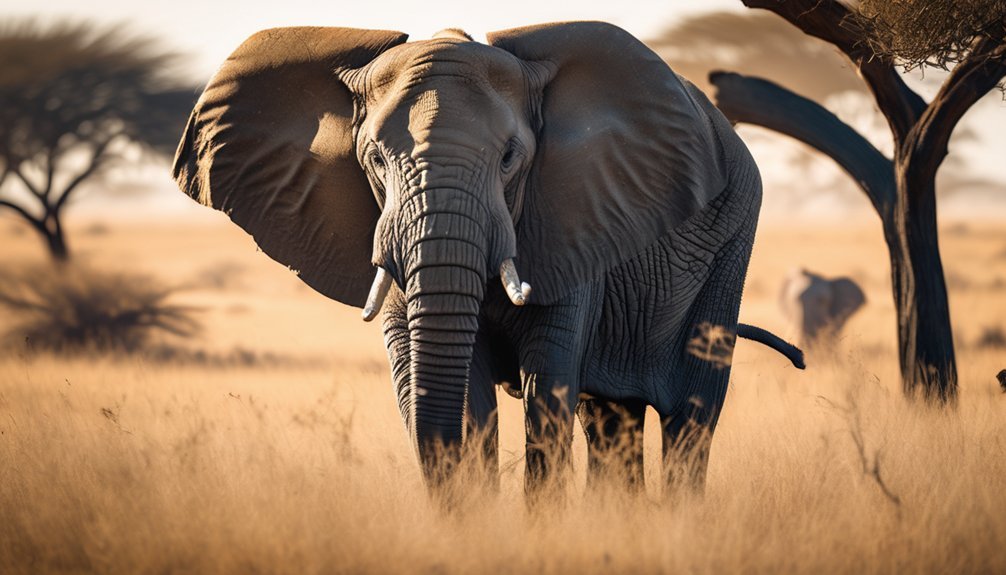
Animal memory is powerful because it combines highly specialized brain structures, efficient neural encoding, and repeated reinforcement from survival-driven experiences.
You can see this in how different memory types—spatial, social, and associative—map onto distinct neural circuits that store and retrieve information with high fidelity.
When you observe an animal learning, you’re seeing rapid pattern recognition, strong synaptic plasticity, and streamlined consolidation that reduce error and preserve detail.

These mechanisms give you clear evolutionary advantages, because they let an organism compare new input against prior experience with exceptional speed.
These mechanisms confer clear evolutionary advantages, allowing an organism to compare new input with prior experience at remarkable speed.
You also notice that many species integrate emotion and context tightly, which strengthens recall and makes memory more durable.
That precision helps you understand why animal cognition can feel so intimate and remarkably exact.
How Animal Memory Helps Survival
When memory is accurate and durable, it helps animals survive by guiding decisions that reduce risk and increase access to food, shelter, and mates. You rely on predator recognition to separate danger from harmless cues, so you can flee or freeze at the right moment.
You also use seasonal migration routes stored from past experience to reach resources before competitors do.
- A deer traces a dim path through snow
- A bird follows a coastline at dawn
- A fox revisits a scent-rich den edge
- A fish avoids a shadowed strike zone
- A rodent maps safe burrow exits
This kind of environmental adaptation sharpens foraging efficiency, because you remember where nectar, seeds, or prey appeared before.
In close ecological terms, memory converts prior exposure into lower mortality and higher reproductive success.
Elephants and Long-Term Memory
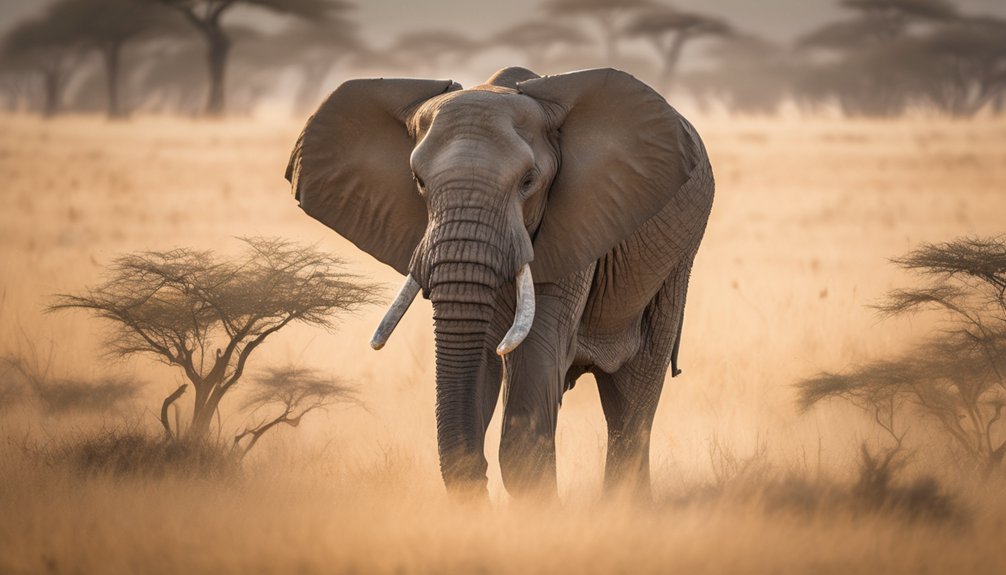
Elephants stand out for long-term memory because they can retain social, spatial, and environmental information for years, even decades. You can see this in their elephant communication and matriarch leadership. The matriarch often remembers waterholes, migration routes, and allies, then guides the herd with high accuracy.
| Memory type | Function | Benefit |
|---|---|---|
| Social | Recognize individuals | Stable alliances |
| Spatial | Recall routes | Efficient travel |
| Environmental | Track hazards | Safer decisions |
| Acoustic | Decode calls | Group coordination |
When you watch them, you’re seeing a distributed cognitive system. Each cue updates the herd’s response, reducing risk and strengthening cohesion. That precision helps them survive drought, conflict, and changing landscapes.
Birds That Cache Food and Remember Spots
Birds that cache food rely on highly accurate spatial memory to recover hidden seeds, nuts, and insects after hours, weeks, or even months.

You can see this caching behavior in jays, chickadees, and nutcrackers, which map landmarks, scent cues, and terrain details with remarkable precision. Their memory techniques reduce loss by distributing stores across many sites, limiting theft and decay.
- A jay tucking a seed beside a mossy root
- A chickadee scanning a snowy branch line
- A nutcracker memorizing pine slopes and rock edges
- A hidden cache beneath brittle leaves
- A bird revisiting a marked patch with exact timing
You’re watching a biological retrieval system that blends perception, learning, and location encoding into efficient survival.
How Dolphins and Primates Use Social Memory
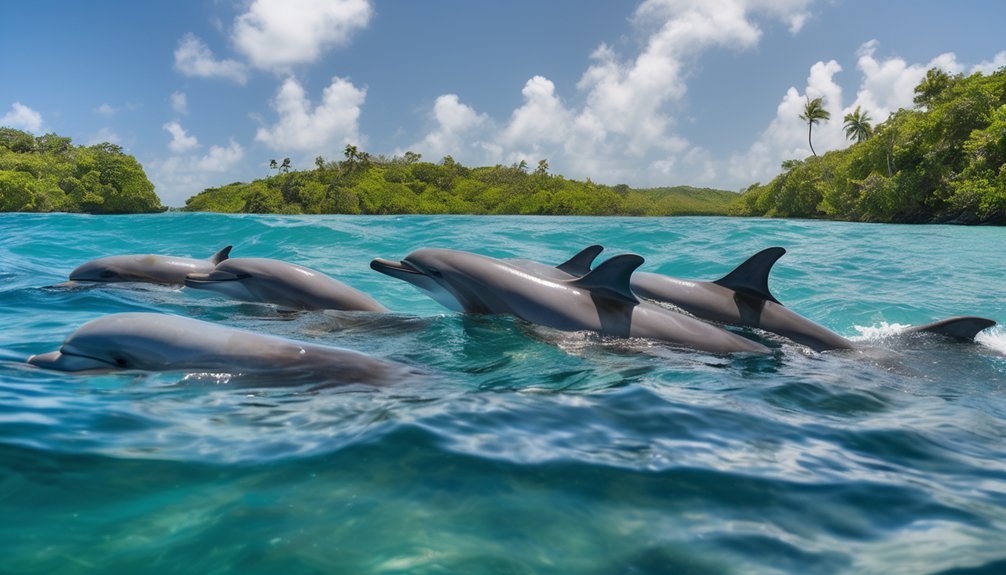
In social groups that change constantly, dolphins and primates depend on memory to track who matters, who rivals whom, and who’s cooperated before. You see this social memory in repeated alliances, kin recognition, and response to individual calls or faces.
Dolphins can remember signature whistles for years, which lets you identify partners quickly and adjust behavior during coordination. Primates use detailed recall to rank relationships, choose grooming partners, and predict aggression.
That memory supports social learning, because you learn by watching whom others trust and imitate. It also sharpens communication skills, since you must match signals to specific individuals and contexts.
What Animal Memory Teaches Scientists
Animal memory gives scientists a clearer model of how cognition works when survival depends on speed, accuracy, and adaptation. You see animal intelligence as a set of measurable tradeoffs: encoding, retention, and retrieval under pressure.
Researchers study memory evolution to identify which neural circuits favor navigation, social tracking, or food caching. That lets you compare species without romanticizing them.
- A raven mapping winter routes across a gray sky
- An elephant recognizing water holes after years
- A bee returning to a flower field by angle
- A dolphin recalling a familiar whistle in surf
- A squirrel hiding acorns in frosted soil
You gain insight into how selection shapes flexible recall, and you help refine models of learning, stress, and brain efficiency.
Frequently Asked Questions
Which Animal Has the Largest Brain-To-Body Memory Advantage?
You’d likely identify the elephant, whose relatively large brain size supports strong cognitive function. Yet memory advantage isn’t purely proportional; neural architecture, density, and specialization also shape how efficiently you remember.
Can Animals Remember Individual Human Faces?
Yes—you can see animals remember individual human faces: crows have recognized specific people after negative encounters, showing strong face recognition and memory retention. This lets you appreciate how their social cognition tracks identity precisely.
Do Some Animals Have Photographic-Like Memory?
Yes, some animals show photographic-like memory, but you’ll want to call it exceptional visual recognition and memory retention, not perfect recall. You can see it in corvids, dolphins, and primates using rapid pattern matching.
How Long Can Marine Animals Remember Migration Routes?
Some marine animals can remember migration routes for years, even decades. You’ll find that sea turtles and whales rely on migration navigation and oceanic memory, retaining routes with remarkable precision across vast, changing waters.
Are Animal Memories Improved by Training?
Yes, you can improve animal memory through training, though training effectiveness depends on species, task, and reinforcement. Repeated practice boosts memory retention by strengthening associations, but it doesn’t guarantee lasting enhancement across all contexts.
Conclusion
When you look at animal memory, you see a finely tuned engine, not a vague talent. Elephants map water and migration with time-tested accuracy, birds store coordinates like living compasses, and dolphins and primates track social signals with calibrated precision. Their memory works like a biological archive, converting experience into survival advantage. If you study these systems, you’ll see evolution’s blueprint: memory isn’t just recall, it’s adaptive intelligence in motion.