
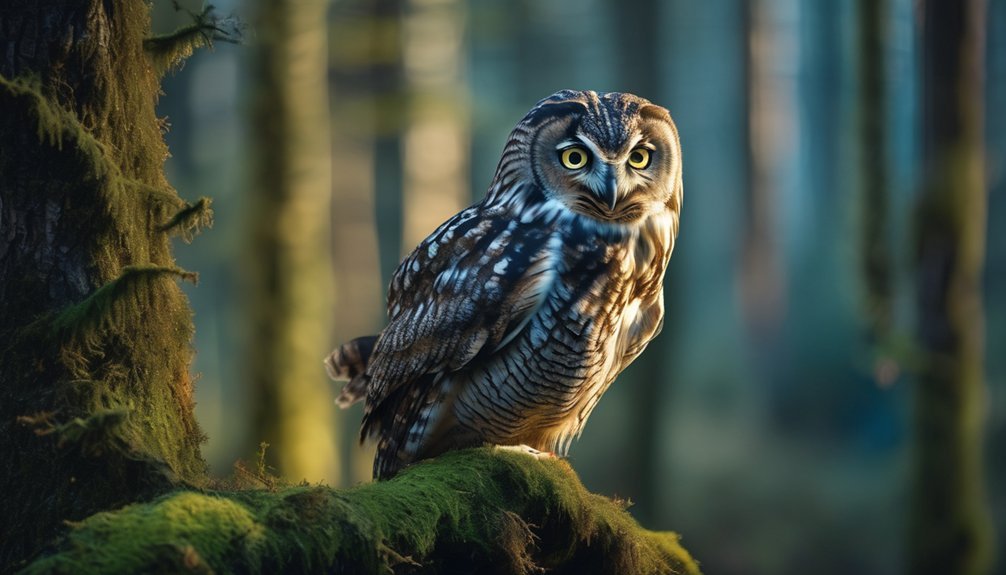
Ever wonder how an owl can seem to look behind itself without moving its body? You’re seeing an adaptation built on a flexible neck with many cervical vertebrae, plus eyes that stay fixed in their sockets. Because the bird can’t shift its eyes much, it turns its head to keep visual focus, protect its prey’s awareness, and align hearing with sight in low light. But that’s only part of the story.
Key Takeaways
- Owls have very flexible necks with many vertebrae, letting them rotate their heads far without moving their bodies.
- Their eyes are fixed in place, so head turns replace eye movement for scanning and tracking.
- This rotation helps them listen and pinpoint prey using tiny differences in sound.
- Flexible blood vessels and arteries protect blood flow during extreme neck twisting.
- Turning their heads widely improves hunting by expanding their view while staying nearly invisible.
Why Do Owls Turn Their Heads So Far?
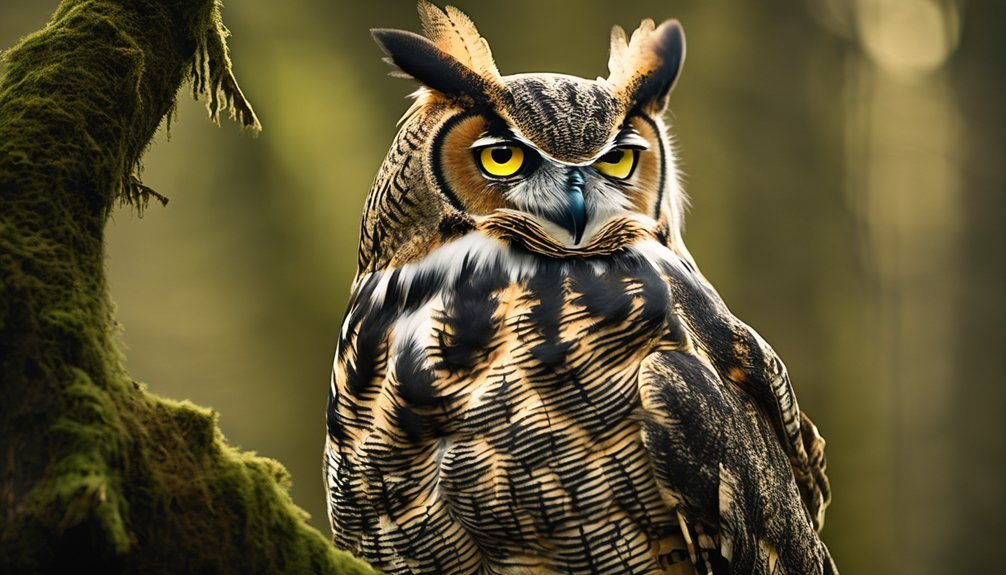
Owls can turn their heads so far because their necks are built for extreme flexibility without sacrificing stability. You’re seeing specialized neck anatomy: many cervical vertebrae, large attachment surfaces, and compliant blood vessels that tolerate rotation.
This structure lets an owl reorient its face toward prey, sounds, or movement while its body stays still. In owl behavior, that head turn supports precise listening and rapid visual targeting without the need to shift the torso.
You may notice the motion looks effortless, but muscles coordinate carefully to control each degree of rotation. The result is a wide field of attention, efficient hunting, and reduced strain on the spine.

Their design gives you a clear example of form serving function in a nocturnal predator.
Why Owl Eyes Stay So Still
Because an owl’s eyes are fixed in bony sockets, they can’t swivel the way human eyes do. You rely on that rigid eye structure to keep owl vision sharply aligned with the retina. This design gives you high visual acuity and strong depth perception, especially in low light.
It also means the bird must hold its gaze steady while scanning. Consider three effects:
- The eyes capture light with minimal movement.
- The brain receives a stable image for precise tracking.
- Head motion compensates when the target shifts.
You can think of the still eyes as a specialized sensor array, built for accuracy rather than flexibility. Their immobility isn’t a flaw; it’s a precise adaptation that supports efficient hunting and clear perception.
How an Owl’s Neck Lets It Turn So Far
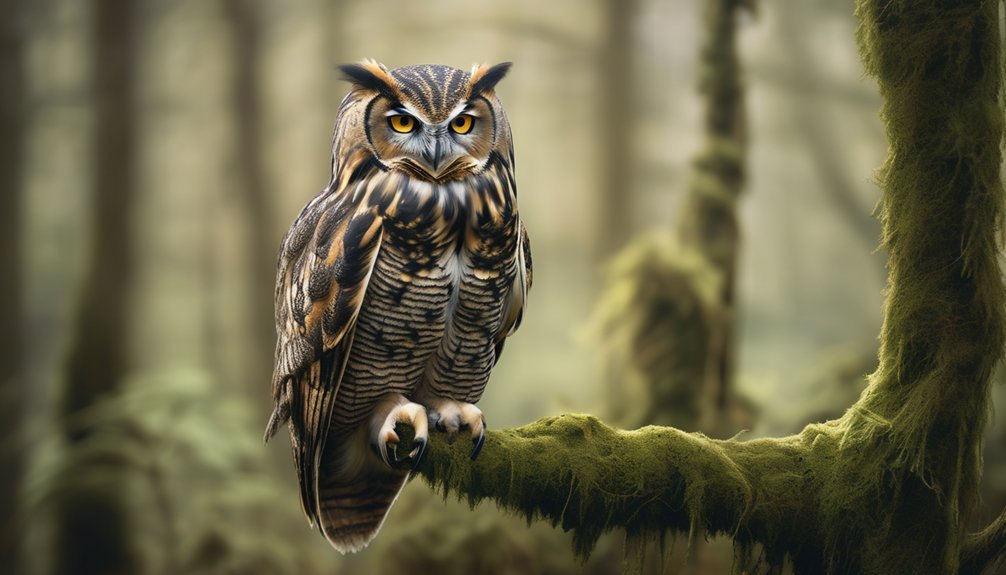
The owl’s remarkable head rotation comes from a neck built for extreme flexibility, with many more vertebrae than a human neck and joints that allow a wide range of motion.
You can think of this as a skeletal adaptation that gives the bird unusually high neck flexibility without requiring the whole body to move. Each vertebra is shaped to permit smooth turning, and the neck muscles guide the motion with control.
Because you’re watching an owl, you see a head that can pivot far left or right while the body stays aligned. That arrangement helps the bird scan its surroundings efficiently, especially when it’s perched and listening.
The result is a precise, efficient system that lets you notice a motionless body paired with a highly mobile head.
How Owls Protect Blood Flow
To keep blood moving safely during extreme head turns, an owl’s arteries include protective features that prevent the vessels from kinking or being pinched. You can think of this as specialized neck anatomy built to preserve blood circulation.
When you rotate an owl’s head, the vessels keep their shape because they’re positioned with extra slack and reinforced pathways.
- Large arterial openings give the arteries room to shift.
- Flexible connections let flow continue as the head turns.
- Backup vessels help maintain supply if one route narrows.
You’d notice that these adaptations reduce pressure changes and limit interruption to the brain.
In your own study of owl blood circulation, you can see how precise vessel design supports survival without relying on risky strain.
How Owl Head Turning Helps Hunting
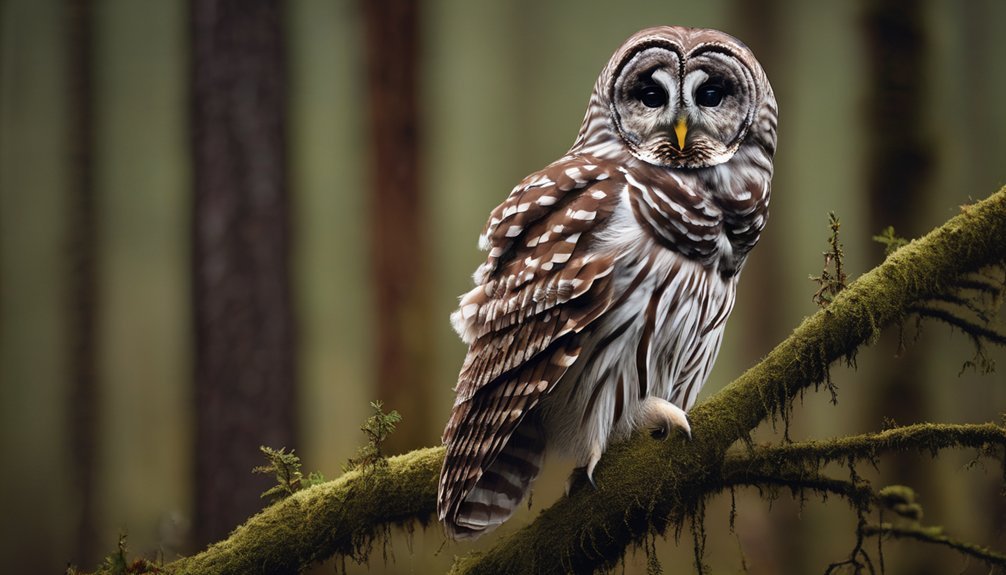
Safe blood flow lets an owl use its extreme head rotation as a hunting tool rather than a risk. You can see how this motion improves prey detection by letting the bird scan a wide arc without moving its body or alerting nearby animals. That stillness supports efficient hunting strategies in low light, where small movements matter.

| Feature | Hunting effect | Result |
|---|---|---|
| Wide rotation | Expands visual coverage | Locates prey faster |
| Body remains still | Reduces visual cues | Keeps prey unaware |
| Rapid repositioning | Refines aim | Improves strike timing |
You’re looking at a precise adaptation: the head turns, the eyes stay forward-facing, and the owl preserves focus on a target. This combination helps it assess distance, judge motion, and commit to a strike with less wasted effort.
How Do Owl Head Turns Help Them Hear?
When an owl turns its head, it can compare tiny differences in sound arrival time and volume between its left and right ears, which helps it localize prey with remarkable precision.
You’re watching sound localization in action: the head shift lets the bird aim its facial disk toward a noise source, sharpening auditory precision. By adjusting angle, it reduces interference from the body and gathers cleaner acoustic cues.
- Time differences reveal direction.
- Volume differences refine angle.
- Head position improves cue integration.
You can think of this as a living acoustic sensor. Each turn updates the owl’s estimate of distance and bearing, so it hears more accurately in darkness.
The result is a fast, intimate link between motion and perception.
How Owl Head Turning Differs From Human Necks
Owls can rotate their heads far more than humans because their necks contain many more vertebrae and specialized blood vessels that keep blood flow stable during extreme rotation.
You, by contrast, have only seven cervical vertebrae, so your neck flexibility is limited by joint shape, muscle tension, and vessel stretch.
When an owl turns, it also uses precise visual adaptation to keep its forward-facing eyes trained on prey without moving the body.
Human necks support balance and broad scanning, but they can’t match this range safely.
If you watch an owl closely, you’ll see that its motion is deliberate, efficient, and anatomically tuned for silent hunting.
Your neck protects delicate tissues; an owl’s neck prioritizes extreme rotation while preserving circulation and vision.
Frequently Asked Questions
Do All Owl Species Turn Their Heads the Same Amount?
No, you won’t find identical head rotation across owl species; owl anatomy differs by size and neck structure. You’ll see variation, though most can still rotate their heads far more than humans can.
Can Owls Turn Their Heads All the Way Around?
No, you can’t. Owl anatomy allows extraordinary head rotation—about 270 degrees, not 360. You’ll see their flexible neck bones, specialized blood vessels, and muscle structure let them look behind without turning their bodies.
Do Baby Owls Learn Head Turning as They Grow?
Yes, you’ll see baby owl behavior change as they mature. They don’t learn extreme head turning; instead, head rotation development is limited by anatomy and improves as neck muscles strengthen and coordination increases.
Does Head Turning Help Owls Communicate With Each Other?
Yes—though you’d expect silent hunters to keep their distance, your owl’s head movements can serve as social signals. They help it display alertness, coordinate with mates, and communicate threat or interest without vocalizing.
Can an Owl Hurt Itself by Turning Too Far?
Yes, you can see that an owl’s neck flexibility greatly reduces injury risks when it turns far. Its bones, blood vessels, and muscles are adapted for extreme rotation, so it usually won’t hurt itself.
Conclusion
When you watch an owl twist its head nearly 270 degrees, you’re seeing a highly specialized neck at work. Owls have about twice as many cervical vertebrae as humans, which gives them extraordinary flexibility without harming blood flow. This lets them keep their fixed eyes aimed at prey while they use hearing and vision together. In other words, their head turns aren’t a trick—they’re a precise adaptation for silent, efficient hunting.