
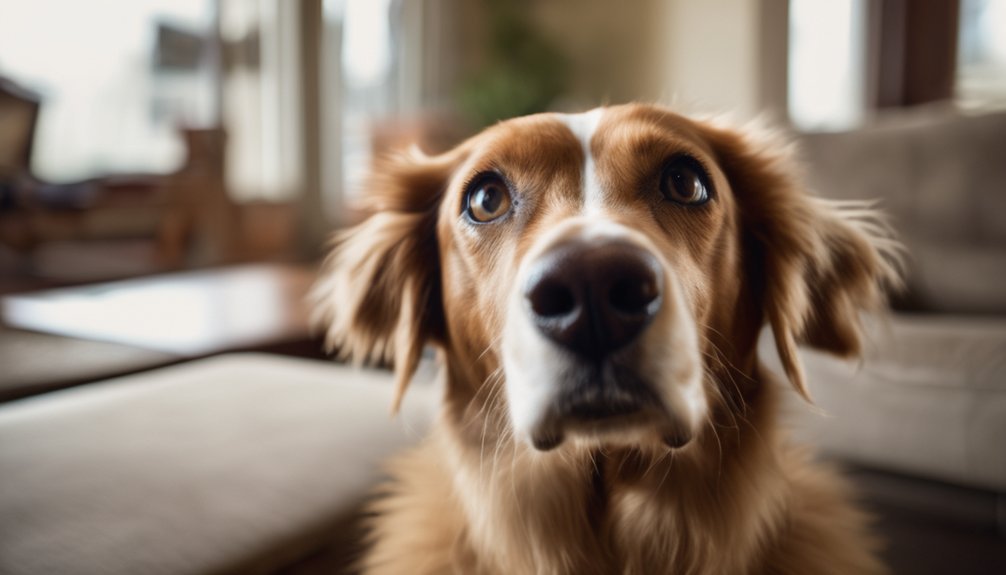
About 54% of dog owners say their dogs tilt their heads during conversation, but the reason isn’t as simple as charm. When you talk to your dog, it may angle its head to improve sound localization, reduce visual obstruction from its muzzle, and better read your facial cues. That small movement can reflect attention, learning, or curiosity, yet in some cases it can also point to something more…
Key Takeaways
- Dogs tilt their heads to better hear your voice and locate where sounds are coming from.
- Head tilting can improve how dogs see your face and read your expressions while you speak.
- It helps them match your words with tone, pitch, and rhythm for better understanding.
- Dogs may tilt their heads to show curiosity, attention, or uncertainty during conversation.
- Brief head tilting is usually normal, but persistent or sudden tilting may need a vet check.
Why Dogs Tilt Their Heads
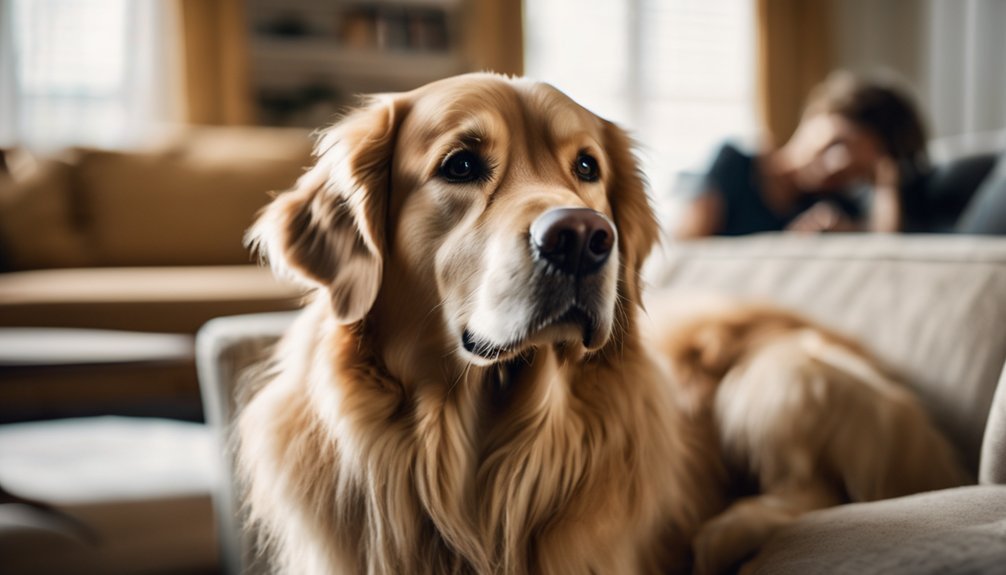
Dogs tilt their heads to improve how they gather and interpret sensory information. When you speak, your dog may adjust the angle of its skull to study your face, posture, and vocal pattern more precisely.
This behavior has several head tilt causes, including curiosity, attention, and uncertainty during canine communication. You might notice it most when a word sounds familiar or emotionally charged.
The tilt can also help your dog align visual cues with what you’re saying, making your expression easier to read. In some dogs, the response reflects learning: they’ve learned that head movement often brings clearer social feedback.
Head tilting may help dogs match your expression with your words, making social cues easier to understand.
If the tilt appears briefly and your dog stays relaxed, it usually signals engagement rather than concern.

How Head Tilting Helps Dogs Hear
When your dog tilts its head, it may be trying to better locate and interpret sound. You help this by noticing how ear positioning changes the path of sound into each ear. That slight angle can improve sound localization, especially when a voice or noise comes from one side.
| Cue | Hearing effect |
|---|---|
| Head tilt | Shifts ear alignment |
| Ear positioning | Alters sound capture |
| One-sided sound | Enhances localization |
| Soft speech | Prompts focused listening |
| Repeated call | Improves response accuracy |
How Dogs Use Vision and Facial Cues
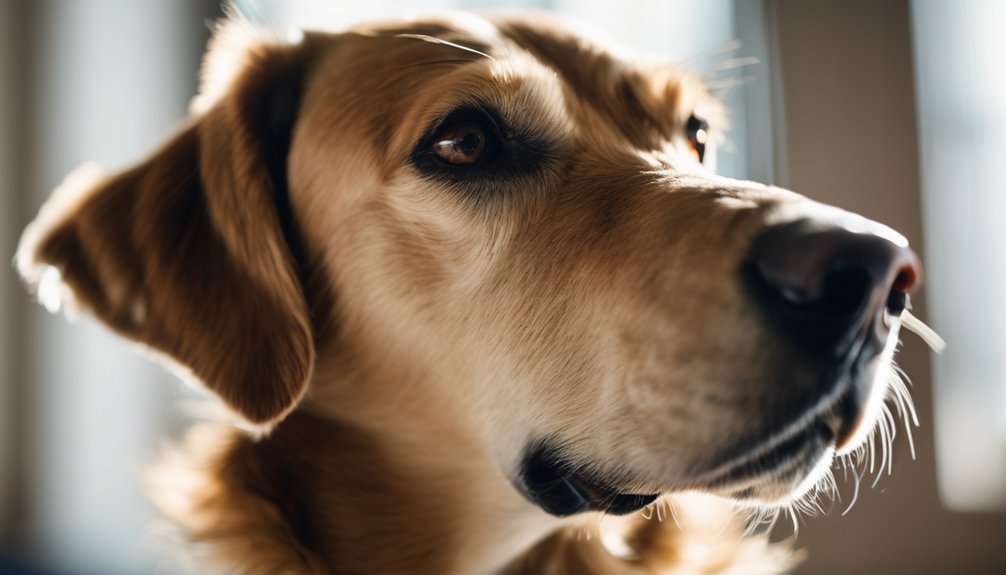
A head tilt can also improve visual sampling, helping a dog inspect your face and body more clearly. You may block parts of your mouth, eyes, or hands with your nose angle, so a brief tilt can reduce that obstruction.
This posture can sharpen visual perception by shifting the line of sight and improving depth cues. You also give your dog rich communication signals through eyebrow movement, lip tension, gaze direction, and hand position. Your dog reads these details quickly, especially when you’re close and speaking softly.
The tilt lets your dog compare these cues with your overall posture, which helps clarify intent. In that moment, you and your dog exchange a small, precise visual check-in that supports social understanding.
What Dogs Learn From Your Voice
Your voice gives a dog several important cues at once: tone, pitch, rhythm, and emotional intensity.
With repeated exposure, your dog builds voice recognition, linking your specific sound patterns to your routines, moods, and likely outcomes. A calm, steady voice can lower arousal and support an emotional response that looks relaxed and attentive.
Repeated exposure helps your dog link your voice patterns to routines, moods, and what happens next.
A sharp or strained voice may signal uncertainty, correction, or threat, prompting your dog to adjust behavior. You’re not just speaking words; you’re shaping expectations through consistent vocal patterns.
Your dog learns that certain phrases, spoken in certain ways, predict feeding, play, training, or restraint. This learning depends on association, not language comprehension.
When you speak clearly and consistently, you help your dog read your intent with greater precision and confidence.
When Head Tilting Shows Curiosity and Focus
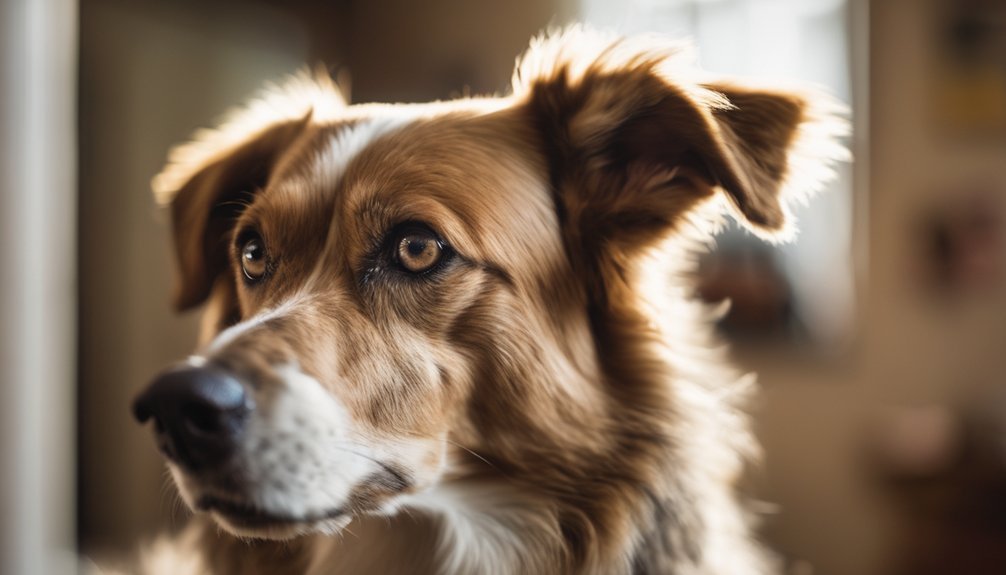
Head tilting can signal that a dog is narrowing attention to gather more information. You may notice this when your voice changes or a sound becomes unclear. The posture functions as one of several curiosity signals and attention cues, helping your dog refine what it hears and sees.
- Your dog may angle its head to isolate your speech.
- It may seek visual detail by adjusting its view of your face.
- It may hold still to process a novel sound.
- It may use the posture while assessing whether the cue matters.
In this moment, you’re seeing focused inquiry, not confusion alone. A brief tilt often means your dog’s mind is actively comparing input, then deciding what deserves a response.
Why Some Dogs Tilt Their Heads More Often
Dogs that tilt their heads frequently often do so because certain traits make the behavior more useful or more noticeable. You may see this more in dogs with narrow muzzles, large ears, or a head shape that shifts sound reception. Breed differences, too, can influence how often you notice the gesture.
| Trait | Effect | Example |
|---|---|---|
| Head shape | Alters sound access | Long muzzle |
| Breed differences | Changes expression rate | Hound |
| Sensory focus | Increases response to speech | Alert dog |
You may also reinforce the pattern without meaning to, because your voice, facial movement, and attention can reward the tilt. Some dogs learn that tilting brings a reaction from you, so they repeat it. In these dogs, the behavior reflects anatomy, temperament, and learned response working together.

Signs Your Dog’s Head Tilt Is Normal
A head tilt is usually normal when it happens in response to a sound, sight, or voice and your dog otherwise acts alert, balanced, and comfortable. You can read the pattern through subtle communication cues and context.
Normal signs include:
- The head tilt appears briefly, then resolves.
- Your dog keeps steady posture and coordinated movement.
- Ears, eyes, and mouth stay relaxed.
- Your dog responds to you, food, or play right after.
You may also notice the tilt on one side, then the other, as your dog samples information. In these moments, the head tilt looks like focused attention, not distress.
If your dog tracks you, wags naturally, and moves without hesitation, you’re likely seeing a healthy response to your voice.
When Head Tilting Could Signal a Problem
When your dog’s head tilt lasts longer than a brief moment, appears suddenly without an obvious trigger, or comes with other changes, it may point to an underlying problem rather than normal curiosity.
A head tilt that lingers or appears suddenly can signal an underlying problem, not simple curiosity.
You should consider head injuries, neurological issues, or inner ear disease, especially if the tilt pairs with stumbling, eye movement changes, or nausea. Hearing loss can also alter how your dog tracks sound and create unusual head positioning.
Watch for anxiety signs, since stress can mimic or intensify a tilt, but don’t assume behavior alone explains it. Persistent tilting may also reflect physical discomfort in the neck or ears.
Some breed tendencies can make a mild tilt more noticeable, yet a new or severe change deserves attention because it’s rarely just a personality trait.
How to Respond When Your Dog Tilts Its Head
Start by watching your dog’s body language and the context of the head tilt. You can respond by staying calm and speaking in a steady tone; this supports dog communication without overstimulation.
Notice whether your dog seems relaxed, alert, or confused, because canine behavior often reflects the sound, movement, or scent you’ve introduced.
- Pause and let your dog assess you.
- Repeat a cue once, clearly.
- Reward focused attention with a small treat or gentle praise.
- If the tilt comes with stiffness, pawing, or disorientation, contact your veterinarian.
You don’t need to force interaction. Instead, you should observe, answer, and respect your dog’s pace.
This approach builds trust and helps you read subtle signals accurately, especially in close, affectionate moments.
Frequently Asked Questions
Can Puppies Tilt Their Heads the Same Way as Adult Dogs?
Yes, you can expect puppies to tilt their heads like adult dogs. This puppy behavior reflects developing communication cues, but you’ll notice it’s often less controlled, because their muscles, hearing, and attention are still maturing.
Do Certain Dog Breeds Tilt Their Heads More Often?
Yes, you’ll notice breed tendencies: some breeds tilt more often because of head shape, hearing, and attentiveness. You can also influence frequency with training methods, rewarding focused listening and calm, curious responses during conversation.
Is Head Tilting Linked to a Dog’s Emotional Attachment?
Not directly, though you may notice it more in dogs bonded to you. Studies suggest about 60% of head tilts occur during attentive listening, reflecting emotional communication and canine behavior, not attachment alone.
Can Dogs Tilt Their Heads to One Side Only?
Yes, your dog can tilt to one side only. Head tilt reasons include hearing asymmetry, ear irritation, or balance issues. In canine communication, a consistent one-sided tilt deserves veterinary evaluation, especially if it’s sudden.
Does Head Tilting Happen When Dogs Hear Other Animals?
Yes, your dog may tilt its head at bird chirps, cat meows, or other animal sounds, like a small radar tuning in. You’re seeing canine communication at work, as it processes confusing, meaningful signals.
Conclusion
In the end, when your dog tilts its head, you’re seeing a small but meaningful act of attention. You’re helping it gather sound, read your face, and match your tone to your message. Like a curious detective in a familiar mystery, your dog is working to understand you better. Most head tilts are normal and reflect engagement. If the behavior changes suddenly or seems frequent and unusual, you should have your veterinarian assess it.